Tumblr
766783855974825984
It’s only wrong when YOU do it! The psychology of hypocrisy | Dean Burnett
“Humans are prone to the principle of least effort, often known as the ‘path of least resistance,’ which means they’ll go for whatever option requires the least work. Hypocrisy allows you to appear principled without having to be so, which is much easier than adhering to strict principles.”
766782408029798400
Here are some examples of activities or uses that typically require that amount of water:
Using 500 milliliters (ml) of water is relatively common in everyday life. Here are some examples of activities or uses that typically require that amount of water:
- Drinking Water: 500 ml is equivalent to about two standard glasses of water or a typical small bottle of water that people might drink.
- Cooking: Many recipes involve boiling water, such as making pasta or rice, where 500 ml might be a starting quantity.
- Handwashing: A brief hand wash, depending on the faucet flow rate, can use around 500 ml of water.
- Brushing Teeth: Leaving the tap running while brushing teeth for two minutes could use about 500 ml or more of water, though turning it off saves water.
- Showering: A very short shower using a water-saving showerhead might consume around 500 ml in a few seconds, as shower flow rates often range from 6 to 12 liters per minute.
- Watering a Small Plant: Many houseplants require about 500 ml of water per watering, depending on their size and type.
- Coffee or Tea Preparation: Brewing a couple of cups of coffee or tea uses around 500 ml of water.
These examples help illustrate how everyday activities can equate to this seemingly small quantity of water.
By ChatGPT
766741357215760384
Is attending art school necessary to become an artist?
Jean-Michel Basquiat did not attend formal art school. Instead, he was largely self-taught and became known as part of the street art scene in New York City in the late 1970s and early 1980s. He gained prominence through his graffiti work under the pseudonym “SAMO” and later transitioned to more formal art settings, becoming a major figure in the neo-expressionist movement. His raw talent, distinctive style, and bold commentary on issues such as race and class distinguished him as a powerful force in contemporary art without traditional academic training.
Andy Warhol did receive formal art education. He studied commercial art at Carnegie Institute of Technology (now Carnegie Mellon University) in Pittsburgh, graduating in 1949 with a degree in pictorial design. His education and subsequent work as a commercial illustrator greatly influenced his later artistic style and approach, particularly in his role as a leading figure of the Pop Art movement. Warhol’s use of mass production techniques, celebrity culture, and commercial imagery are often attributed to his early professional experiences and training.
Jackson Pollock did attend formal art school. He studied at the Art Students League of New York, where he was taught by Thomas Hart Benton, a leading American regionalist painter. Benton’s focus on rhythmic and dynamic compositions influenced Pollock’s early work, although Pollock later developed his unique style, breaking away from his mentor’s realism. Pollock became known for his groundbreaking drip and action painting techniques, making him one of the most significant figures in abstract expressionism.
David Hockney attended art school and had a formal education in the arts. He studied at the Bradford College of Art in his hometown in England and later attended the Royal College of Art in London. Hockney gained recognition during his time at the Royal College, becoming a leading figure in the British Pop Art movement. His formal training helped him experiment with various media and styles, making him one of the most versatile and influential artists of the 20th and 21st centuries.
By ChatGPT
766727347254722560
“When you’re doing something for the first time, you don’t know it’s going to work. You spend seven or eight years working on something, and then it’s copied. I have to be honest: the first thing I can think, all those weekends that I could have at home with my family but didn’t. I think it’s theft, and it’s lazy.”
— Jonathan Ive
766727177162080256
“It is important to ask yourself whether your thoughts are consistent with facts or logic. There could be another explanation for a situation that is truer than your interpretation. Sometimes it is hard to break from long-held beliefs that have become part of your reality. Understand that it can take time and patience to overcome any negative preconceived notions toward your life that you’ve built up.”
766617430301802496
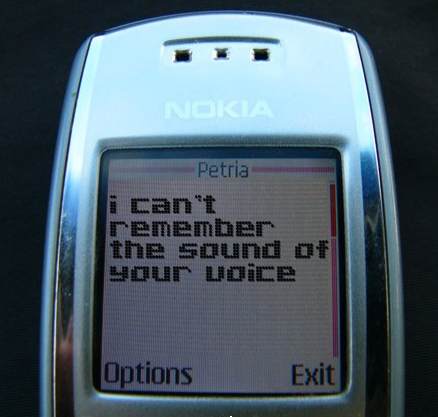
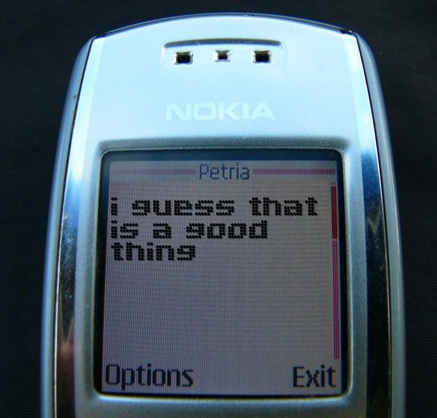
people are not made up of broken glass and the universe did not place
you here to complete them
766601719761256448
“Most people believe we have freewill. That we all choose our path. Sometimes the path is clear, sometimes not so much. Every twist, every turn, can challenge our sense of direction. But it’s the choices we make when we reach a fork in the road that define who we are.”
— Dexter Morgan
766600550996475904
Dexter’s Creepiest Moments
766442075340275712
AMERICA F#K YEAH! MUSIC VIDEO Team America World Police THEME SONG
766436220704374784
Chinatown – Trailer
766412907979423744
Finding creative ideas
Finding creative ideas can come from a blend of exploration, inspiration, and structure. Here are some techniques you can try:
- Divergent Thinking: Start with brainstorming without limits. Jot down as many ideas as possible, no matter how unconventional. Quantity often leads to quality by pushing past the obvious.
- Mind Mapping: Begin with a core concept and visually branch out with related ideas. This approach can reveal connections you hadn’t considered.
- Combine and Remix: Take two unrelated concepts and see if you can combine them into something new. For example, think about how the paper industry could intersect with environmental education, or how digital platforms can simulate real-world investment.
- Observe and Take Notes: Everyday life is a constant source of inspiration. Notice trends, user pain points, or processes that could be streamlined. Keep a notebook to capture these thoughts, even if they seem random at first.
- Reverse Thinking: Instead of asking “How can I create a great idea?”, try thinking in reverse—consider how not to solve a problem or list “don’ts” for a project. This can lead to breakthrough thinking by clarifying what you do want.
- Draw from Other Industries: Looking at innovation in completely different fields often brings fresh perspectives. For instance, if you’re in the paper industry, examine what the tech or entertainment industries are doing to engage customers and consider how you might apply similar strategies.
- Set Constraints: Ironically, limitations can fuel creativity. Setting a constraint like “this idea must be doable with only one material” forces you to think deeply about how to work within boundaries.
- Collaborate with Others: Bringing other perspectives into the mix can help generate more ideas and refine them. Try brainstorming sessions with people who have different backgrounds or expertise.
- Experiment and Prototype: Sometimes ideas only become clear through trial and error. Don’t wait for a perfect concept—build quick prototypes or mockups to test the feasibility and refine them as you go.
- Take Breaks: Finally, stepping away and engaging in different activities, like a walk or even enjoying a beer, can refresh your mind and lead to unexpected insights.
By ChatGPT
766406602229153792

766405885246554112
“There is another type of fiction which we create all the time to glorify ourselves and denounce others. We backbite more and praise less. We project ourselves as smarter than what we actually are and discredit the smartness of others. We cover our follies and believe that we are great, good and virtuous and brand others as evil and vicious.”
— Awdhesh Singh, Myths are Real, Reality is a Myth
766264276113571840
“Anne Wood, co-creator of the show, and Andrew Davenport, the series writer, told The Guardian in a 2013 article titled, ‘How we made: Teletubbies,’ that their inspiration for the show’s characters came from visiting the Smithsonian Institution in Washington, D.C. Wood recalled the initial development of the show: ‘We were interested in how children were reacting to the increasingly technological environment of the late 1990s. We’d just visited the Smithsonian Institution in Washington, and Andrew [Davenport] had been amused at how astronauts looked like toddlers in nappies.’”