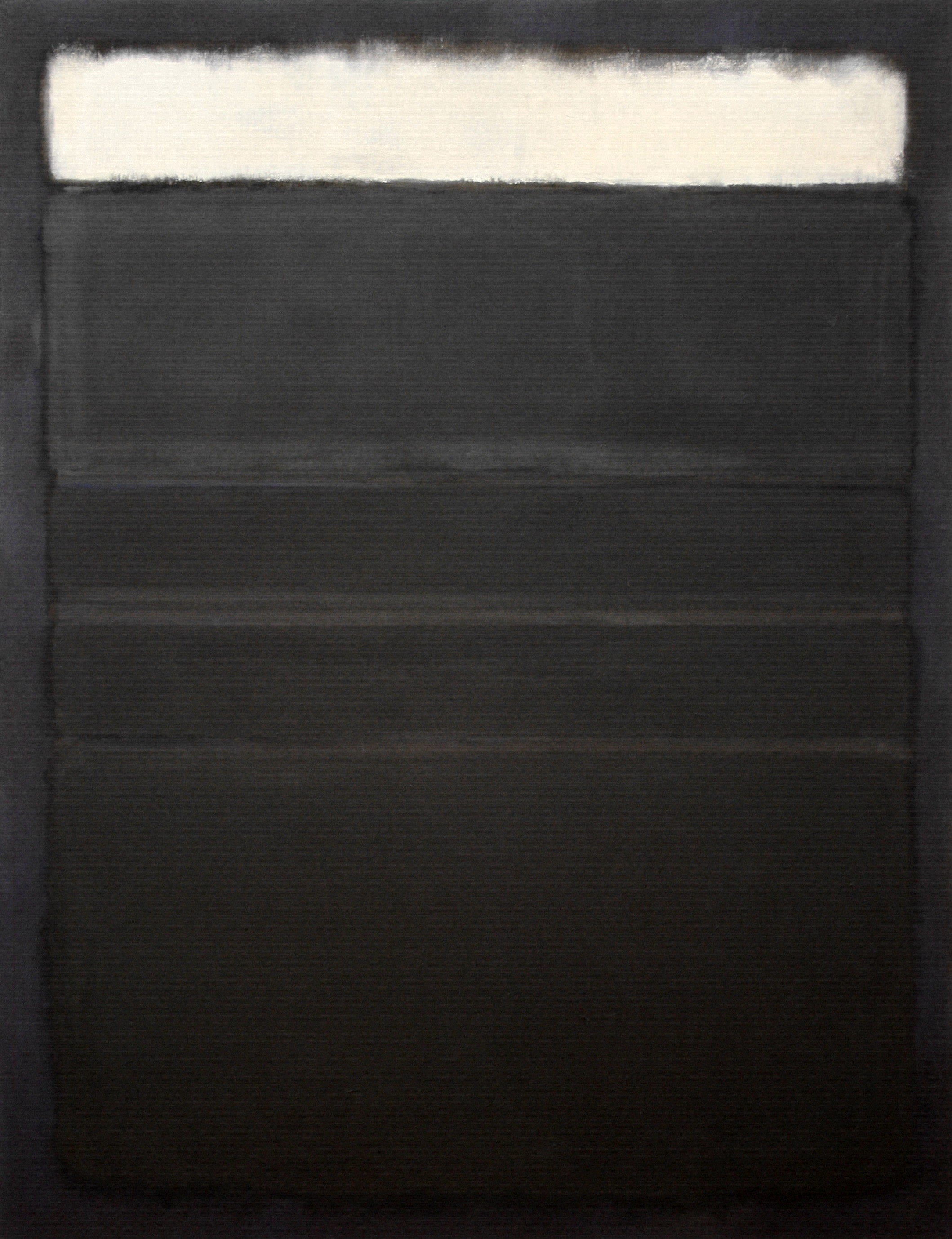
If a painting is created mainly to match a luxurious interior rather than to express something deeply personal or challenge ideas, then it leans more toward decorative art, even if it’s technically a painting. It becomes part of the decor rather than a standalone statement.
That raises an interesting question—does the intent of the artist or the way the artwork is used define whether it’s fine art or decorative art? If someone paints with raw emotion and meaning but it ends up as a luxury wall piece, does that change what it is?
Especially with modern abstract painting—it’s everywhere in high-end homes, hotels, and corporate spaces. A lot of it seems designed to be aesthetically pleasing but not too thought-provoking, so it blends into the environment rather than demanding attention. It feels like abstraction has been commercialized into a luxury good rather than a form of deep expression, at least in many cases.
Of course, that doesn’t mean all abstract art today is purely decorative. There are still artists pushing boundaries and using abstraction in meaningful ways. But a lot of what sells seems to be more about fitting a vibe than saying something.
“Why escape your intended purpose by copying and trying to be someone else? You will discover who you were meant to be only after you have shown confidence being yourself.” — Suzy Kassem
Word Series: A Copy of A Copy Poster. This is a copy of a copy poster. Size: 18 x 24 in. On a matte paper. Heavyweight stock.
Both physical and NFT items are now available in our store.
“I don’t think it’s necessary to be original. It’s necessary to be honest.”
Martin Creed: What’s the point of it? is the first major retrospective of Creed’s ingenious and often highly provocative work. Since the beginning of his career, when he made small objects that could be placed anywhere, Creed has made work that questions the very nature of art and challenges taboos. His work takes on a multitude of forms—from sculpture, paintings, neons, films and installations, to music and performance—appearing both in the art gallery and in broader public circulation. At once rigorous and humorous, his art continually surprises, disrupts and overturns our expectations. It reflects on the unease we face in making choices, the comfort we find in repetition, the desire to control, and the inevitable losses of control that shape existence.
Martin Creed Work No. 88 1995 A sheet of A4 paper crumpled into a ball.
“When I was a younger man, art was a lonely thing. No galleries, no
collectors, no critics, no money. Yet, it was a golden age, for we all
had nothing to lose and a vision to gain. Today it is not quite the
same. It is a time of tons of verbiage, activity, consumption. Which
condition is better for the world at large I shall not venture to
discuss. But I do know, that many of those who are driven to this life
are desperately searching for those pockets of silence where we can root
and grow. We must all hope we find them.”
“I have found that in accepting and immersing myself in subject matter I paint with more intensity and that the ‘hows’ of painting are more inevitably determined by the ‘whats’.” — David Park
David Park (1911-1960) Two People in White 1957 oil on canvas 24 x 32 in. Price realised USD 378,000
“You don’t need a special place to meditate. You can transcend anywhere in the world. The unified field is here, and there, and everywhere.” — David Lynch _ Gravitational force: a long-range attraction that influences all particles.
The Unified Field of Consciousness Series: Gravitational. 2023 Digital art 3000 x 4500 px Software: Adobe Illustrator
Created by the human mind and handcrafted.
Only NFTs are available in our store. OBO (or best offer price).
If a painting is created mainly to match a luxurious interior rather than to express something deeply personal or challenge ideas, then it leans more toward decorative art, even if it’s technically a painting. It becomes part of the decor rather than a standalone statement.
That raises an interesting question—does the intent of the artist or the way the artwork is used define whether it’s fine art or decorative art? If someone paints with raw emotion and meaning but it ends up as a luxury wall piece, does that change what it is?
Especially with modern abstract painting—it’s everywhere in high-end homes, hotels, and corporate spaces. A lot of it seems designed to be aesthetically pleasing but not too thought-provoking, so it blends into the environment rather than demanding attention. It feels like abstraction has been commercialized into a luxury good rather than a form of deep expression, at least in many cases.
Of course, that doesn’t mean all abstract art today is purely decorative. There are still artists pushing boundaries and using abstraction in meaningful ways. But a lot of what sells seems to be more about fitting a vibe than saying something.
“There is a big stone. Do you consider it to be inside or outside your mind?” ⠀ Abstract Art Series: The Stone Mind Poster. Size: 18 x 24 in. On a matte paper. Heavyweight stock.
Both physical and NFT items are now available in our store.
“Art is not a pleasure, a solace, or an amusement; art is a great matter. But most art of the upper classes is made for luxury, and does not serve the poor in any way.”