“The creative process is a cocktail of instinct, skill, culture and a highly creative feverishness. It is not like a drug; it is a particular state when everything happens very quickly, a mixture of consciousness and unconsciousness, of fear and pleasure; it’s a little like making love, the physical act of love.”
Francis Bacon Study After Velázquez’s Portrait of Pope Innocent X 1953 Oil on canvas 60 × 46 in
“What do you think an artist is? An imbecile who has only eyes if he is a painter, ears if he is a musician, or a lyre in every chamber of his heart if he is a poet? On the contrary, he is at the same time a political being, constantly aware of the heartbreaking, passionate, or delightful things that happen in the world, shaping himself completely in their image. How could he be indifferent to other people and withdraw into himself? In the serene atmosphere of studios and libraries, he does not forget that the world is out there. No, painting is not done to decorate apartments. It is an instrument of war.”
Pablo Picasso Guernica 1937 oil on canvas 137.4 in × 305.5 in
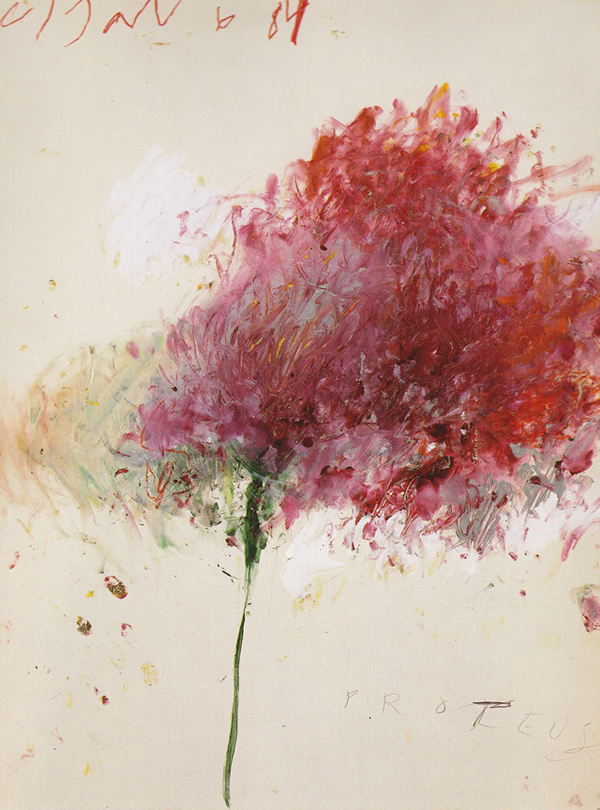
“I don’t think it’s necessary to be original. It’s necessary to be honest.”
Martin Creed: What’s the point of it? is the first major retrospective of Creed’s ingenious and often highly provocative work. Since the beginning of his career, when he made small objects that could be placed anywhere, Creed has made work that questions the very nature of art and challenges taboos. His work takes on a multitude of forms—from sculpture, paintings, neons, films and installations, to music and performance—appearing both in the art gallery and in broader public circulation. At once rigorous and humorous, his art continually surprises, disrupts and overturns our expectations. It reflects on the unease we face in making choices, the comfort we find in repetition, the desire to control, and the inevitable losses of control that shape existence.
Martin Creed Work No. 88 1995 A sheet of A4 paper crumpled into a ball.
Style often helps categorize and define art, making it easier for people to understand and discuss different periods, techniques, and themes in art history. Without a recognizable style, art can become more challenging to classify. However, this does not mean that art without a defined style lacks value or meaning. It just means that it may not fit neatly into the traditional frameworks that we’ve created for understanding art.
In the absence of a specific style, art may be categorized by other criteria, like the concepts behind the work, its intentions, or even its context (social, political, or cultural). For instance, conceptual art is categorized by the ideas it expresses rather than the visual style itself. Similarly, installation art might focus more on how the work interacts with space and the viewer than on the style of its execution.
In some ways, art without style challenges the idea that all art must be categorized in a specific way. It opens up a broader interpretation, where the meaning and impact of the art can come from its message or experience rather than its form.
Do you find this lack of style freeing, or do you think art needs some form of structure to be appreciated?
An art movement is a style or trend in art that is followed by a group of artists during a specific period. These movements often share common techniques, themes, or philosophies. They can be influenced by historical events, cultural shifts, or technological advancements.
For example:
Impressionism (late 19th century) focused on capturing light and everyday life with loose brushwork.
Surrealism (20th century) explored dreams and the unconscious mind with strange, dreamlike imagery.
Abstract Expressionism (mid-20th century) emphasized spontaneous and emotional brushstrokes rather than realistic representation.
Art movements help categorize different styles and ideas in art history. Do you have a particular movement you’re interested in?