Art
777709407417090048
“Well, it’s the creative process – research and inspiration. Development of ideas. Refinement and craft. You have to dig deep into the problem at the beginning and find that wee gem of an idea to springboard into something big. A truth you can then develop and craft into something beautiful. Feed your eyes and your senses and creative things start to happen.” — Chloe Templeman
777683070969085952
“Because judgmentalism destroys relationships. If you are better than someone, you are apart from them. You are above them, not beside them—and so nobody is beside you. And, of course, because real strength is not about sh*tting on other people. It’s about knowing who you are, what you value, and how you want to live that truth. It’s about knowing that you can afford to be generous because you are enough and there is enough to go around. Extending you some kindness does not diminish me; instead, it makes the world that I exist in a better place to be. We bake a bigger pie; we all win.”
777681911801921536
“The world is vast, but the frog in the well thinks it knows everything.”
— Japanese Proverb
777681151868502016
Face to Face with Life’s Challenges: Ole-Jørgen Edna at TEDxBKK
“This is what gives life its meaning and value.”
777654388488568832
CIA and Pollock Art
The CIA’s promotion of Jackson Pollock and Abstract Expressionism was part of a broader Cold War strategy to position the United States as a leader in cultural freedom and innovation, countering the Soviet Union’s emphasis on socialist realism. This was done covertly through the following methods:
1. Funding Through Front Organizations
The CIA used front organizations like the Congress for Cultural Freedom (CCF) (founded in 1950) to secretly fund art exhibitions, publications, and cultural events. The CCF was an international group that promoted Western culture and intellectual life, and it received financial backing from the CIA without the knowledge of most participants.
2. Sponsoring Exhibitions
The CIA, through the CCF and other groups, helped organize international art exhibitions showcasing American artists, including Pollock, Mark Rothko, and Willem de Kooning. One of the key exhibitions was “The New American Painting” (1958-1959), which traveled across Europe and was seen as a major moment in legitimizing Abstract Expressionism.
3. Support from Wealthy Patrons
The CIA also worked indirectly through influential figures in the art world, such as Nelson Rockefeller, who was a major supporter of modern art and had connections to the Museum of Modern Art (MoMA). MoMA itself played a key role in promoting Abstract Expressionism through exhibitions and acquisitions, with some scholars arguing that CIA funds may have indirectly supported these efforts.
4. Art as a Symbol of Freedom
Abstract Expressionism, with its emphasis on personal expression, was seen as the ultimate representation of freedom—an antidote to Soviet socialist realism, which depicted rigid, state-approved subjects. By elevating artists like Pollock, the CIA helped reinforce the idea that the U.S. valued creative liberty, which fit neatly into Cold War propaganda.
5. Influencing Art Critics and Publications
Art critics such as Clement Greenberg played a crucial role in promoting Abstract Expressionism as the pinnacle of modern art. Though there is no direct evidence that Greenberg was CIA-funded, his influence aligned with the agency’s goals. Magazines like Encounter, which was secretly funded by the CIA, also contributed to the spread of Abstract Expressionist ideas.
Did Pollock Know?
There is no evidence that Jackson Pollock (or other Abstract Expressionists) knew about the CIA’s involvement. The artists themselves were often left-leaning or even anti-establishment, which makes it ironic that their work was used as a Cold War propaganda tool.
Outcome
By the 1950s and 60s, Abstract Expressionism had become the dominant force in the art world, firmly establishing New York as the new center of modern art—overtaking Paris. This shift was largely due to the efforts of institutions that, in some cases, were backed by the CIA, whether directly or indirectly.
777653498115440640
follow in someone’s footsteps
idiom
: to do the same things that another person has done before.
777636209306501120

777580748812288000
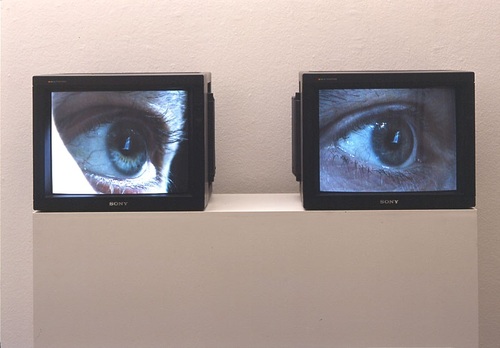
Waterfall
Mariele Neudecker
777569912651644928
“Artists do not live for art; they live through art.”
— Jerry Saltz
777564571504459776
“Be a yardstick of quality. Some people aren’t used to an environment where excellence is expected.”
— Steve Jobs
777564173201752064
“Sometimes, the hardest thing to be is yourself.”
— Unknown
777556096613269504
“It’s not what you say, but what you do that defines you.”
— Unknown
777538580458422272


“An artist fights to retain the integrity of a work so that it remains a strong, clear vision. Art is and should be the act of an individual willing to say something new, something not quite familiar.”
Maya Lin
Vietnam Veterans Memorial, 1982
National Mall, Washington D.C.
Sponsor: Vietnam Veterans Memorial Fund
Architect of Record: Cooper-Lecky Partnership
Landscape Architect: Henry Arnold
Photography: Terry Adams, Mark Segal, Victoria Sambunaris, Wendy Watriss
777496541509337088
“You can’t copy anybody and end with anything. If you copy, it means you’re working without any real feeling.”
— Milt Jackson