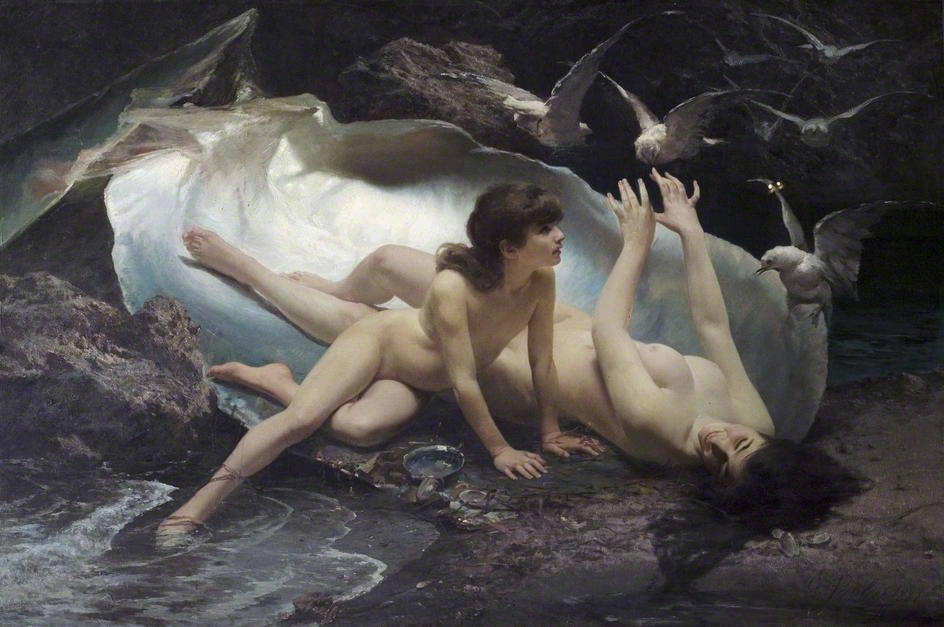
“A key premise of ontological addiction theory is that regardless of how the ego manifests or how visible a person’s egotism might be, having a big ego is invariably not in the interests of fostering health and well-being. This applies to the health and well-being of the individual as well as to that of everyone they encounter. The reason for this is because the more we relate to ourselves as being separate from or more important than others, the more we are deluding ourselves as to how reality functions.”
“Art has been valued and given importance through the artist, regarded as the one who creates something wondrous and beautiful. At a certain point, artists within that way of thinking often distance themselves more and more from the community and society. In Thai education, this system of teaching and learning art is still being used.”
“When art is no longer the center of the universe, then artists are not either. This has been a question asked of artists since the time of Walter Benjamin. He spoke about this long ago, and it has been written about for a long time.
“In the modernist view, the artist was seen as something close to a superhuman — exalted as someone with supreme specialness, with an intuition that could not be explained. When the artist was elevated above us, above the university guard or the noodle vendor next door, the artist became like a kind of demi-god, regarded as more special than anyone else.
“In fact, in contemporary thought, the artist is like a motorcycle taxi driver — it’s just another profession. We work within a framework of knowledge that is not some kind of miracle. And art itself depends on other bodies of knowledge.”
Jiradej Meemalai Co-founder of ‘Baan Noorg Collaborative Arts & Culture’
“เมื่อศิลปะไม่เป็นศูนย์กลางจักรวาล ศิลปินก็จะไม่เป็นด้วย ซึ่งศิลปินเคยถูกตั้งคำถามนี้มาตั้งแต่สมัย Benjamin Walter เขาพูดเรื่องนี้มานานแล้ว หนังสือก็เขียนมานานแล้ว
“Those who engage in public corrections of this sort often are looking to feel good about themselves, and, according to Benoît Monin, a psychology professor at Stanford University, displays of language all-knowing-ness provide a ready-made, two-pronged opportunity to do so. ‘The way we evaluate our competence is relative to other people,’ he says. ‘If I need to feel good about my language skills, one way that I could do that would be to give myself evidence that my language skills are awesome. Another is to give myself evidence that other people’s language skills suck. So by putting down other people, I can feel better about myself.’”
You are what you hate. What you hate says a lot about who you are and what you value. _ The response in the body when we dislike someone
In order to understand what happens in your body when you dislike someone, you can start by trying to understand #fear. As Robert Sapolsky writes in “Why Your Brain Hates Other People,” when we see someone who even looks different from us, “there is preferential activation of the amygdala,” which means the brain region associated with fear and aggression flares up. This visceral, emotional reaction can spark a long-term pattern of dislike when it’s validated by action: if you perceive that someone has hurt you, your fear of them becomes rational.
Our negative feelings toward someone get stronger as bad experiences with them pile up, and these negative thoughts trigger the fight-or-flight response in our bodies. As AJ Marsden, assistant professor of Psychology at Beacon College in Leesburg, Florida, puts it, “our fight-or-flight response is our bodies way of dealing with a stressor.” ⠀ Stressors that trigger fight-or-flight need not be life or death, though, says Marsden: “Sadly, our body cannot tell the difference between an actual stressor (being chased by someone with a knife) and a perceived stressor (having work with someone you hate).” This is why seeing posts from your high school bully can make you feel the anxiety of being bullied all over again: your fearful associations with disliking the person trigger your own need to protect yourself. ⠀ Source: https://bit.ly/3h7ALZu
Art Series: The Middle Finger #Organic T-Shirt.
Both physical and NFT items are now available in our store.
By being treated in these damaging ways, the child learns that being yourself is dangerous, that in order to survive and be at least marginally accepted by your caregivers, you have to hide who you really are: your thoughts, observations, feelings, and preferences.
Other times the child decides to lie to get their needs met, needs that otherwise would be completely ignored. For example, if the caregivers are emotionally distant, the child might lie or pretend that somethings going on just to receive some attention.
And, of course, if the child is routinely attacked or rejected for being authentic, they learn to hide and pretend. In many cases, to the degree where they gradually lose connection to their authentic self and have no idea anymore who they really are.
This is tragic. However, its important to realize that, as adults, we don’t have to be afraid of abandonment anymore. We don’t need our caregivers to survive. We can endure and deal with all these feelings of betrayal, hurt, distrust, shame, loneliness, anger, and many others.
As adults we can slowly untangle all of these problems and slowly rediscover who we really are. We also can start working on trusting others who actually are trustworthy. We can become authentic again.
“It is impossible for someone to lie unless he thinks he knows the truth. Producing bullshit requires no such conviction. A person who lies is thereby responding to the truth, and he is to that extent respectful of it. When an honest man speaks, he says only what he believes to be true; and for the liar, it is correspondingly indispensable that he considers his statements to be false. For the bullshitter, however, all these bets are off: he is neither on the side of the true nor on the side of the false. His eye is not on the facts at all, as the eyes of the honest man and of the liar are, except insofar as they may pertain to his interest in getting away with what he says. He does not care whether the things he says describe reality correctly. He just picks them out, or makes them up, to suit his purpose.”
“Impressionism was the name given to a certain form of observation when #Monet, not content with using his eyes to see what things were or what they looked like as everybody had done before him, turned his attention to noting what took place on his own retina (as an oculist would test his own vision).”
JohnSingerSargent The Black Brook c.1908 Oil paint on canvas 552 × 698 mm
“The male ego can in some cases be tied to how and where a man sees his place in the world and whether he’s living up to expectations — his and those of society.
Cultural stereotypes for men can be intricately tied to both the inflation and deflation of the male ego. Some men measure themselves by the answers to the following questions:
Am I strong enough? Am I wealthy enough? Do I meet the traditional definition of masculinity? Do I attract women? Do I control things or people? Do people recognize me for these things and am I respected and revered for them?”