artoftheday
788326679984685056
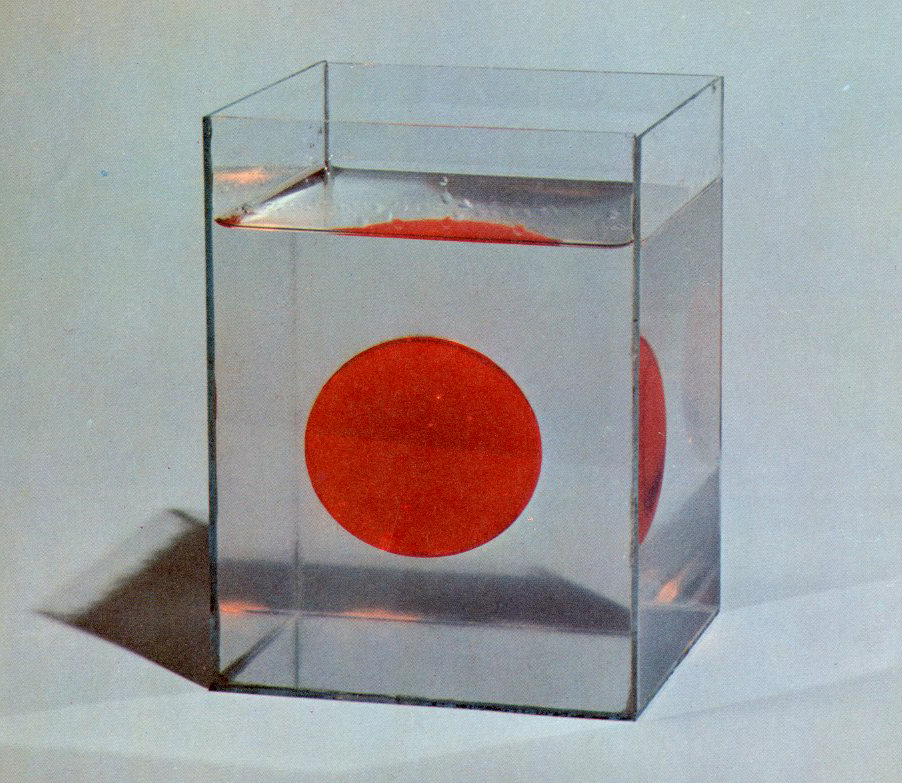
From Fascinating Experiments in Physics by François Cherrier.
Found at stopping off place.
786995524379328512

“People, buying my stuff, can take it wherever they go and can rebuild it if they choose. If they keep it in their heads, that’s fine too. They don’t have to buy it to have it – they can just have it by knowing it.”
Lawrence Weiner
PUSH AS IF & LEFT AS IS
2012
language and the materials referred to.
Dimensions variable.
785589048193564672
“You can only be a good artist if you’ve got money. Otherwise you’re just a struggling artist and no one cares.”
— Tracey Emin
780549743588868096

“What I never wanted in art – and why I probably didn’t belong in art – was that I never wanted viewers. I think the basic condition of art is the viewer: The viewer is here, the art is there. So the viewer is in a position of desire and frustration. There were those Do Not Touch signs in a museum that are saying that the art is more expensive than the people. But I wanted users and a habitat. I don’t know if I would have used those words then, but I wanted inhabitants, participants. I wanted an interaction.” — Vito Acconci
In January 1972, Acconci staged one of the decade’s most notorious performance art pieces at the Sonnabend Gallery in SoHo. Gallery visitors entered to find the space empty except for a low wood ramp. Hidden below the ramp, out of sight, Acconci masturbated, basing his fantasies on the movements of the visitors above him. He narrated these fantasies aloud, his voice projected through speakers into the gallery: “you’re on my left … you’re moving away but I’m pushing my body against you, into the corner … you’re bending your head down, over me … I’m pressing my eyes into your hair.” Seedbed was a seminal work that transformed the physical space of the gallery through minimal intervention to create an intimate connection between artist and audience, even as they remained invisible to one another.
Vito Acconci
Seedbed
1972
Gelatin silver print
7 7/8 x 11 11/16 in.
774712928735789056
Fine vs Decorative Art
If a painting is created mainly to match a luxurious interior rather than to express something deeply personal or challenge ideas, then it leans more toward decorative art, even if it’s technically a painting. It becomes part of the decor rather than a standalone statement.
That raises an interesting question—does the intent of the artist or the way the artwork is used define whether it’s fine art or decorative art? If someone paints with raw emotion and meaning but it ends up as a luxury wall piece, does that change what it is?
Especially with modern abstract painting—it’s everywhere in high-end homes, hotels, and corporate spaces. A lot of it seems designed to be aesthetically pleasing but not too thought-provoking, so it blends into the environment rather than demanding attention. It feels like abstraction has been commercialized into a luxury good rather than a form of deep expression, at least in many cases.
Of course, that doesn’t mean all abstract art today is purely decorative. There are still artists pushing boundaries and using abstraction in meaningful ways. But a lot of what sells seems to be more about fitting a vibe than saying something.
By ChatGPT
774669193720233984

“Where there is no shadow, there is no light.”
Michelangelo Merisi da Caravaggio (1571-1610)
The Taking of Christ
1602
oil on canvas
133.5 cm × 169.5 cm (52.6 in × 66.7 in)
National Gallery of Ireland
774552857832816640

“You are a light. You are the light. Never let anyone — any person or any force — dampen, dim or diminish your light … Release the need to hate, to harbor division, and the enticement of revenge. Release all bitterness. Hold only love, only peace in your heart, knowing that the battle of good to overcome evil is already won.” — John Lewis
John Lewis
2020
Watercolor on paper
12 x 9 in
Price: Not for Sale