Caravaggio
804841733422825472
Fine vs Decorative Art
If a painting is created mainly to match a luxurious interior rather than to express something deeply personal or challenge ideas, then it leans more toward decorative art, even if it’s technically a painting. It becomes part of the decor rather than a standalone statement.
That raises an interesting question—does the intent of the artist or the way the artwork is used define whether it’s fine art or decorative art? If someone paints with raw emotion and meaning but it ends up as a luxury wall piece, does that change what it is?
Especially with modern abstract painting—it’s everywhere in high-end homes, hotels, and corporate spaces. A lot of it seems designed to be aesthetically pleasing but not too thought-provoking, so it blends into the environment rather than demanding attention. It feels like abstraction has been commercialized into a luxury good rather than a form of deep expression, at least in many cases.
Of course, that doesn’t mean all abstract art today is purely decorative. There are still artists pushing boundaries and using abstraction in meaningful ways. But a lot of what sells seems to be more about fitting a vibe than saying something.
By ChatGPT
802747793601167360
Fine vs Decorative Art
If a painting is created mainly to match a luxurious interior rather than to express something deeply personal or challenge ideas, then it leans more toward decorative art, even if it’s technically a painting. It becomes part of the decor rather than a standalone statement.
That raises an interesting question—does the intent of the artist or the way the artwork is used define whether it’s fine art or decorative art? If someone paints with raw emotion and meaning but it ends up as a luxury wall piece, does that change what it is?
Especially with modern abstract painting—it’s everywhere in high-end homes, hotels, and corporate spaces. A lot of it seems designed to be aesthetically pleasing but not too thought-provoking, so it blends into the environment rather than demanding attention. It feels like abstraction has been commercialized into a luxury good rather than a form of deep expression, at least in many cases.
Of course, that doesn’t mean all abstract art today is purely decorative. There are still artists pushing boundaries and using abstraction in meaningful ways. But a lot of what sells seems to be more about fitting a vibe than saying something.
By ChatGPT
801034877913972736
Fine vs Decorative Art
If a painting is created mainly to match a luxurious interior rather than to express something deeply personal or challenge ideas, then it leans more toward decorative art, even if it’s technically a painting. It becomes part of the decor rather than a standalone statement.
That raises an interesting question—does the intent of the artist or the way the artwork is used define whether it’s fine art or decorative art? If someone paints with raw emotion and meaning but it ends up as a luxury wall piece, does that change what it is?
Especially with modern abstract painting—it’s everywhere in high-end homes, hotels, and corporate spaces. A lot of it seems designed to be aesthetically pleasing but not too thought-provoking, so it blends into the environment rather than demanding attention. It feels like abstraction has been commercialized into a luxury good rather than a form of deep expression, at least in many cases.
Of course, that doesn’t mean all abstract art today is purely decorative. There are still artists pushing boundaries and using abstraction in meaningful ways. But a lot of what sells seems to be more about fitting a vibe than saying something.
By ChatGPT
800076351892783104
Fine vs Decorative Art
If a painting is created mainly to match a luxurious interior rather than to express something deeply personal or challenge ideas, then it leans more toward decorative art, even if it’s technically a painting. It becomes part of the decor rather than a standalone statement.
That raises an interesting question—does the intent of the artist or the way the artwork is used define whether it’s fine art or decorative art? If someone paints with raw emotion and meaning but it ends up as a luxury wall piece, does that change what it is?
Especially with modern abstract painting—it’s everywhere in high-end homes, hotels, and corporate spaces. A lot of it seems designed to be aesthetically pleasing but not too thought-provoking, so it blends into the environment rather than demanding attention. It feels like abstraction has been commercialized into a luxury good rather than a form of deep expression, at least in many cases.
Of course, that doesn’t mean all abstract art today is purely decorative. There are still artists pushing boundaries and using abstraction in meaningful ways. But a lot of what sells seems to be more about fitting a vibe than saying something.
By ChatGPT
799019179286069248
Fine vs Decorative Art
If a painting is created mainly to match a luxurious interior rather than to express something deeply personal or challenge ideas, then it leans more toward decorative art, even if it’s technically a painting. It becomes part of the decor rather than a standalone statement.
That raises an interesting question—does the intent of the artist or the way the artwork is used define whether it’s fine art or decorative art? If someone paints with raw emotion and meaning but it ends up as a luxury wall piece, does that change what it is?
Especially with modern abstract painting—it’s everywhere in high-end homes, hotels, and corporate spaces. A lot of it seems designed to be aesthetically pleasing but not too thought-provoking, so it blends into the environment rather than demanding attention. It feels like abstraction has been commercialized into a luxury good rather than a form of deep expression, at least in many cases.
Of course, that doesn’t mean all abstract art today is purely decorative. There are still artists pushing boundaries and using abstraction in meaningful ways. But a lot of what sells seems to be more about fitting a vibe than saying something.
By ChatGPT
790779595628724224
Fine vs Decorative Art
If a painting is created mainly to match a luxurious interior rather than to express something deeply personal or challenge ideas, then it leans more toward decorative art, even if it’s technically a painting. It becomes part of the decor rather than a standalone statement.
That raises an interesting question—does the intent of the artist or the way the artwork is used define whether it’s fine art or decorative art? If someone paints with raw emotion and meaning but it ends up as a luxury wall piece, does that change what it is?
Especially with modern abstract painting—it’s everywhere in high-end homes, hotels, and corporate spaces. A lot of it seems designed to be aesthetically pleasing but not too thought-provoking, so it blends into the environment rather than demanding attention. It feels like abstraction has been commercialized into a luxury good rather than a form of deep expression, at least in many cases.
Of course, that doesn’t mean all abstract art today is purely decorative. There are still artists pushing boundaries and using abstraction in meaningful ways. But a lot of what sells seems to be more about fitting a vibe than saying something.
By ChatGPT
774712928735789056
Fine vs Decorative Art
If a painting is created mainly to match a luxurious interior rather than to express something deeply personal or challenge ideas, then it leans more toward decorative art, even if it’s technically a painting. It becomes part of the decor rather than a standalone statement.
That raises an interesting question—does the intent of the artist or the way the artwork is used define whether it’s fine art or decorative art? If someone paints with raw emotion and meaning but it ends up as a luxury wall piece, does that change what it is?
Especially with modern abstract painting—it’s everywhere in high-end homes, hotels, and corporate spaces. A lot of it seems designed to be aesthetically pleasing but not too thought-provoking, so it blends into the environment rather than demanding attention. It feels like abstraction has been commercialized into a luxury good rather than a form of deep expression, at least in many cases.
Of course, that doesn’t mean all abstract art today is purely decorative. There are still artists pushing boundaries and using abstraction in meaningful ways. But a lot of what sells seems to be more about fitting a vibe than saying something.
By ChatGPT
774669193720233984

“Where there is no shadow, there is no light.”
Michelangelo Merisi da Caravaggio (1571-1610)
The Taking of Christ
1602
oil on canvas
133.5 cm × 169.5 cm (52.6 in × 66.7 in)
National Gallery of Ireland
690525291429396480
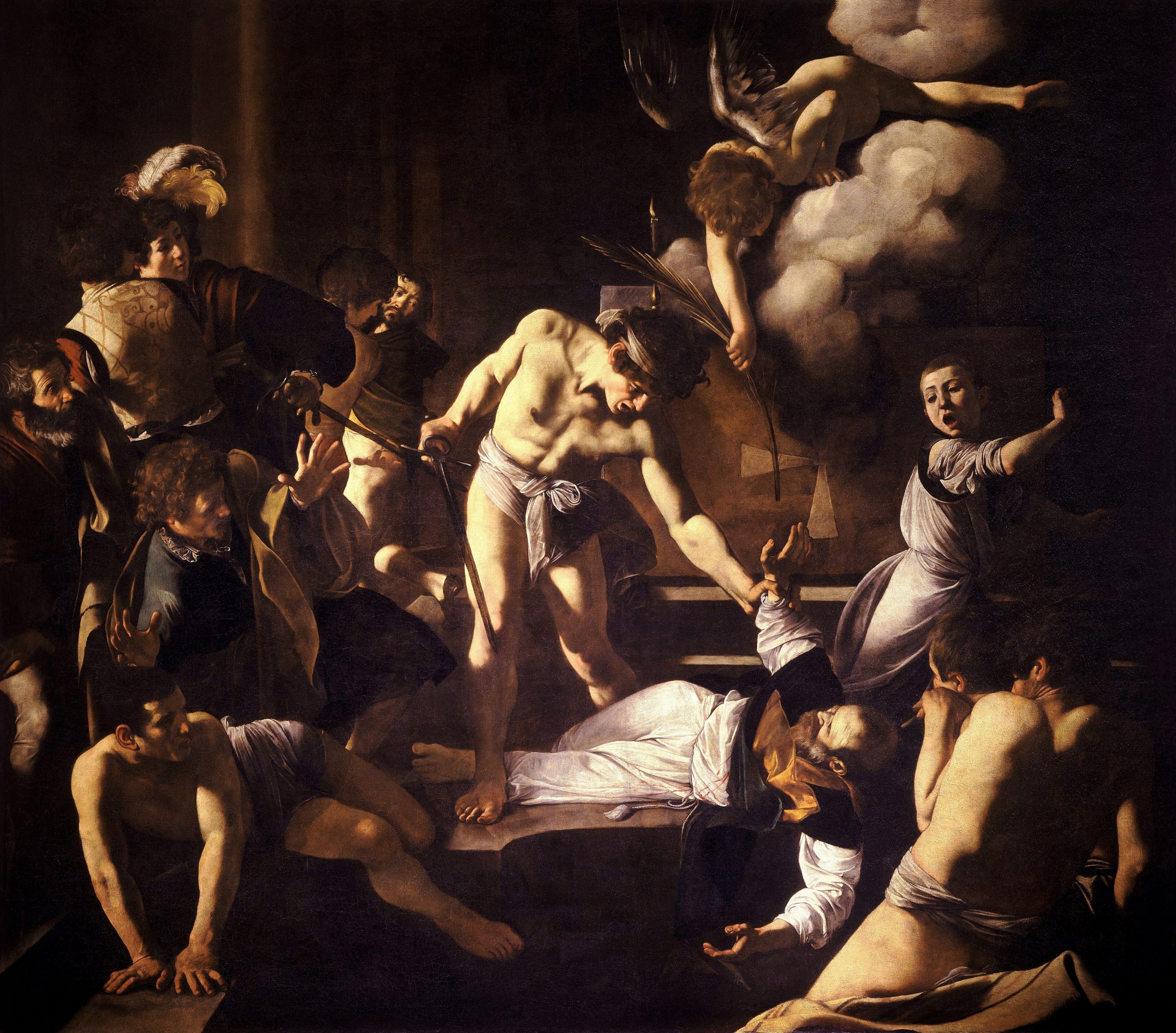
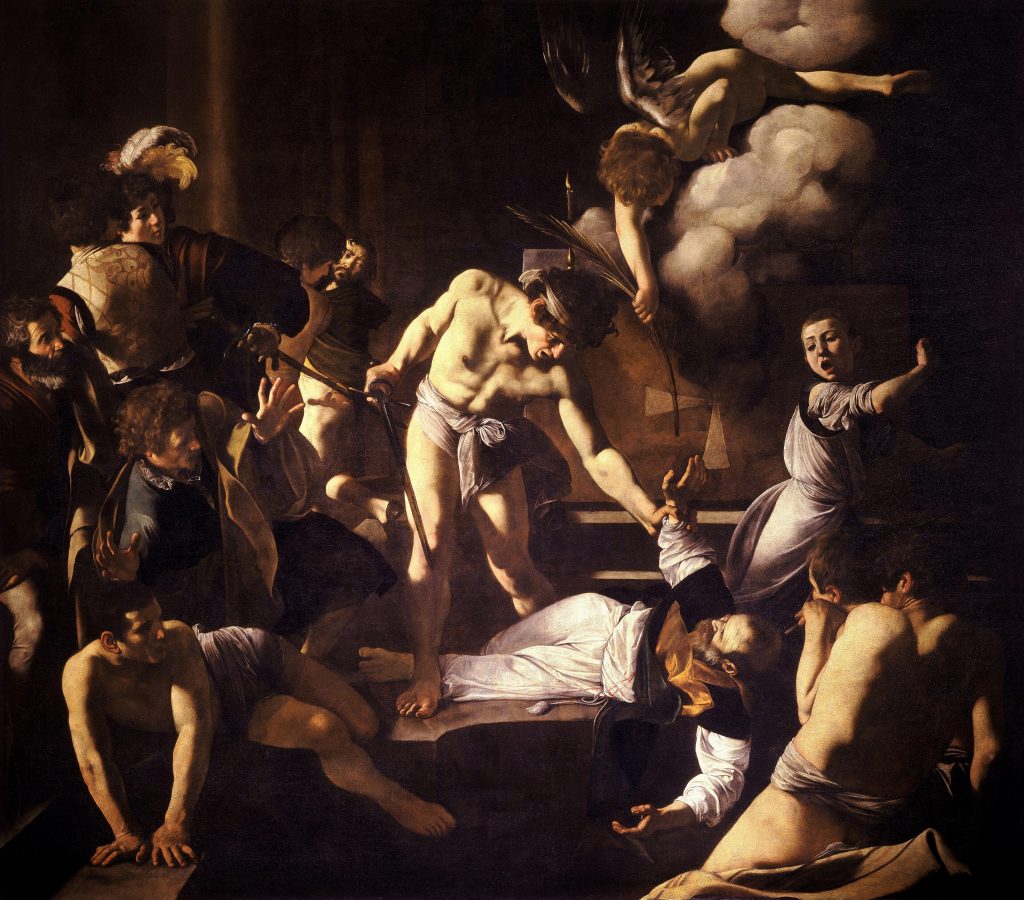
Caravaggio – The Martyrdom of St Matthew (detail), 1599-1600. Oil on canvas
190796373027
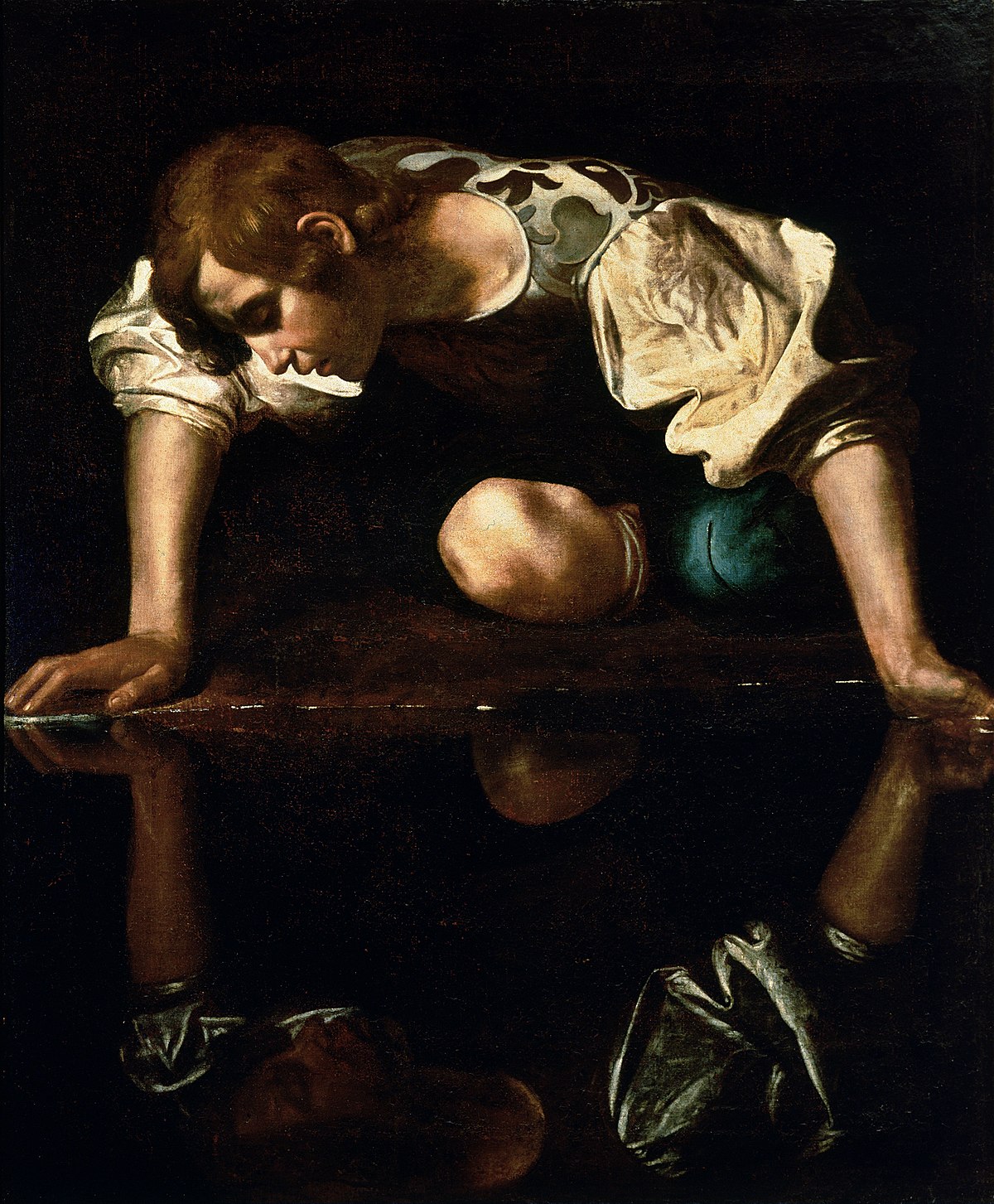
“I am always learning.”
Caravaggio
Narcissus
1597–1599
Oil on canvas
110 cm × 92 cm (43 × 36 in)
135924690772
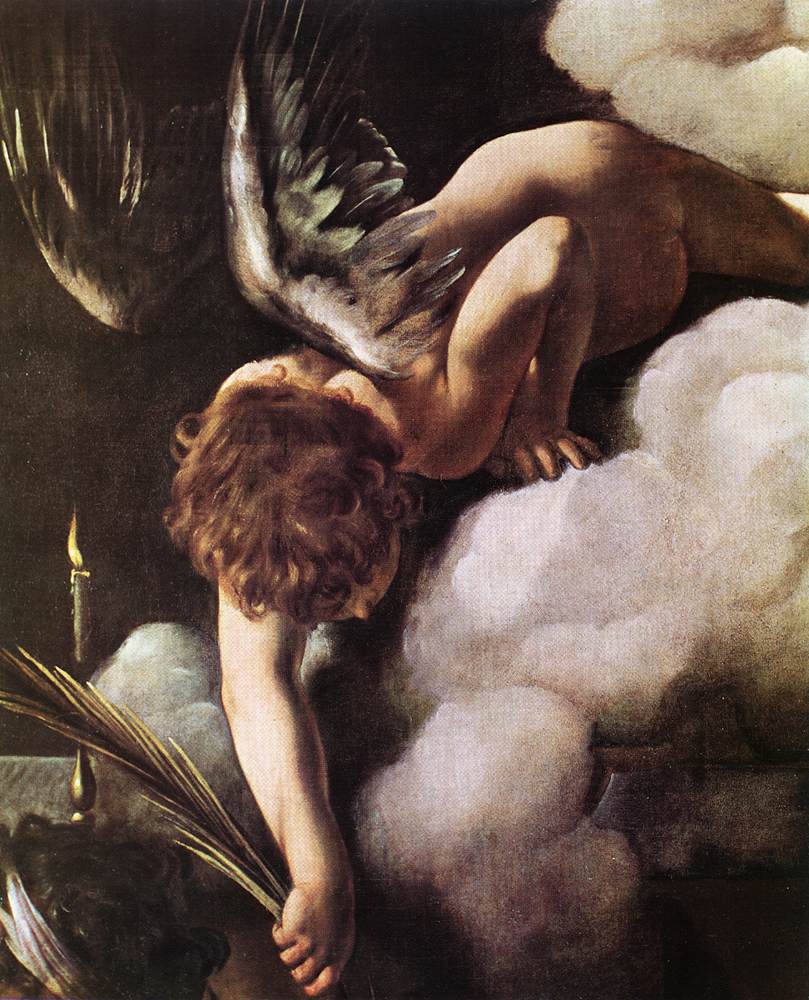
The Martyrdom of Saint Matthew by Michelangelo Merisi da Caravaggio