THE FIRST DaDee Scorpion Garbage Truck in California – In Action!
In Thailand, we have to pay both for a garbage man and the district where you live monthly! Beside the taxpayers’ money, Don’t we pay our taxes?? Corruption! Mafia!
“Another factor encouraging my positive attitude about
problem solving was World War II when the U.S. spent billions of dollars
for weapons of mass destruction in the Manhattan Project. Cost was no
object and it was one of the largest and best-financed projects
undertaken to that date. I realized the same energies that went into the
Manhattan Project could be channeled to improve and update our way of
life, and to achieve and maintain the optimal symbiotic relationship
between nature and humankind. If we are willing to spend that amount of
money, resources, and human lives in times of war, we must ask why we
don’t commit equal resources to improving the lives of everyone and
anticipating humane needs for the future in times of peace.
When
scientists were called upon to solve problems of a military nature, the
answers were immediately forthcoming. This demonstrated to me the
ability of science and technology to solve problems when properly
organized and funded, but it is shameful that these methods are not
applied to solving social problems on a global scale. In my work I am
not attempting to predict the future. I am only pointing out what is
possible with the intelligent application and humane use of science and
technology. This does not call for scientists to manage society. What I
suggest is applying the methods of science to the social system for the
benefit of human kind and the environment.”
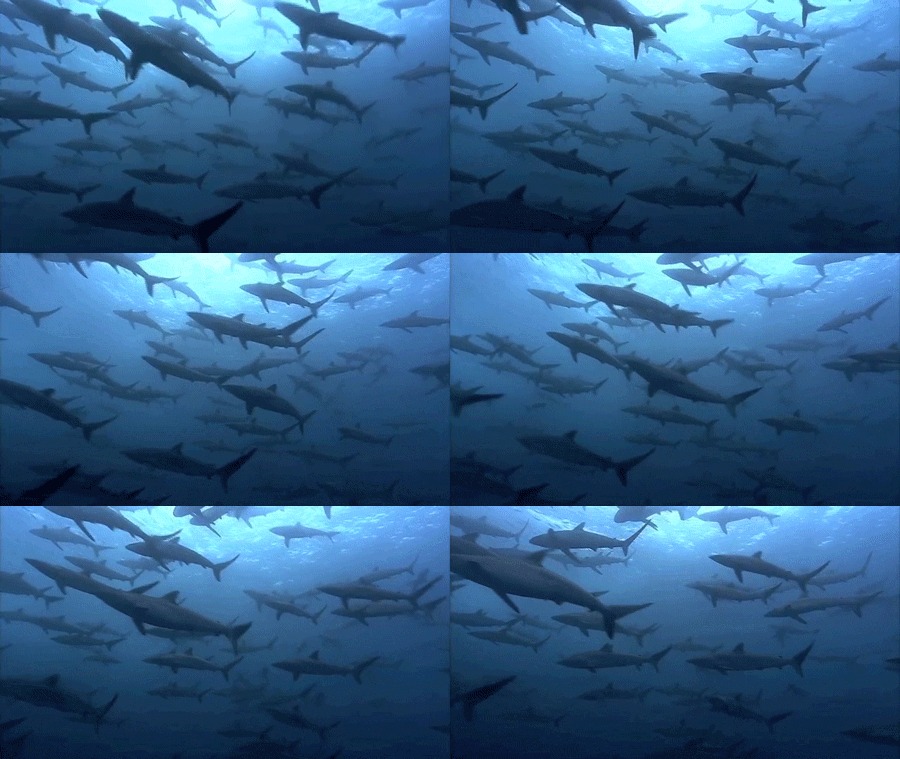
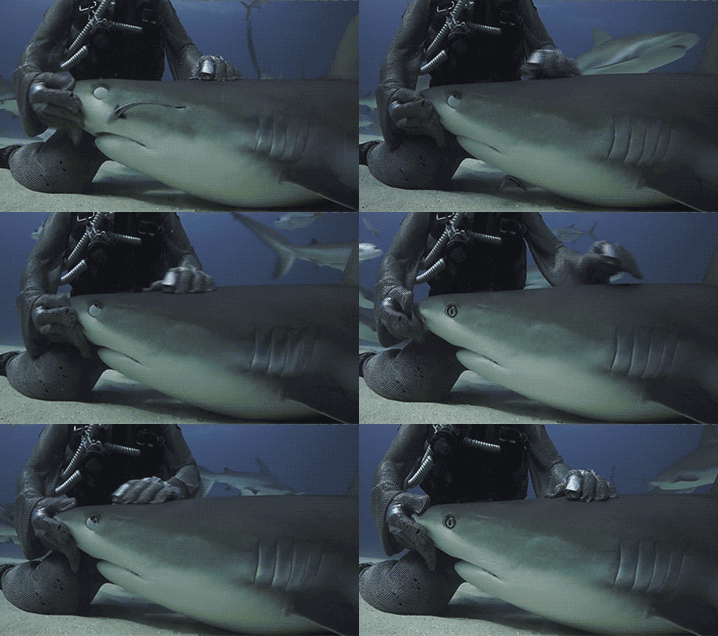
For too long, sharks have been portrayed and perceived as the menacing, lurking creatures in the deep. Contrary to popular belief, we are much more of a threat to them than they are to us.
Researchers have found that the ominous music that often accompanies even documentary footage of them has inspired excessive fear about sharks.
In an experiment at UC San Diego, participants watched footage of sharks. Some scenes featured uplifting music, and others had a more daunting score.
The effect was what you might expect. Viewers saw sharks as intimidating creatures when they they also heard ominous music.
But with uplifting music (or none at all), viewers had a more positive impression of sharks.
This is problematic because rarely do we see shark footage without the ominous music, and the negativeportrayals of sharks may be hindering conservation efforts.
“We know from prior research that conservation progress for sharks is sluggish compared to marine mammals and that this slow response may be due in part to the societal marginalization of sharks,” says study co-author Elizabeth Keenan.
After all, in the words of Senegalese conservationist Baba Diou, “we will conserve only what we love.”
And while they’re still not exactly a furry, cuddly rabbit, consider this: you’re more likely to be struck by lightening than fall prey to a fatal shark attack.