deception

25 items found

767411654757580800

donotdestroy:

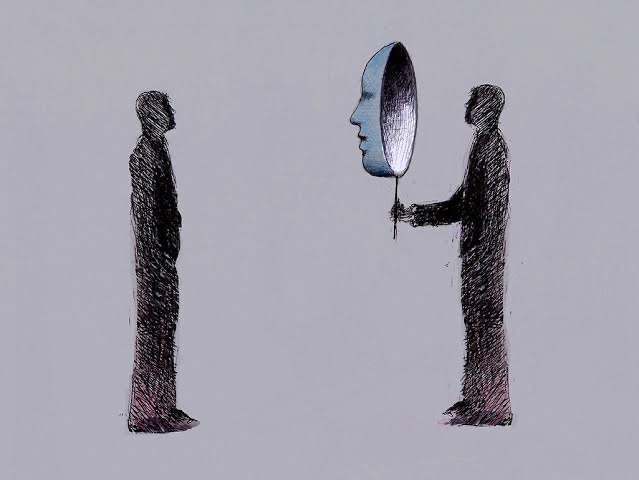
“What’s so interesting is that we seem to intuitively understand that if we can get ourselves to believe something first, we’ll be more effective at getting others to believe it,” says William von Hippel, a psychologist at The University of Queensland, who co-authored the study. “So we process information in a biased fashion, we convince ourselves, and we convince others. The beauty is, those are the steps Trivers outlined—and they all lined up in one study.”

765964713155772416

“What’s so interesting is that we seem to intuitively understand that if we can get ourselves to believe something first, we’ll be more effective at getting others to believe it,” says William von Hippel, a psychologist at The University of Queensland, who co-authored the study. “So we process information in a biased fashion, we convince ourselves, and we convince others. The beauty is, those are the steps Trivers outlined—and they all lined up in one study.”

762894832920330240

donotdestroy:

We lie to ourselves to protect our self-images, which allows us to act immorally while maintaining a clear conscience. According to the very latest research, self-deception may have even evolved to help us to persuade others; if we start believing our own lies, it’s much easier to get other people to believe them, too.

760203732380221440

donotdestroy:

We lie to ourselves to protect our self-images, which allows us to act immorally while maintaining a clear conscience. According to the very latest research, self-deception may have even evolved to help us to persuade others; if we start believing our own lies, it’s much easier to get other people to believe them, too.

754687304701984768

donotdestroy:

What is Self-Deception?

Self-deception is the act of fooling yourself into believing something that is not true or denying aspects of reality to avoid discomfort or cognitive dissonance. Signs of self-deception include:

  • Rationalizing or justifying your actions or beliefs
  • Ignoring evidence that contradicts your beliefs
  • Minimizing or dismissing the effect of your behavior on yourself or others
  • Avoiding self-reflection or introspection to maintain a preferred self-image

751449904863379456

donotdestroy:

We lie to ourselves to protect our self-images, which allows us to act immorally while maintaining a clear conscience. According to the very latest research, self-deception may have even evolved to help us to persuade others; if we start believing our own lies, it’s much easier to get other people to believe them, too.

745532736193871872

“Trust is the bedrock of social life at all levels, from romance and parenting to national government. Deception always undermines it. Because truth is so essential to the human enterprise, which relies on a shared view of reality, the default assumption most people have is that others are truthful in their communications and dealings. Most cultures have powerful social sanctions against lying.”