Depression
722332728773804032
In the end, memories of what we did hold more value than what we had.
721290544414883840
I didn’t want kids to think that to be happy, they had to be famous or rich or live in the big city.
— Dan Savage
721129252705222656
Bullying
Bullying is a complex issue with various underlying causes. People engage in bullying behavior for different reasons, and it’s important to understand that it is not justified or acceptable. Here are some common reasons why individuals may engage in bullying:
1. Power and control: Some people bully others to exert power and control over them. They may feel a sense of superiority by belittling or demeaning others.
2. Insecurity and low self-esteem: Individuals with low self-esteem may bully others as a way to compensate for their own insecurities. By putting others down, they may temporarily feel better about themselves.
3. Peer pressure: In certain social groups, bullying may be perceived as a way to gain acceptance or maintain a certain social status. People may join in or continue bullying behavior to fit in with their peers.
4. Lack of empathy: Some individuals may have difficulty understanding or empathizing with the feelings of others. This lack of empathy can lead to a disregard for the harm they cause through bullying.
5. Learned behavior: Bullying can be learned from observing others, such as family members, friends, or even media influences. If someone grows up in an environment where bullying is normalized or tolerated, they may be more likely to engage in similar behavior.
6. Personal issues or trauma: Individuals who have experienced personal issues or trauma, such as abuse or neglect, may sometimes resort to bullying as a way to cope with their own pain or regain a sense of control.
It’s important to note that these are general reasons and not an exhaustive list. Each bullying situation is unique, and it may involve a combination of factors. Understanding the underlying reasons can help in developing strategies to address and prevent bullying behavior, fostering empathy, and promoting a positive and inclusive environment.
By Chat GTP
720083874364997632
Everything we hear is an opinion, not a fact. Everything we see is a perspective, not the truth.
716254834602491904
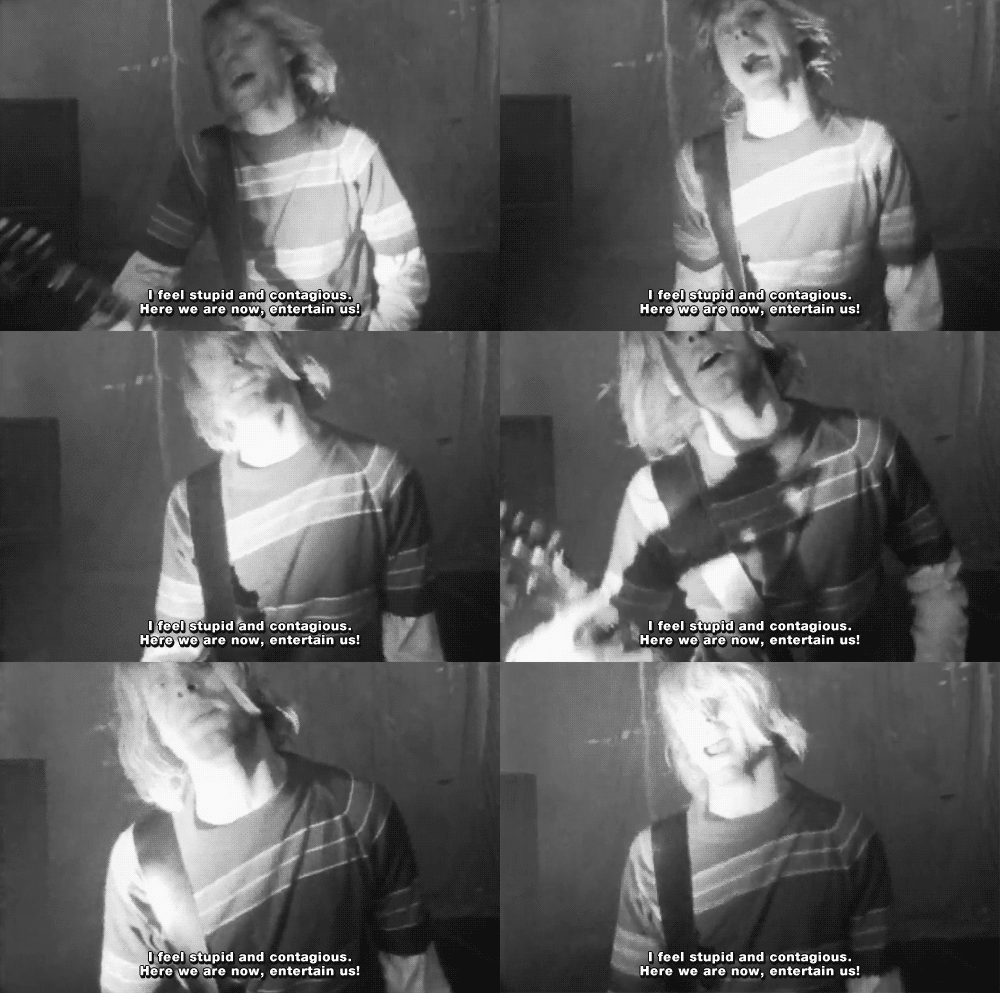
This also has a tie to his suicide note where he feels that his daughter
Frances B. Cobain would grow up to be like him, his worst fear. He says
to Boddah (His imaginary friend) that she,
“Reminds me too much of what I used to be, full of love and joy, kissing
every person she meets because everyone is good and will do her no harm.
And that terrifies me to the point to where I can barely function. I
can’t stand the thought of Frances becoming the miserable,
self-destructive, death rocker that I’ve become.“
708271617366736896
703745344492748800
What is the psychology underlying people who imitate others a lot?
Such people tends to fall into either one of three categories. First, they might be suffering from low self-esteem and therefore do not believe their own thoughts, feelings, and behaviors are good enough. Second, they want to fit in with a certain “type” of person, and that won’t be possible if that person is not accepting of him/her having their own thoughts. Third, the imitator might simply be overwhelmed by someone’s “charisma,” either negative or positive, and rather than go against the tide of that charisma, it’s easier to just succumb to it.
They might not even recognize it as copying rather they usually do it kind of innately.
703603868114780160
702705853698064384
The world is not driven by greed, it’s drive by envy.
702524231956758528
Working hard for something we don’t care about is called stress: Working hard for something we love is called passion.
702257114355204096
I don’t really care so much what people say about me because it usually is a reflection of who they are. For example, if people wish I would sound like I used to sound, then it says more about them than it does me.