drawing
776884889557630976
I’d be a little jealous if your art made it into MoMA!
776751430024478720

“A painting is not a picture of an experience, but is the experience.”
Mark Rothko
No. 10
1958
oil on canvas
94 ¼ x 69 ¼ in.
Price realised
USD 81,925,000
776396429505740800
If words didn’t matter, then why do artists give their work titles?
776390422853517313
“There is nothing more surreal than reality.”
— Salvador Dalí
776387713665531904

“My painting is not violent, it’s life that is violent. Even within the most beautiful landscape, in the trees, under the leaves, the insects are eating each other; violence is a part of life. We are born with a scream; we come into life with a scream and maybe love is a mosquito net between the fear of living and the fear of death.”
Francis Bacon
Study for Portrait
1977
oil and dry transfer lettering on canvas
78 x 58 1/8 in.
Price realised
USD 49,812,500
776255530985537536

“A lot of people seem to think that art or photography is about the way things look, or the surface of things. That’s not what it’s about for me. It’s really about relationships and feelings…it’s really hard for me to do commercial work because people kind of want me to do a Nan Goldin. They don’t understand that it’s not about a style or a look or a setup. It’s about emotional obsession and empathy.”
Nan Goldin
Nan and Brian in Bed, N.Y.C., 1983
1983
Cibachrome print
24 ½ x 38 in.
Price realised
USD 63,000
776204724250771456

“It is important to express oneself…provided the feelings are real and are taken from you own experience.”
Berthe Morisot (1841-1895)
Après le déjeuner
1881
oil on canvas
31 7/8 x 39 3/8 in.
Price realised
GBP 6,985,250
776186694141657088
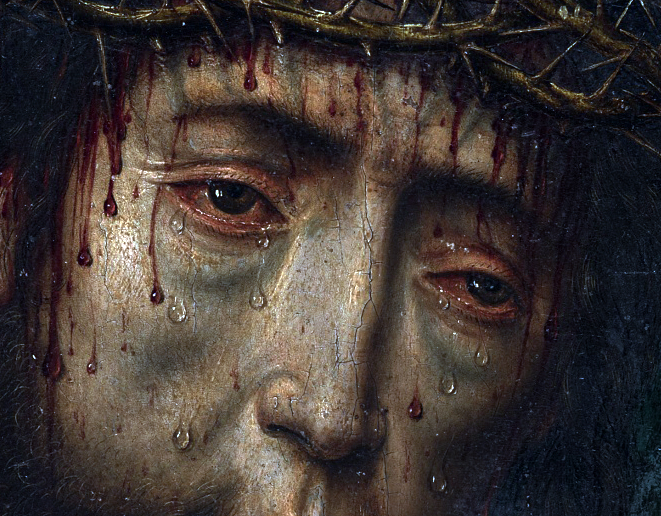
Aelbrecht Bouts (workshop of) – Christ crowned with thorns. Detail.
776106724756258816

“If I saw the art around me that I liked, then I wouldn’t do art.”
John Baldessari
Inflatable Women/Divers/Baby
1988
Black and white photographs, oil tint, and vinyl paint
91 x 72½ in.
Price realised
USD 314,500
775944506560430080

“You really need faith in yourself to make art and to stand up for what you believe in.”
Elizabeth Peyton
Balzac + Roses
2008
watercolour on paper
12 ¼ x 9 in.
Estimate
GBP 50,000 – GBP 70,000
775747641573277696

“There are no rules. That is how art is born, how breakthroughs happen. Go against the rules or ignore the rules. That is what invention is about.”
Helen Frankenthaler
Elberta
1975
acrylic on canvas
79 x 97 in.
Price realised
USD 4,285,000
775482691897491456

“I’d always wanted to know the difference between a mark that was art and one that wasn’t.” — Roy Lichtenstein
Roy Lichtenstein (1923-1997)
Kiss III
1962
Magna on canvas
64 x 48 in.
Price realised
USD 31,135,000
775454845106896896
Choosing quality over quantity means that you’re more invested in choosing things that can stand the test of time over choosing many things that could easily fall apart. It’s a concept that applies to many areas of life.
775325262415003649
“The value of art lies in its power to inspire, not in its price tag.”
— Unknown