drawing
783606527494946816
“The world is burning, people are barely holding on — and millionaires are betting on dead pieces of canvas. Yes, I said it: a piece of canvas. Because art is meant to live, to breathe, to move us — not to be traded like stock or hoarded like trophies. But in their hands, it’s just a price tag. And that’s the tragedy!”
— User comment on Sotheby’s Art Auction Sale Falls
783434460759801856

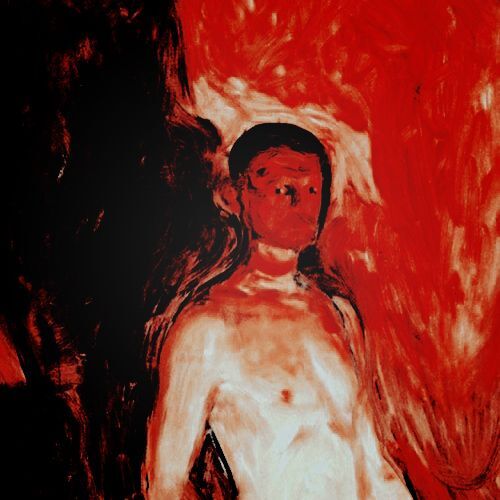
Edvard Munch (Norwegian, 1863-1945), Melancholy Man and Mermaid (Encounter on the Beach), c.1896-1902. Pastel and wash on paper, 25.3 x 34 cm.
783299666618056704
“Painting is self-discovery. Every good artist paints what he is.”
— Jackson Pollock
782709740058951681

Proteus, Cy Twombly. 1984.
782494155075174400
Van Gogh sold one painting in his lifetime. Was he not an artist?
782442125684047872
Let Art Speak
The use of art descriptions and explanations—especially written ones—has a deep history, but the formal practice developed over time in stages, especially as art moved into public institutions and became part of intellectual discourse.
1. Early Religious and Royal Patronage (before the 1500s):
- No written descriptions were common, but symbolic meaning was built into the artwork itself—especially in religious art.
- In churches, priests or scholars explained artwork to the public orally, especially since most people were illiterate.
- In royal courts, court artists or patrons might include inscriptions or heraldic symbols to convey identity or meaning.
2. Renaissance (1400s–1600s):
- Artists began signing their work and sometimes included Latin inscriptions or visual clues to indicate meaning.
- Thinkers like Vasari (in Lives of the Artists, 1550) began writing biographies and interpretations of artists’ works—this was an early form of art writing and interpretation.
- Patrons also began commissioning works with specific meanings or allegories, often recorded in letters or contracts.
3. Baroque & Enlightenment (1600s–1700s):
- Art academies emerged (like the French Académie des Beaux-Arts), and with them came formal rules and rationales for what art should do.
- Exhibition catalogues started to appear, offering short descriptions of artworks shown in salons or royal collections.
- Paintings were often described in terms of themes, moral lessons, or classical references.
4. Romanticism & Realism (1800s):
- As artists sought to express personal emotion or social truth, art critics like Baudelaire began to write about art in newspapers and books.
- Artists started writing manifestos or letters explaining their intentions (e.g., Courbet’s political realism).
- Public museums like the Louvre or British Museum began offering labels and guided tours—bringing written description to mass audiences.
5. Modernism (1900s):
- As art became more abstract, the need for explanation grew—leading to manifestos (e.g., Futurism, Dada, Surrealism).
- Art critics and theorists like Greenberg, Benjamin, and Berger began interpreting and contextualizing work for readers.
- Museums introduced more sophisticated wall texts, catalogues, and artist statements.
6. Contemporary Art (1970s–present):
- Art description has become nearly standardized—most galleries and museums now include:
- Artist statements
- Curatorial essays
- Wall labels with conceptual and historical context
- Conceptual and installation art especially requires explanation, as the idea is often not visible in the object.
So, while symbolic and oral explanation existed in ancient and medieval times, formal art descriptions as we know them today really took off during the Renaissance, then institutionalized in the Enlightenment, and became essential in Modern and Contemporary art.
by ChatGPT