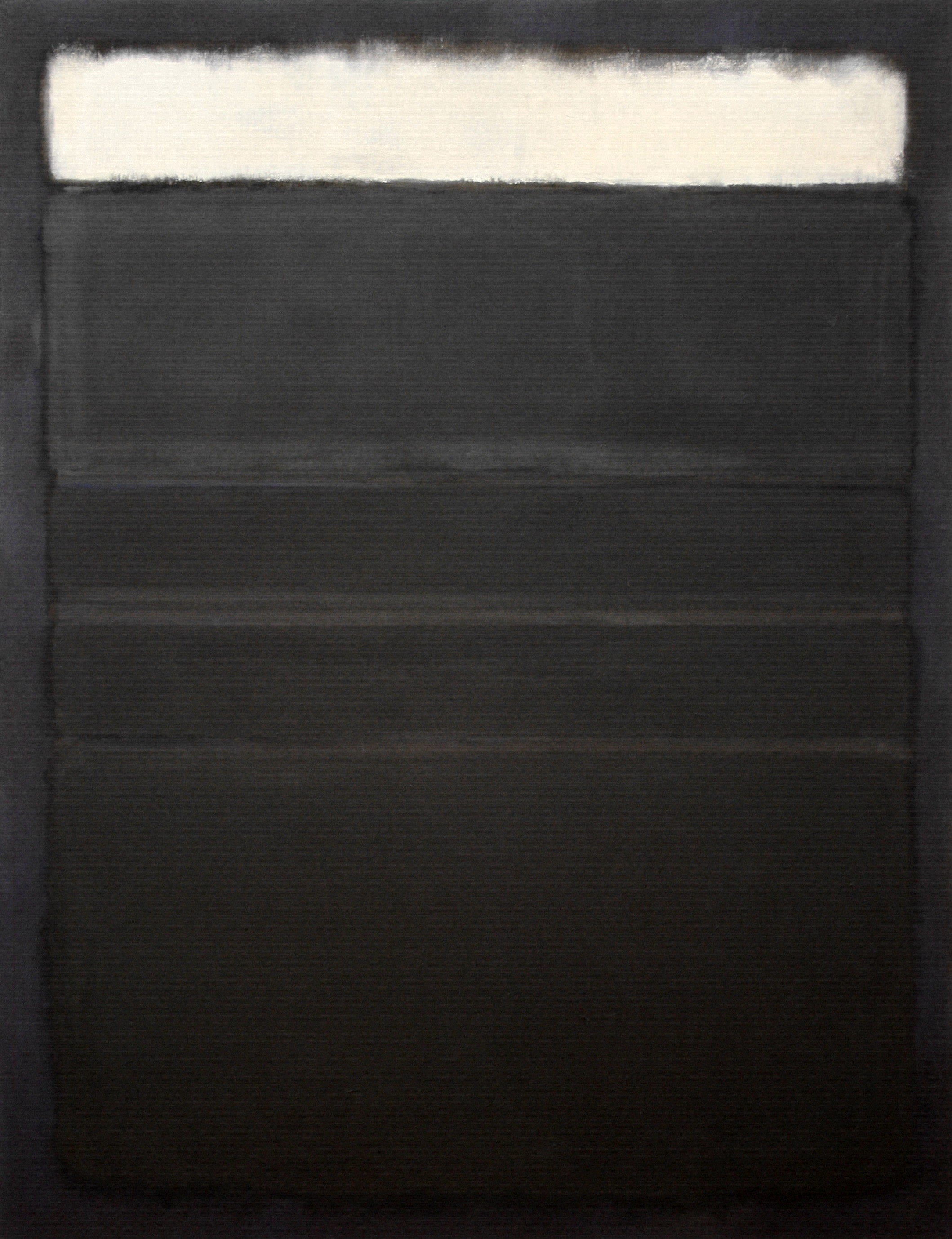
“An artist fights to retain the integrity of a work so that it remains a strong, clear vision. Art is and should be the act of an individual willing to say something new, something not quite familiar.”
Maya Lin Vietnam Veterans Memorial, 1982 National Mall, Washington D.C.
Sponsor: Vietnam Veterans Memorial Fund Architect of Record: Cooper-Lecky Partnership Landscape Architect: Henry Arnold Photography: Terry Adams, Mark Segal, Victoria Sambunaris, Wendy Watriss
“Art has been valued and given importance through the artist, regarded as the one who creates something wondrous and beautiful. At a certain point, artists within that way of thinking often distance themselves more and more from the community and society. In Thai education, this system of teaching and learning art is still being used.”
“When art is no longer the center of the universe, then artists are not either. This has been a question asked of artists since the time of Walter Benjamin. He spoke about this long ago, and it has been written about for a long time.
“In the modernist view, the artist was seen as something close to a superhuman — exalted as someone with supreme specialness, with an intuition that could not be explained. When the artist was elevated above us, above the university guard or the noodle vendor next door, the artist became like a kind of demi-god, regarded as more special than anyone else.
“In fact, in contemporary thought, the artist is like a motorcycle taxi driver — it’s just another profession. We work within a framework of knowledge that is not some kind of miracle. And art itself depends on other bodies of knowledge.”
Jiradej Meemalai Co-founder of ‘Baan Noorg Collaborative Arts & Culture’
“เมื่อศิลปะไม่เป็นศูนย์กลางจักรวาล ศิลปินก็จะไม่เป็นด้วย ซึ่งศิลปินเคยถูกตั้งคำถามนี้มาตั้งแต่สมัย Benjamin Walter เขาพูดเรื่องนี้มานานแล้ว หนังสือก็เขียนมานานแล้ว
“I don’t think it’s necessary to be original. It’s necessary to be honest.”
Martin Creed: What’s the point of it? is the first major retrospective of Creed’s ingenious and often highly provocative work. Since the beginning of his career, when he made small objects that could be placed anywhere, Creed has made work that questions the very nature of art and challenges taboos. His work takes on a multitude of forms—from sculpture, paintings, neons, films and installations, to music and performance—appearing both in the art gallery and in broader public circulation. At once rigorous and humorous, his art continually surprises, disrupts and overturns our expectations. It reflects on the unease we face in making choices, the comfort we find in repetition, the desire to control, and the inevitable losses of control that shape existence.
Martin Creed Work No. 88 1995 A sheet of A4 paper crumpled into a ball.
“The whole thing [about] art and money is ridiculous. The value of a painting at auction is not necessarily the value of the painting. It’s the value of two people bidding against each other because they really want the painting.”
“When I was a younger man, art was a lonely thing. No galleries, no
collectors, no critics, no money. Yet, it was a golden age, for we all
had nothing to lose and a vision to gain. Today it is not quite the
same. It is a time of tons of verbiage, activity, consumption. Which
condition is better for the world at large I shall not venture to
discuss. But I do know, that many of those who are driven to this life
are desperately searching for those pockets of silence where we can root
and grow. We must all hope we find them.”
“I have found that in accepting and immersing myself in subject matter I paint with more intensity and that the ‘hows’ of painting are more inevitably determined by the ‘whats’.” — David Park
David Park (1911-1960) Two People in White 1957 oil on canvas 24 x 32 in. Price realised USD 378,000
“You don’t need a special place to meditate. You can transcend anywhere in the world. The unified field is here, and there, and everywhere.” — David Lynch _ Gravitational force: a long-range attraction that influences all particles.
The Unified Field of Consciousness Series: Gravitational. 2023 Digital art 3000 x 4500 px Software: Adobe Illustrator
Created by the human mind and handcrafted.
Only NFTs are available in our store. OBO (or best offer price).
“Art has been valued and given importance through the artist, regarded as the one who creates something wondrous and beautiful. At a certain point, artists within that way of thinking often distance themselves more and more from the community and society. In Thai education, this system of teaching and learning art is still being used.”
“When art is no longer the center of the universe, then artists are not either. This has been a question asked of artists since the time of Walter Benjamin. He spoke about this long ago, and it has been written about for a long time.
“In the modernist view, the artist was seen as something close to a superhuman — exalted as someone with supreme specialness, with an intuition that could not be explained. When the artist was elevated above us, above the university guard or the noodle vendor next door, the artist became like a kind of demi-god, regarded as more special than anyone else.
“In fact, in contemporary thought, the artist is like a motorcycle taxi driver — it’s just another profession. We work within a framework of knowledge that is not some kind of miracle. And art itself depends on other bodies of knowledge.”
Jiradej Meemalai Co-founder of ‘Baan Noorg Collaborative Arts & Culture’
“เมื่อศิลปะไม่เป็นศูนย์กลางจักรวาล ศิลปินก็จะไม่เป็นด้วย ซึ่งศิลปินเคยถูกตั้งคำถามนี้มาตั้งแต่สมัย Benjamin Walter เขาพูดเรื่องนี้มานานแล้ว หนังสือก็เขียนมานานแล้ว