Édouard Manet
156301316252
“It is not enough to know your craft – you have to have feeling. Science is all very well, but for us imagination is worth far more.”
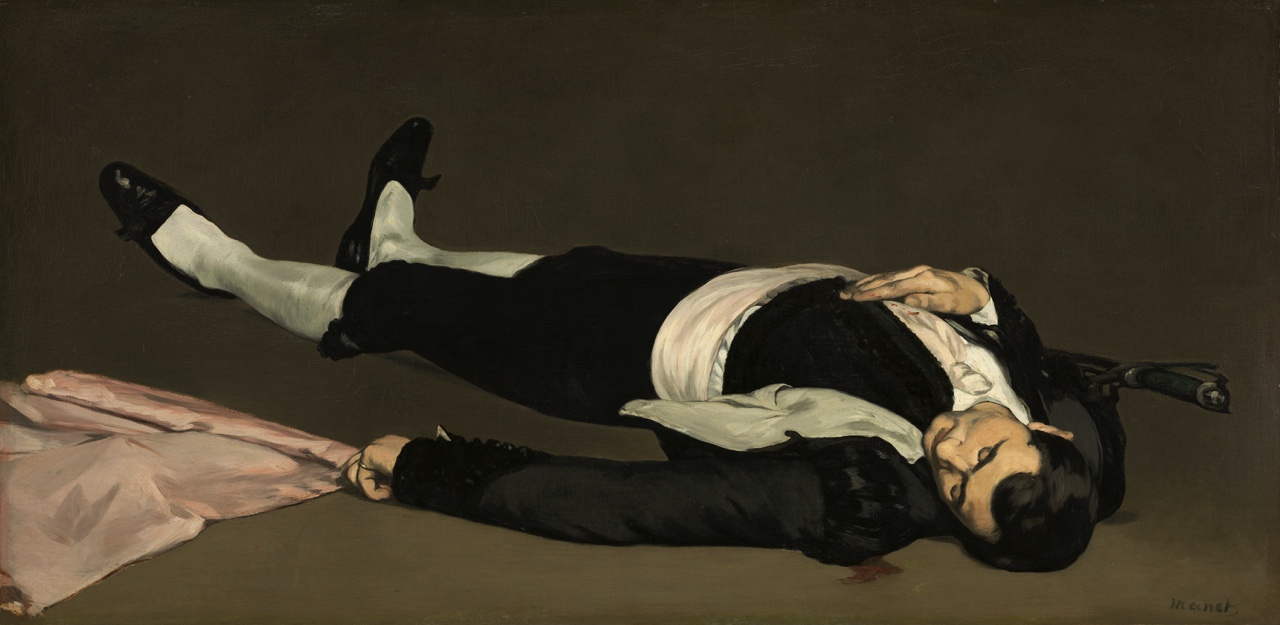
The Dead Bullfighter
1864-1865, oil on canvas
76 × 153.3 cm (29.9 × 60.4 in)
by Édouard Manet
149496814392
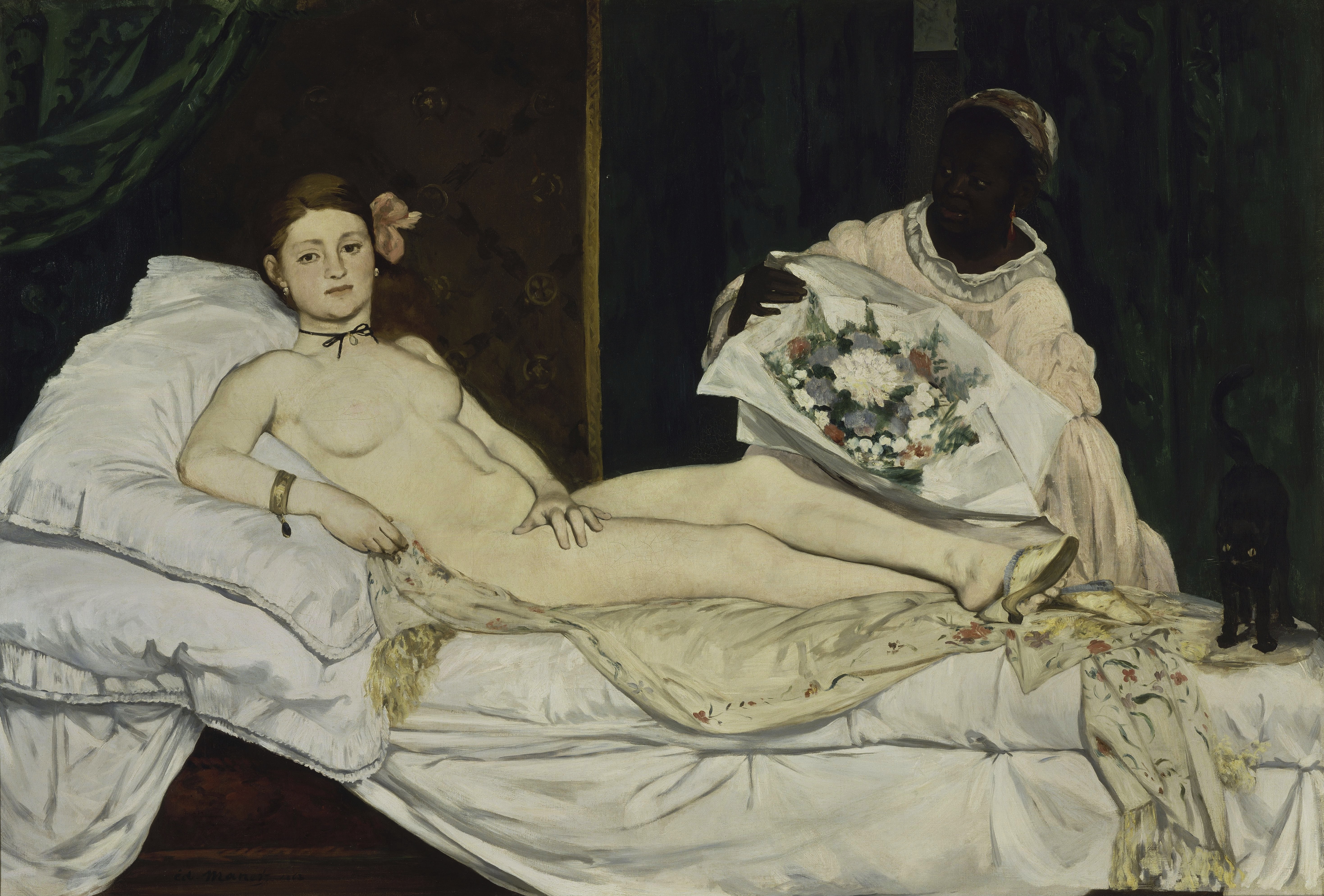
Olympia, 1863 by Edouard Manet
Though Manet’s The Luncheon on the Grass (Le déjeuner sur l’herbe) sparked controversy in 1863, his Olympia stirred an even bigger uproar when it was first exhibited at the 1865 Paris Salon. Conservatives condemned the work as “immoral” and “vulgar.”[1] Journalist Antonin Proust later recalled, “If the canvas of the Olympia was not destroyed, it is only because of the precautions that were taken by the administration.” The critics and the public condemned the work alike. Even Émile Zola was reduced to disingenuously commenting on the work’s formal qualities rather than acknowledging the subject matter, “You wanted a nude, and you chose Olympia, the first that came along”.[9] He paid tribute to Manet’s honesty, however, “When our artists give us Venuses, they correct nature, they lie. Édouard Manet asked himself why lie, why not tell the truth; he introduced us to Olympia, this fille of our time, whom you meet on the sidewalks.”[10]
146258065812
THE HISTORY OF IMPRESSIONISM – Discovery Art Artist (documentary)
143697051192
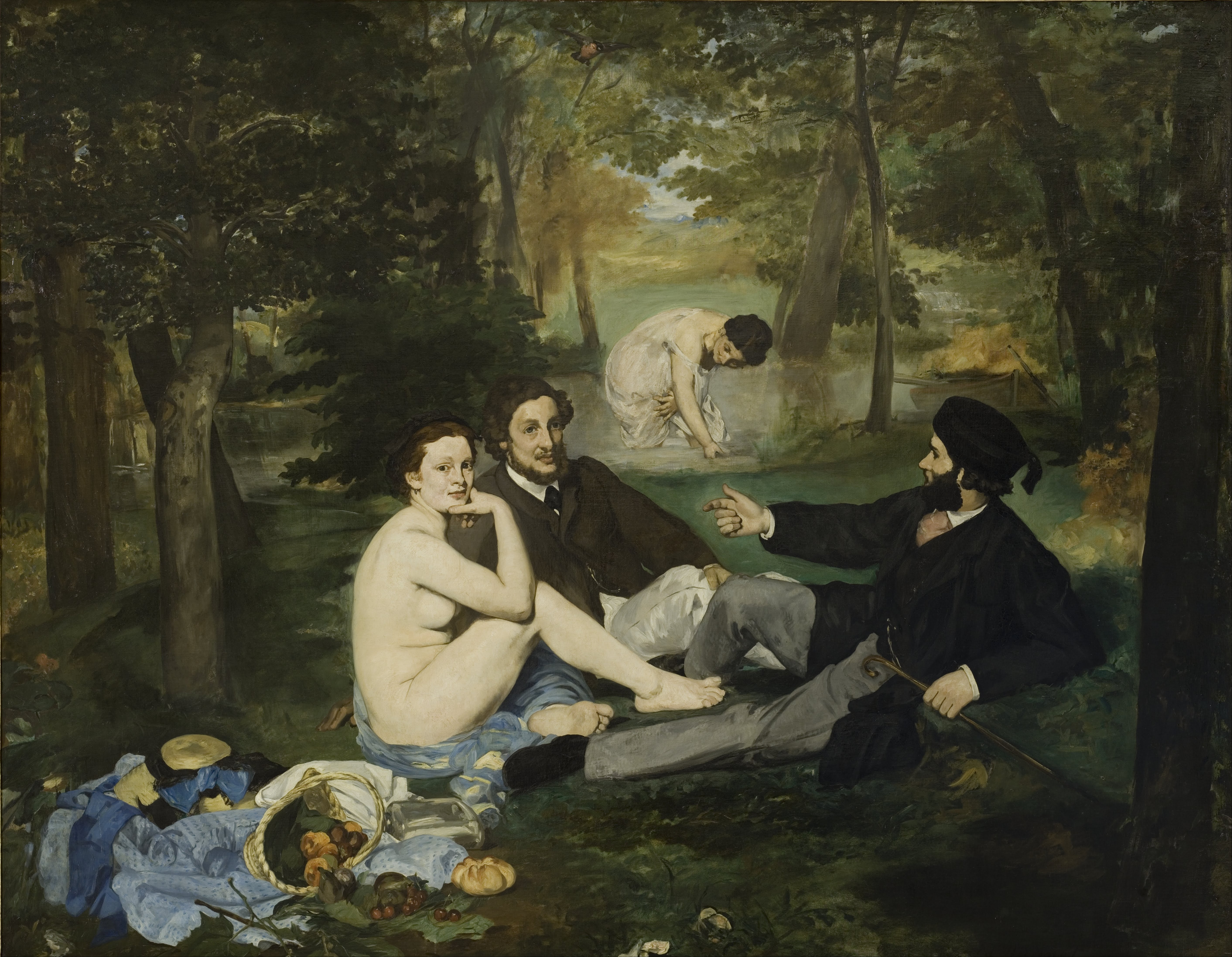
The Luncheon on the Grass by Édouard Manet
142657316272
Impressionism
A French 19th century art movement which marked a momentous break from tradition in European painting. The Impressionists incorporated new scientific research into the physics of colour to achieve a more exact representation of colour and tone.
The sudden change in the look of these paintings was brought about by a change in methodology: applying paint in small touches of pure colour rather than broader strokes, and painting out of doors to catch a particular fleeting impression of colour and light. The result was to emphasise the artist’s perception of the subject matter as much as the subject itself.
Impressionist art is a style in which the artist captures the image of an object as someone would see it if they just caught a glimpse of it. They paint the pictures with a lot of color and most of their pictures are outdoor scenes. Their pictures are very bright and vibrant. The artists like to capture their images without detail but with bold colors. Some of the greatest impressionist artists were Edouard Manet, Camille Pissaro, Edgar Degas, Alfred Sisley, Claude Monet, Berthe Morisot and Pierre Auguste Renoir.