enlightenment
790230193275027456

Aleister Crowley (1875–1947)
Founder of: Thelema
Major Work: The Book of the Law (Liber AL vel Legis)
Philosophy: Mystical, esoteric, and individualistic
Motto: Do what thou wilt shall be the whole of the Law
Key Points:
- Deeply immersed in ceremonial magic, Eastern mysticism, Qabalah, and the Golden Dawn traditions.
- Claimed to be the prophet of a new Aeon (the Aeon of Horus), with Thelema as its spiritual law.
- Emphasized personal spiritual development and breaking social/moral constraints.
- Considered both a mystic and a hedonist, but was genuinely pursuing spiritual enlightenment.
- Seen as a genuine occultist, often cryptic, symbol-rich, and difficult to interpret.
- Called “The Great Beast 666,” though largely as an ironic jab at Christian values.
783792227756507136
Thinking is difficult, that’s why most people judge.
—Carl Gustav Jung
773337963018977280
Thinking is difficult, that’s why most people judge.
—Carl Gustav Jung
773337712259432448
“One does not become enlightened by imagining figures of light, but by making the darkness conscious.”
— C.G. Jung
754036948359938048
‘The art of Zen’ education resource: History of Zen Buddhism
“Zen is a school of Buddhism which emphasises the practice of meditation as the key ingredient to awakening ones inner nature, compassion and wisdom. The practice of meditation (Zen in Japanese) as a means of attaining enlightenment was introduced, as we have seen, by the Buddha himself. Zen approached Buddhism in the most direct, simple and practical way. It grasped that enlightenment was the most fundamental aspect of Buddhism and thus did away with sacred scriptures, rituals and objects of worship, all of which had become a major aspect of Mahayana Buddhism in India.”
753538699337269248
The Origins of Zen
In Zen Buddhism, the main goal is not exactly “Nirvana” as understood in some other Buddhist traditions. Instead, Zen focuses on achieving “satori” or “kensho,” which are terms for enlightenment or awakening. This awakening is a direct, experiential realization of one’s true nature or the true nature of reality.
While Nirvana in broader Buddhist context often refers to the liberation from the cycle of birth and death (samsara) and the end of suffering, Zen emphasizes a more immediate and experiential understanding. Zen practice involves meditation (zazen), mindfulness, and direct experience, often guided by a teacher, to awaken to the present moment and one’s true self.
In essence, while both Zen and other Buddhist traditions aim for enlightenment and liberation, Zen’s approach is more focused on direct, immediate experience and awakening in the present moment.
By ChatGPT
727357415377584128
In Buddhism, enlightenment (called bodhi in Indian Buddhism, or satori in Zen Buddhism) is when a Buddhist finds the truth about life and stops being reborn because they have reached Nirvana. Once you get to Nirvana you are not born again into samsara (which is suffering).
Enlightenment (Buddhism) – Simple English Wikipedia, the free encyclopedia
727168182076522496
654798212470800384
One does not become enlightened by imagining figures of light, but by making the darkness conscious.
127459413402
หลวงพ่อชาและหลวงพ่อสุเมโธ เผยแผ่พุทธศาสนาที่อังกฤษปี 2520
115200944112
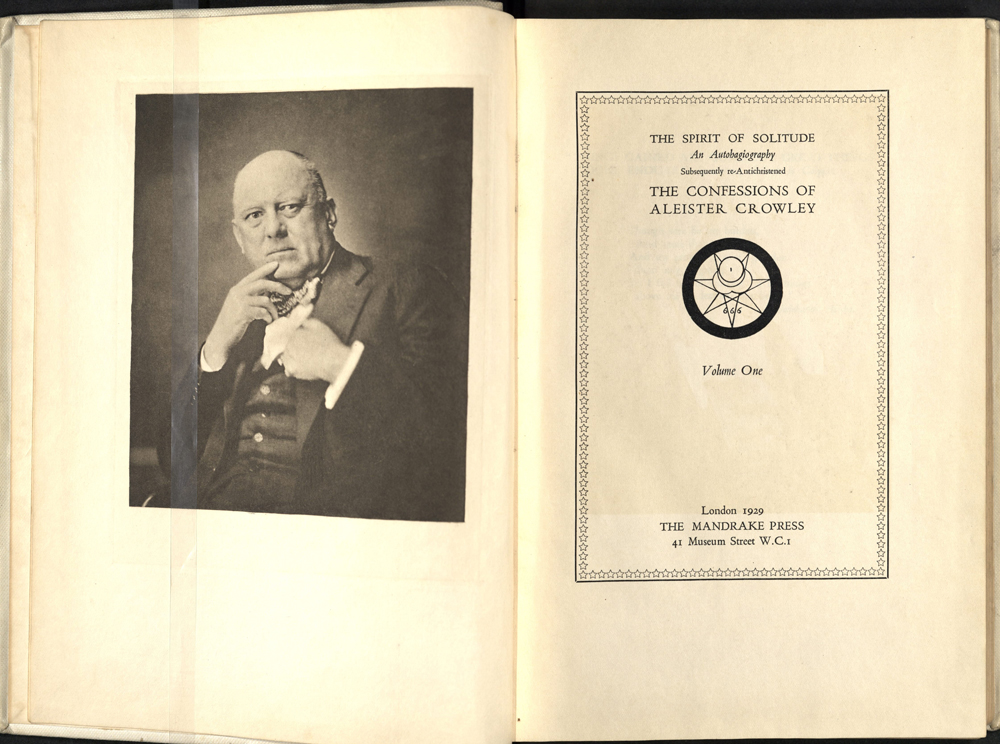
The Confessions of Aleister Crowley
112813789722

“The fact that there is a Beginning or an End is just a concept seeded into your mind by society. YOU are Constant, Continuous, Infinite Energy
and Energy never ends it TRANSFORMS.”—anon-i-mus