fake
746518756388388864
745013343956467713
why do we deceive ourselves? and how do we overcome it?
People tend the deceive themselves in 4 ways.
1. IT’S TRUE IF I BELIEVE IT.
2. IT’S TRUE IF WE BELIEVE IT.
3. IT’S TRUE IF I WANT TO BELIEVE IT.
4. IT’S TRUE IF IT SERVES MY VESTED INTEREST TO BELIEVE IT.
743606096210640896
How self-deception allows people to lie
We lie to ourselves to protect our self-images, which allows us to act immorally while maintaining a clear conscience. According to the very latest research, self-deception may have even evolved to help us to persuade others; if we start believing our own lies, it’s much easier to get other people to believe them, too.
743382326224027648
What are we hiding from ourselves?
What truths are we running from?
743381865429434368
Self-Deception: Why We Do It and How to Stop It
We all do it. We engage in self-deception—hiding the truth from ourselves about our true feelings, motives, or circumstances. When we’re deceiving ourselves, we’re denying evidence, logic, or reality and rationalizing choices or behaviors to serve a false narrative. We’re not seeing or viewing things accurately. Our self-deception can be conscious or unconscious, controlled or automatic, acute or chronic.
Masaru Emoto
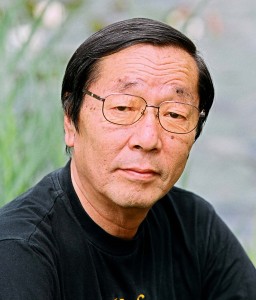
Commentators have criticized Emoto for insufficient experimental controls and for not sharing enough details of his experiments with the scientific community.[9][17] He has also been criticized for designing his experiments in ways that permit manipulation or human error.[9][18] Biochemist and Director of Microscopy at University College Cork William Reville wrote, “It is very unlikely that there is any reality behind Emoto’s claims.”[9] Reville noted the lack of scientific publication and pointed out that anyone who could demonstrate such phenomena would become immediately famous and probably wealthy.[9]
Writing about Emoto’s ideas in the Skeptical Inquirer, physician Harriet A. Hall concluded that it was “hard to see how anyone could mistake it for science”.[5] In 2003, James Randi published an invitation on his website, offering Emoto to take the One Million Dollar Paranormal Challenge, in which Emoto could have received US$1,000,000 if he had been able to reproduce the experiment under test conditions agreed to by both parties. Randi did not receive a response.[19]
737330028486049792
“Commentators have criticized Emoto for insufficient experimental controls and for not sharing enough details of his experiments with the scientific community. He has also been criticized for designing his experiments in ways that permit manipulation or human error. Biochemist and Director of Microscopy at University College Cork William Reville wrote, “It is very unlikely that there is any reality behind Emoto’s claims.” Reville noted the lack of scientific publication and pointed out that anyone who could demonstrate such phenomena would become immediately famous and probably wealthy.
Writing about Emoto’s ideas in the Skeptical Inquirer, physician Harriet A. Hall concluded that it was “hard to see how anyone could mistake it for science”. In 2003, James Randi published an invitation on his website, offering Emoto to take the One Million Dollar Paranormal Challenge, in which Emoto could have received US$1,000,000 if he had been able to reproduce the experiment under test conditions agreed to by both parties. Randi did not receive a response.”
736938743475388416
“[The bullshitter] does not reject the authority of the truth, as the liar does, and oppose himself to it. He pays no attention to it at all. By virtue of this, bullshit is a greater enemy of the truth than lies are.”
— Harry Frankfurt (On Bullshit, p. 61)
736771611158544384
“It is impossible for someone to lie unless he thinks he knows the truth. Producing bullshit requires no such conviction. A person who lies is thereby responding to the truth, and he is to that extent respectful of it. When an honest man speaks, he says only what he believes to be true; and for the liar, it is correspondingly indispensable that he considers his statements to be false. For the bullshitter, however, all these bets are off: he is neither on the side of the true nor on the side of the false. His eye is not on the facts at all, as the eyes of the honest man and of the liar are, except insofar as they may pertain to his interest in getting away with what he says. He does not care whether the things he says describe reality correctly. He just picks them out, or makes them up, to suit his purpose.”
— Harry Frankfurt (On Bullshit, pp. 55-56)
735998322111807488
735730450344083456
735382183714455552
“Anyhow, the older I get, the less impressed I become with originality. These days, I’m far more moved by authenticity. Attempts at originality can often feel forced and precious, but authenticity has quiet resonance that never fails to stir me.”
— Elizabeth Gilbert
735175123531923456
Authentic: Merriam-Webster’s word of the year
Welcome to the Real World