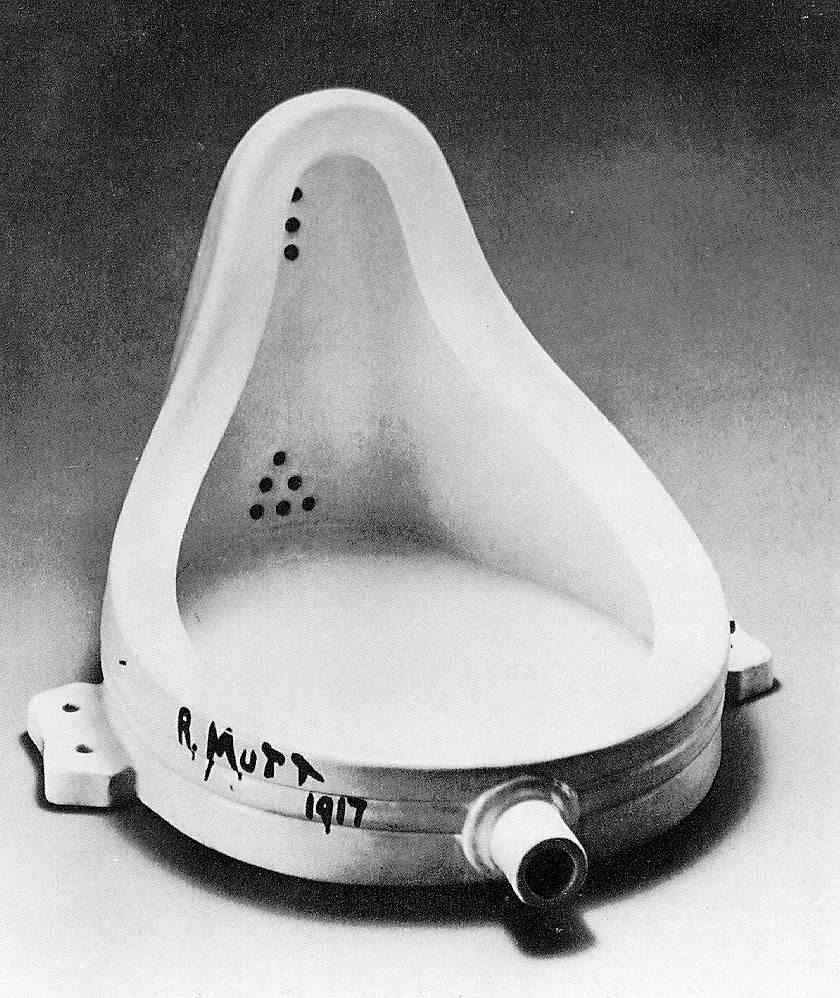
“Art for the most part, is about concentration, solitude and determination. It’s really not about other people’s needs and assumptions. I’m not interested in the notion that art serves something. Art is useless, not useful.”
“An artist fights to retain the integrity of a work so that it remains a strong, clear vision. Art is and should be the act of an individual willing to say something new, something not quite familiar.”
Maya Lin Vietnam Veterans Memorial, 1982 National Mall, Washington D.C.
Sponsor: Vietnam Veterans Memorial Fund Architect of Record: Cooper-Lecky Partnership Landscape Architect: Henry Arnold Photography: Terry Adams, Mark Segal, Victoria Sambunaris, Wendy Watriss
“There is a big stone. Do you consider it to be inside or outside your mind?” ⠀ Abstract Art Series: The Stone Mind Poster. Size: 18 x 24 in. On a matte paper. Heavyweight stock.
Both physical and NFT items are now available in our store.
“Museums are managers of consciousness. They give us an
interpretation of history, of how to view the world and locate ourselves
in it. They are, if you want to put it in positive terms, great
educational institutions. If you want to put it in negative terms, they
are propaganda machines.”
“Art for the most part, is about concentration, solitude and determination. It’s really not about other people’s needs and assumptions. I’m not interested in the notion that art serves something. Art is useless, not useful.”
“Art for the most part, is about concentration, solitude and determination. It’s really not about other people’s needs and assumptions. I’m not interested in the notion that art serves something. Art is useless, not useful.”
Richard Serra (b. 1938, San Francisco) Strike: To Roberta and Rudy 1969–71 Hot-rolled steel 8 ft 1 in x 24 ft x 1 ½ in Guggenheim Museum, New York
“Museums are managers of consciousness. They give us an
interpretation of history, of how to view the world and locate ourselves
in it. They are, if you want to put it in positive terms, great
educational institutions. If you want to put it in negative terms, they
are propaganda machines.”
“What I never wanted in art – and why I probably didn’t belong in art – was that I never wanted viewers. I think the basic condition of art is the viewer: The viewer is here, the art is there. So the viewer is in a position of desire and frustration. There were those Do Not Touch signs in a museum that are saying that the art is more expensive than the people. But I wanted users and a habitat. I don’t know if I would have used those words then, but I wanted inhabitants, participants. I wanted an interaction.” — Vito Acconci
In January 1972, Acconci staged one of the decade’s most notorious performance art pieces at the Sonnabend Gallery in SoHo. Gallery visitors entered to find the space empty except for a low wood ramp. Hidden below the ramp, out of sight, Acconci masturbated, basing his fantasies on the movements of the visitors above him. He narrated these fantasies aloud, his voice projected through speakers into the gallery: “you’re on my left … you’re moving away but I’m pushing my body against you, into the corner … you’re bending your head down, over me … I’m pressing my eyes into your hair.” Seedbed was a seminal work that transformed the physical space of the gallery through minimal intervention to create an intimate connection between artist and audience, even as they remained invisible to one another.
Vito Acconci Seedbed 1972 Gelatin silver print 7 7/8 x 11 11/16 in.
Ideas have fathers One of the many destructive assumptions nowadays is that ideas have no fathers. But ideas are thought up by someone. For example, the concept of placing a sculpture on the ground without a plinth was one of Judd’s ideas; it is now very common and no one is aware of this. Another one of his ideas was the concept of the installation, the use of the whole space. Many artists devalue this idea. Once again there is no discussion at all and mediocre works are created. Art historians who are concerned with the past are at least still interested in chronology, those who work with contemporary art are not, and they see art as the subject for their own speculations.
Artist Donald Judd (1928 – 1994) held the 1993 Mondrian Lecture called ‘Some aspects of colour in general and red and black in particular’.
“One could consider that the choices made are like a paradox. It can be seen as a paradox for the painter to not choose the color of his canvas, but I want the charge-taker to decide, since ultimately he has to live with it.”— Claude Rutault
Claude Rutault was a French both minimalist and conceptual artist, best known for the original way of expression he created and named definition-method, which is basically a manual how to create his art piece.
Installation view of After the Masters: A Tribute to Claude Rutault (1941–2022) at Musée d’Orsay, 2023