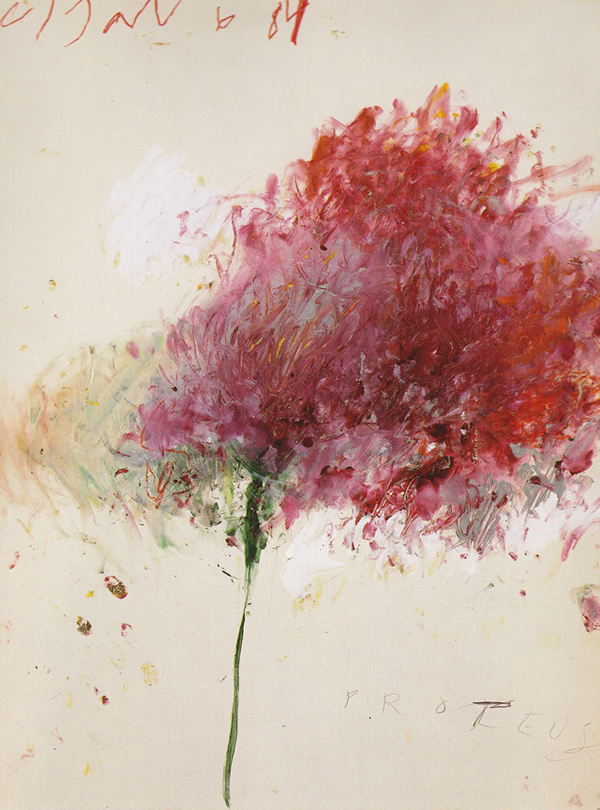
“The world is burning, people are barely holding on — and millionaires are betting on dead pieces of canvas. Yes, I said it: a piece of canvas. Because art is meant to live, to breathe, to move us — not to be traded like stock or hoarded like trophies. But in their hands, it’s just a price tag. And that’s the tragedy!”
— User comment on Sotheby’s Art Auction Sale Falls
“I am not interested in the kind of expression that you have when you
paint a painting with brush strokes. It’s all right, but it’s already
done and I want to do something new. I didn’t want to get into something
which is played out and narrow. I want to do as I like, invent my own
interests. Of course, that doesn’t mean that people who, like Newman,
still paint are worn out. But I think that’s a particular kind of
experience involving a certain immediacy between you and the canvass,
you and the particular kind of experience of that particular moment. I
think what I’m trying to deal with is something more long range than
that in a way, more obscure perhaps, more involved with things that
happen over a longer time perhaps. At least it’s another area of
experience.”
Artists should study art history for several reasons:
Inspiration and Influence – Understanding past movements, styles, and artists can provide fresh ideas and insights that influence an artist’s own work.
Technical and Conceptual Growth – Studying historical techniques, materials, and methods helps artists refine their own practice and expand their creative approach.
Context and Meaning – Art is often a response to cultural, political, and social issues. Knowing the historical context of art allows artists to create work with deeper meaning and relevance.
Avoiding Reinventing the Wheel – By learning from past successes and mistakes, artists can build upon existing knowledge rather than repeating what has already been done.
Developing a Critical Eye – Exposure to a variety of styles and critiques sharpens an artist’s ability to analyze and evaluate art, including their own.
Building a Personal Voice – Studying different artistic movements helps artists understand where they fit within the larger artistic tradition, allowing them to develop a unique style.
Professional and Academic Opportunities – Knowledge of art history can open doors in teaching, curation, and other art-related careers beyond personal practice.
Cultural Literacy – Understanding art history enriches an artist’s appreciation of global cultures and traditions, making their work more informed and impactful.
Ultimately, art history provides artists with a foundation of knowledge that can fuel creativity, enhance technique, and deepen the meaning of their work.
The phrase “Let art speak for itself” likely emerged from the broader philosophy that art should be experienced and interpreted directly by viewers, without requiring excessive explanation or commentary. It aligns with ideas from movements like Romanticism and Modernism, which emphasized the emotional, personal, or universal power of art.
Key Contexts for the Phrase:
1. Romanticism (18th-19th Century):
Romantic artists and thinkers believed in the innate ability of art to evoke emotions and connect directly to the human spirit, minimizing the need for verbal justification.
2. Modernism (late 19th-20th Century):
Modernist artists often rejected traditional rules and advocated for the autonomy of art. They believed that art could stand on its own without the constraints of narrative or explanation.
3. Art Criticism and Philosophy:
Thinkers like John Ruskin and Clement Greenberg contributed to the idea that art should be appreciated for its intrinsic qualities—form, texture, color—without relying heavily on external context.
“I try more and more to be myself, caring relatively little whether people approve or disapprove.” — Vincent Van Gogh
Vincent van Gogh (1853-1890) Laboureur dans un champ oil on canvas 19 7/8 x 25 ½ in. (50.3 x 64.9 cm.) Painted in Saint Rémy, early September 1889 Price realised: USD 81,312,500