novel
798422322021269504
The sun and moon had always shone; the rivers had always flowed and
the bees had hummed, but in previous times all this had been nothing to
Siddhartha but a fleeting and illusive veil before his eyes, regarded
with distrust, condemned to be disregarded and ostracized from the
thoughts, because it was not reality, because reality lay on the other
side of the visible. But now his thoughts lingered on this side; he saw
and recognized the visible and he sought his place in this world. He did
not seek reality; his goal was not on any other side. The world was
beautiful when looked at in this way—without any seeking, so simple, so
childlike. The moon and the stars were beautiful, the brook, the shore,
the forest and the rock, the goat and the golden beetle, the flower and
the butterfly were beautiful. It was beautiful and pleasant to go
through the world like that, so childlike, so awakened, so concerned
with the immediate, without any distrust. …All this had always been and he had never seen it; he was never
present. Now he was present and belonged to it. Through his eyes he saw
light and shadows; through his mind he was aware of moon and stars.—Siddhartha (novel) pp. 45-46 by Hermann Hesse
726311105284259840

“Odors have a power of persuasion stronger than that of words, appearances, emotions, or will. The persuasive power of an odor cannot be fended off, it enters into us like breath into our lungs, it fills us up, imbues us totally. There is no remedy for it.” — Patrick Süskind
166419880222
There’s a lot of ugly things in this world, son. I wish I could keep ’em all away from you. That’s never possible.
155239324342
The sun and moon had always shone; the rivers had always flowed and
the bees had hummed, but in previous times all this had been nothing to
Siddhartha but a fleeting and illusive veil before his eyes, regarded
with distrust, condemned to be disregarded and ostracized from the
thoughts, because it was not reality, because reality lay on the other
side of the visible. But now his thoughts lingered on this side; he saw
and recognized the visible and he sought his place in this world. He did
not seek reality; his goal was not on any other side. The world was
beautiful when looked at in this way—without any seeking, so simple, so
childlike. The moon and the stars were beautiful, the brook, the shore,
the forest and the rock, the goat and the golden beetle, the flower and
the butterfly were beautiful. It was beautiful and pleasant to go
through the world like that, so childlike, so awakened, so concerned
with the immediate, without any distrust. …
All this had always been and he had never seen it; he was never
present. Now he was present and belonged to it. Through his eyes he saw
light and shadows; through his mind he was aware of moon and stars.
—Siddhartha (novel) pp. 45-46 by Hermann Hesse
155238451267
The teaching which you have heard, however, is not my opinion, and
its goal is not to explain the world to those who are thirsty for
knowledge. Its goal is quite different; its goal is salvation from
suffering. That is what Gotama teaches, nothing else.
I have never seen a man look and smile, sit and walk like that, he
thought. I, also, would like to look and smile, sit and walk like that,
so free, so worthy, so restrained, so candid, so childlike and
mysterious. A man only looks and walks like that when he has conquered
his self. I also will conquer my self.
—Siddhartha (novel) p. 35 by Hermann Hesse
154605523027
What could I say to you that would be of value, except that perhaps you seek too much, that as a result of your seeking you cannot find. … When someone is seeking, it happens quite easily that he only sees the thing that he is seeking; that he is unable to find anything, unable to absorb anything, because he is only thinking of the thing he is seeking, because he has a goal, because he is obsessed with his goal. Seeking means: to have a goal; but finding means: to be free, to be receptive, to have no goal. You, O worthy one, are perhaps indeed a seeker, for in striving towards your goal, you do not see many things that are under your nose.
154454278462
How strange it is! Now, when I am no longer young, when my hair is fast growing gray, when strength begins to diminish, now I am beginning again like a child.
141974176034
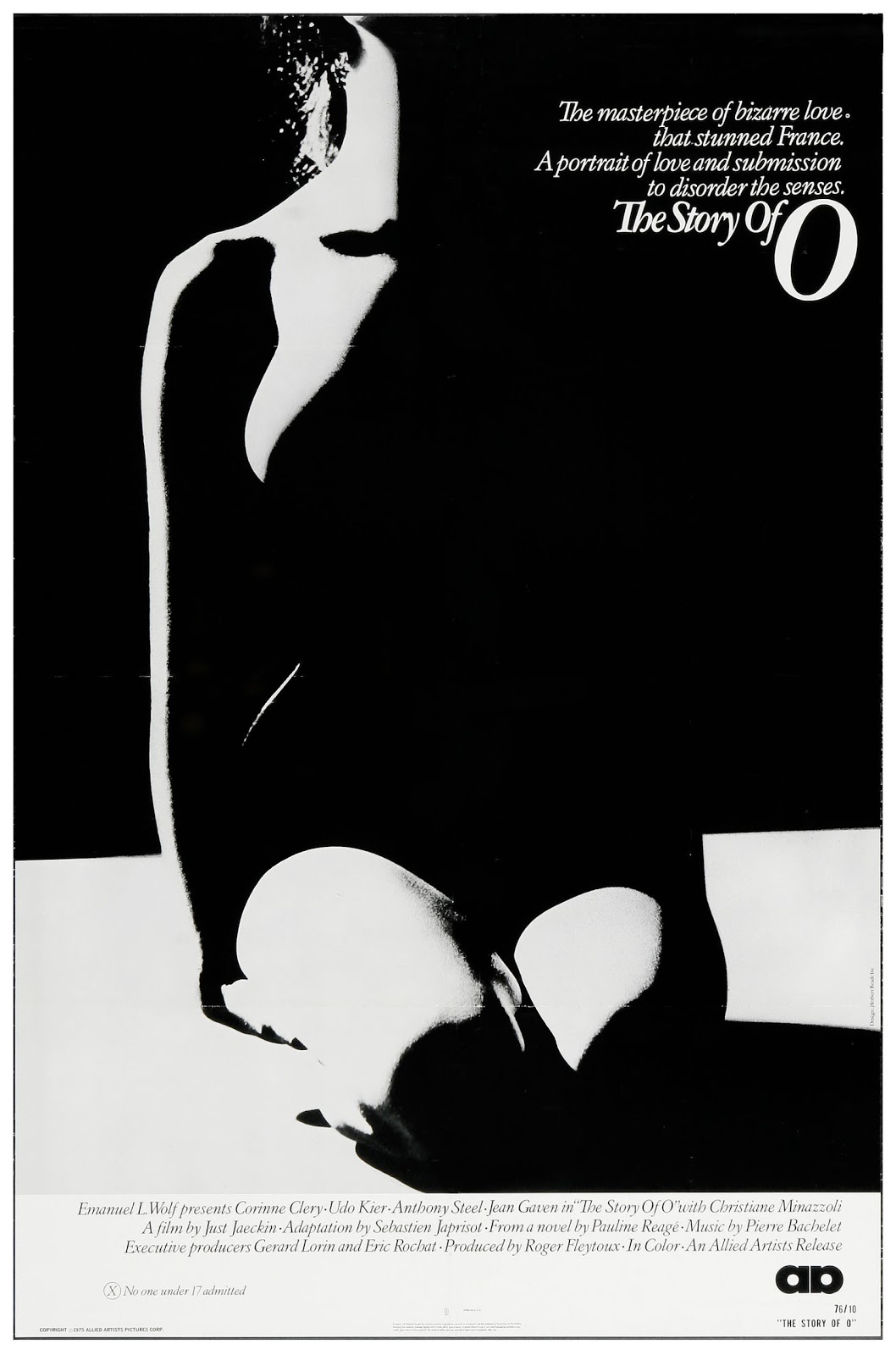
Story of O by Pauline Reage
117520105957
J. G. Ballard
NTERVIEWER
So, how do you write, exactly?
BALLARD
Actually, there’s no secret. One
simply pulls the cork out of the bottle, waits three minutes, and two
thousand or more years of Scottish craftsmanship does the rest.
INTERVIEWER
Let’s
start with obsession. You seem to have an obsessive way of repeatedly
playing out permutations of a certain set of emblems and concerns.
Things like the winding down of time, car crashes, birds and flying,
drained swimming pools, airports, abandoned buildings, Ronald Reagan…
BALLARD
I
think you’re completely right. I would say that I quite consciously
rely on my obsessions in all my work, that I deliberately set up an
obsessional frame of mind. In a paradoxical way, this leaves one free of
the subject of the obsession. It’s like picking up an ashtray and
staring so hard at it that one becomes obsessed by its contours, angles,
texture, et cetera, and forgets that it is an ashtray—a glass dish for
stubbing out cigarettes. Presumably all obsessions are extreme metaphors waiting to be born.
That whole private mythology, in which I believe totally, is a
collaboration between one’s conscious mind and those obsessions that,
one by one, present themselves as stepping-stones.
INTERVIEWER
Your work also seems tremendously influenced by the visual arts.
BALLARD
Yes, sometimes I think that all my writing is nothing more than the compensatory work of a frustrated painter.
INTERVIEWER
How does a book take shape for you?
BALLARD
That’s
a vast topic, and, to be honest, one I barely understand. Even in the
case of a naturalistic writer, who in a sense takes his subject matter
directly from the world around him, it’s difficult enough to understand
how a particular fiction imposes itself. But in the case of an
imaginative writer, especially one like myself with strong affinities to
the surrealists, I’m barely aware of what is going on. Recurrent ideas
assemble themselves, obsessions solidify themselves, one generates a set
of working mythologies, like tales of gold invented to inspire a crew. I
assume one is dealing with a process very close to that of dreams, a
set of scenarios devised to make sense of apparently irreconcilable
ideas. Just as the optical centers of the brain construct a wholly
artificial three-dimensional universe through which we can move
effectively, so the mind as a whole creates an imaginary world that
satisfactorily explains everything, as long as it is constantly updated.
INTERVIEWER
How many hours a day do you put in at the desk?
BALLARD
Two hours in the late morning, two in the early afternoon, followed by a walk along the river to think over the next day. Then at six, Scotch and soda, and oblivion.
INTERVIEWER
That sounds like the schedule of an efficient worker.
INTERVIEWER
Aside
from your adolescent dream of becoming a psychiatrist, do you have any
other pet daydreams about other lives, other careers?
BALLARD
I haven’t really had any private fantasies about an alternative life, even in the daydream sense. I rather like the idea of ending my days drinking myself to death on a mountainside in Mexico.
115466618802

113322050877