Quote of the Day
766617430301802496
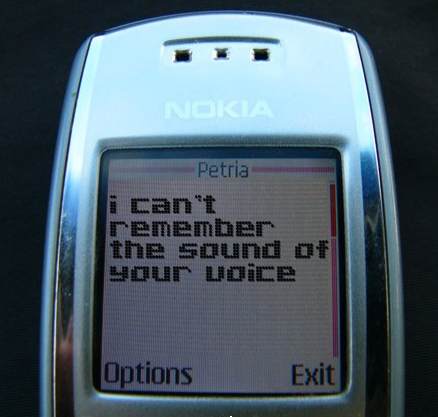
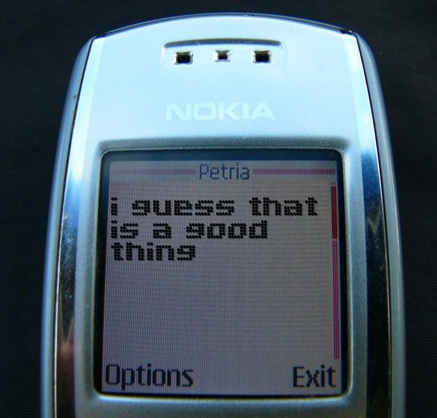
people are not made up of broken glass and the universe did not place
you here to complete them
766601719761256448
“Most people believe we have freewill. That we all choose our path. Sometimes the path is clear, sometimes not so much. Every twist, every turn, can challenge our sense of direction. But it’s the choices we make when we reach a fork in the road that define who we are.”
— Dexter Morgan
766442075340275712
AMERICA F#K YEAH! MUSIC VIDEO Team America World Police THEME SONG
766412907979423744
Finding creative ideas
Finding creative ideas can come from a blend of exploration, inspiration, and structure. Here are some techniques you can try:
- Divergent Thinking: Start with brainstorming without limits. Jot down as many ideas as possible, no matter how unconventional. Quantity often leads to quality by pushing past the obvious.
- Mind Mapping: Begin with a core concept and visually branch out with related ideas. This approach can reveal connections you hadn’t considered.
- Combine and Remix: Take two unrelated concepts and see if you can combine them into something new. For example, think about how the paper industry could intersect with environmental education, or how digital platforms can simulate real-world investment.
- Observe and Take Notes: Everyday life is a constant source of inspiration. Notice trends, user pain points, or processes that could be streamlined. Keep a notebook to capture these thoughts, even if they seem random at first.
- Reverse Thinking: Instead of asking “How can I create a great idea?”, try thinking in reverse—consider how not to solve a problem or list “don’ts” for a project. This can lead to breakthrough thinking by clarifying what you do want.
- Draw from Other Industries: Looking at innovation in completely different fields often brings fresh perspectives. For instance, if you’re in the paper industry, examine what the tech or entertainment industries are doing to engage customers and consider how you might apply similar strategies.
- Set Constraints: Ironically, limitations can fuel creativity. Setting a constraint like “this idea must be doable with only one material” forces you to think deeply about how to work within boundaries.
- Collaborate with Others: Bringing other perspectives into the mix can help generate more ideas and refine them. Try brainstorming sessions with people who have different backgrounds or expertise.
- Experiment and Prototype: Sometimes ideas only become clear through trial and error. Don’t wait for a perfect concept—build quick prototypes or mockups to test the feasibility and refine them as you go.
- Take Breaks: Finally, stepping away and engaging in different activities, like a walk or even enjoying a beer, can refresh your mind and lead to unexpected insights.
By ChatGPT
766254994475319296

By Erik Spiekermann
766148392498987008
Stop Making Stupid People Famous.
766148256878231552
“So bullshitting isn’t just nonsense. It’s constructed in order to appear meaningful, though on closer examination, it isn’t. And bullshit isn’t the same as lying. A liar knows the truth but makes statements deliberately intended to sell people on falsehoods. bullshitters, in contrast, aren’t concerned about what’s true or not, so much as they’re trying to appear as if they know what they’re talking about. In that sense, bullshitting can be thought of as a verbal demonstration of the Dunning-Kruger effect—when people speak from a position of disproportionate confidence about their knowledge relative to what little they actually know, bullshit is often the result.”
766064312316051456
“There is a time for everything, and a season for every activity under the heavens: a time to be born and a time to die, a time to plant and a time to uproot.”
— Ecclesiastes 3:1-2
765988887565910016
Without me, you are nothing.
765966529652211712

The Death card in tarot is often misunderstood due to its ominous name and imagery. However, it rarely signifies literal death. Instead, it represents transformation, change, and the end of a chapter to make way for new beginnings.
Here’s a breakdown of the Death card’s meanings:
1. Transformation and Transition
- The Death card is a powerful symbol of metamorphosis. It often signals the end of a phase, relationship, or belief system, allowing new growth. It encourages letting go of old habits or structures that no longer serve you.
2. Release and Letting Go
- This card often suggests releasing attachments. It can mean accepting loss or moving on from people, places, or things that are holding you back.
3. Cycles and Renewal
- Death is part of life’s natural cycle, and the Death card emphasizes that endings are necessary for beginnings. It serves as a reminder that every ending paves the way for a fresh start.
4. Rebirth and Personal Growth
- Seen positively, the Death card can be about rebirth and reinvention. It’s a chance to become a new version of yourself, shedding what no longer serves you.
5. Inverted (Reversed) Meaning
- When reversed, the Death card can indicate resistance to change, stagnation, or feeling stuck in a situation that needs closure. It can suggest that holding onto the past is blocking progress.
Key Themes
- Keywords: transformation, change, ending, release, rebirth.
- Archetypes: Phoenix rising from the ashes, the cycle of nature (seasons changing).
The Death card, while intense, is fundamentally about growth and evolution, encouraging acceptance of change as part of a healthy, evolving life journey.
765964713155772416
Living a Lie: We Deceive Ourselves to Better Deceive Others
“What’s so interesting is that we seem to intuitively understand that if we can get ourselves to believe something first, we’ll be more effective at getting others to believe it,” says William von Hippel, a psychologist at The University of Queensland, who co-authored the study. “So we process information in a biased fashion, we convince ourselves, and we convince others. The beauty is, those are the steps Trivers outlined—and they all lined up in one study.”
765958968585617408
“You copied my style.”
— 2Pac
765790122077749248
Homophobia refers to prejudice, fear, or dislike toward people who identify as or are perceived to be lesbian, gay, or bisexual. This bias can manifest in negative attitudes, discriminatory behavior, or harmful actions against individuals based on their sexual orientation. It can arise from cultural, social, or personal beliefs and may lead to exclusion, harassment, or violence directed at LGBTQ+ individuals.
765738326656532481
Coincidence
Carl Jung’s concept of *coincidence*, or more precisely, *synchronicity*, refers to the occurrence of meaningful events that appear related but lack any causal connection. Jung proposed that these coincidences are not merely random but reveal an underlying pattern or connection in the universe, which he called the *acausal connecting principle*. Synchronicity often emerges when a person is experiencing intense psychological shifts, serving as a sign or message aligned with their inner state. Jung believed this phenomenon connects the external world with internal psychological experiences, highlighting the deep interconnectedness of mind and matter.