The study showed that the activity of the CB?-receptors varied
according to a daily cycle, with lowest activity levels occurring at the
end of the daylight period. It also showed that levels of an enzyme
responsible for synthesizing new endocannabinoid molecules, NAPE-PLD,
was reduced during the middle of the dark period.
Furthermore, the study showed that presence of THC reduced the
activity of an enzyme known as AANAT, and in doing so reduces the
synthesis of melatonin itself. An earlier study on rats
also showed that THC reduced the activity of AANAT, and suggested that
the mechanism that occurred was as follows: the neurotransmitter
norepinephrine starts a cascade of reactions, the end result of which is
the production of melatonin. THC disrupts this norepinephrine cascade
and thereby reduces the production of melatonin.
It is likely that THC’s endogenous analogue anandamide performs the
same action of reducing the norepinephrine-induced release of melatonin,
and is therefore fundamentally involved in pineal gland function. It
seems that low levels of anandamide or THC are therefore needed in order
for melatonin production to increase. As melatonin levels increase, as
they should normally do at the end of the daylight period, feelings of
sleepiness should occur.
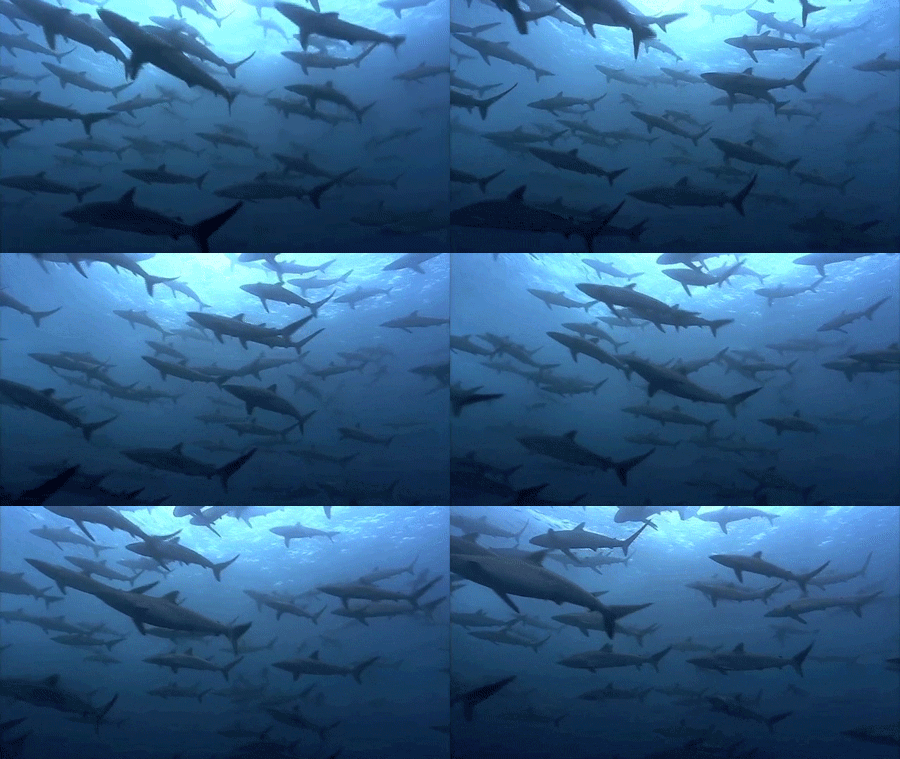
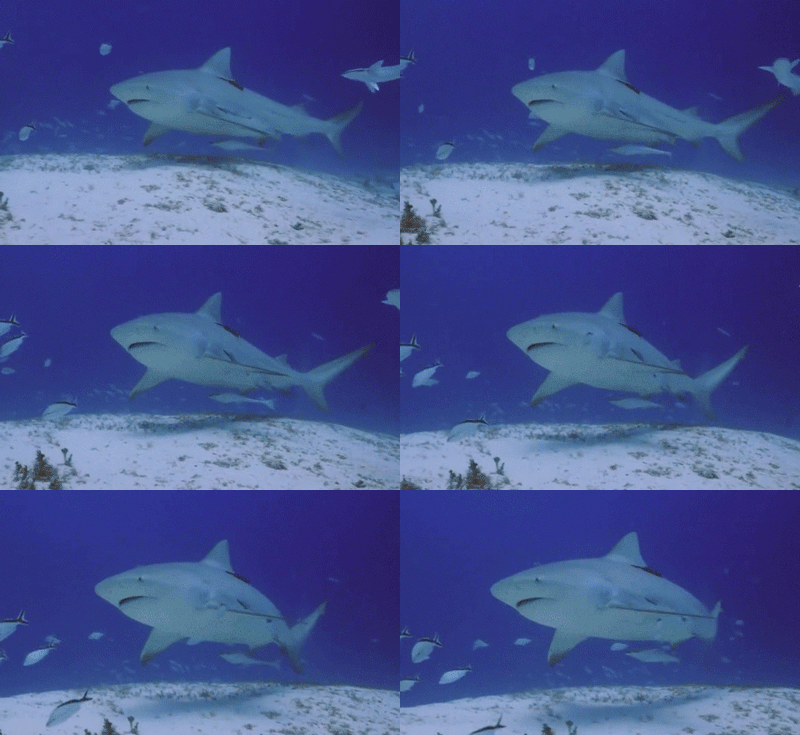
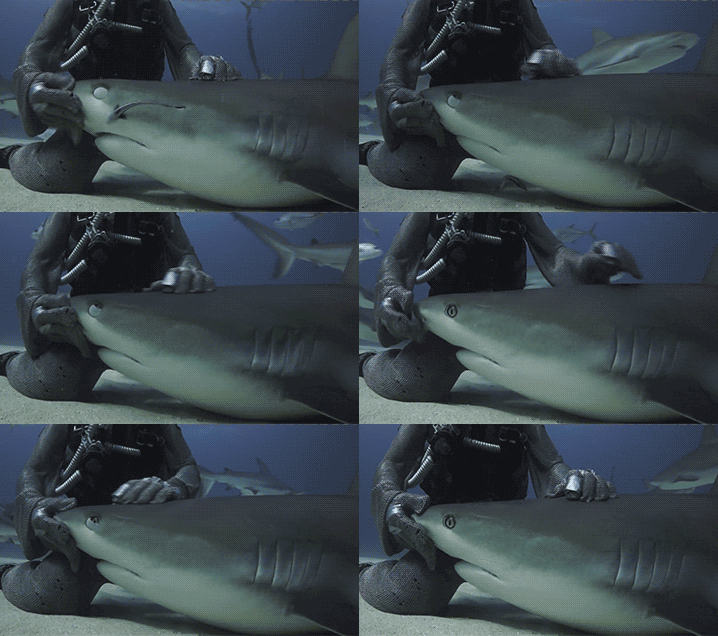
For too long, sharks have been portrayed and perceived as the menacing, lurking creatures in the deep. Contrary to popular belief, we are much more of a threat to them than they are to us.
Researchers have found that the ominous music that often accompanies even documentary footage of them has inspired excessive fear about sharks.
In an experiment at UC San Diego, participants watched footage of sharks. Some scenes featured uplifting music, and others had a more daunting score.
The effect was what you might expect. Viewers saw sharks as intimidating creatures when they they also heard ominous music.
But with uplifting music (or none at all), viewers had a more positive impression of sharks.
This is problematic because rarely do we see shark footage without the ominous music, and the negativeportrayals of sharks may be hindering conservation efforts.
“We know from prior research that conservation progress for sharks is sluggish compared to marine mammals and that this slow response may be due in part to the societal marginalization of sharks,” says study co-author Elizabeth Keenan.
After all, in the words of Senegalese conservationist Baba Diou, “we will conserve only what we love.”
And while they’re still not exactly a furry, cuddly rabbit, consider this: you’re more likely to be struck by lightening than fall prey to a fatal shark attack.
“The problem, often not discovered until late in life, is that when you
look for things in life like love, meaning, motivation, it implies they
are sitting behind a tree or under a rock. The most successful people in
life recognize, that in life they create their own love, they
manufacture their own meaning, they generate their own motivation. For
me, I am driven by two main philosophies, know more today about the
world than I knew yesterday. And lessen the suffering of others. You’d
be surprised how far that gets you.” — Neil deGrasse Tyson