Science
117531635660
I would love to believe that when I die I will live again, that some thinking, feeling, remembering part of me will continue. But much as I want to believe that, and despite the ancient and worldwide cultural traditions that assert an afterlife, I know of nothing to suggest that it is more than wishful thinking. The world is so exquisite with so much love and moral depth, that there is no reason to deceive ourselves with pretty stories for which there’s little good evidence. Far better it seems to me, in our vulnerability, is to look death in the eye and to be grateful every day for the brief but magnificent opportunity that life provides.
117527731647
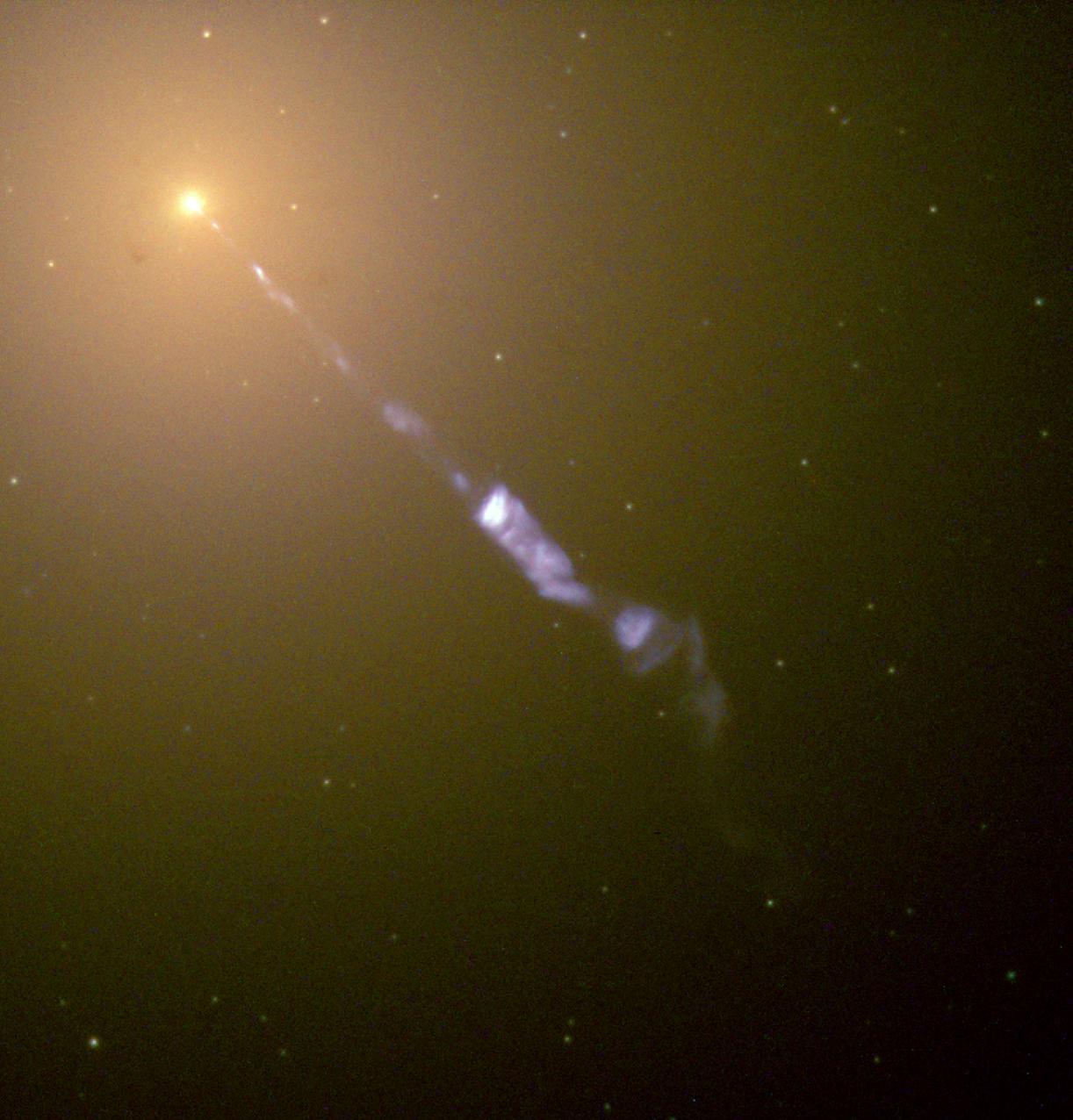
Black Hole-Powered Jet of Electrons and Sub-Atomic Particles Streams From Center of Galaxy M87
117445794437
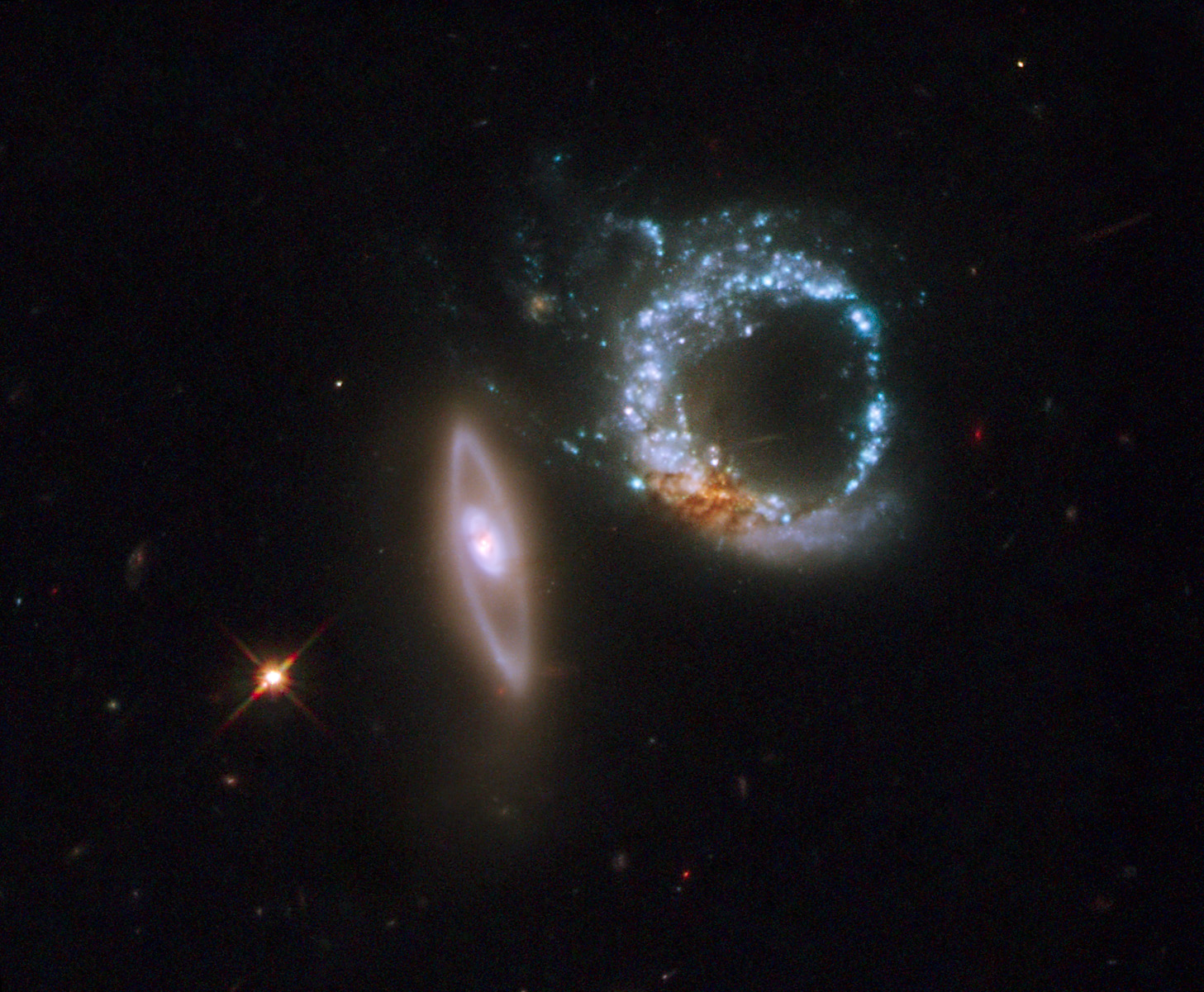
NASA’s Hubble Space Telescope is back in business.
Just a couple of days after the orbiting observatory was brought back
online, Hubble aimed its prime working camera, the Wide Field Planetary
Camera 2 (WFPC2), at a particularly intriguing target, a pair of
gravitationally interacting galaxies called Arp 147.
The image demonstrated that the camera is working exactly as it was
before going offline, thereby scoring a “perfect 10” both for
performance and beauty.
The two galaxies happen to be oriented so that they appear to mark the
number 10. The left-most galaxy, or the “one” in this image, is
relatively undisturbed apart from a smooth ring of starlight. It appears
nearly on edge to our line of sight. The right-most galaxy, resembling a
zero, exhibits a clumpy, blue ring of intense star formation.
The blue ring was most probably formed after the galaxy on the left
passed through the galaxy on the right. Just as a pebble thrown into a
pond creates an outwardly moving circular wave, a propagating density
wave was generated at the point of impact and spread outward. As this
density wave collided with material in the target galaxy that was moving
inward due to the gravitational pull of the two galaxies, shocks and
dense gas were produced, stimulating star formation.
The dusty reddish knot at the lower left of the blue ring probably marks
the location of the original nucleus of the galaxy that was hit.
Arp 147 appears in the Arp Atlas of Peculiar Galaxies, compiled by
Halton Arp in the 1960s and published in 1966. This picture was
assembled from WFPC2 images taken with three separate filters. The blue,
visible-light, and infrared filters are represented by the colors blue,
green, and red, respectively.
The galaxy pair was photographed on October 27-28, 2008. Arp 147 lies in
the constellation Cetus, and it is more than 400 million light-years
away from Earth.
117391368487
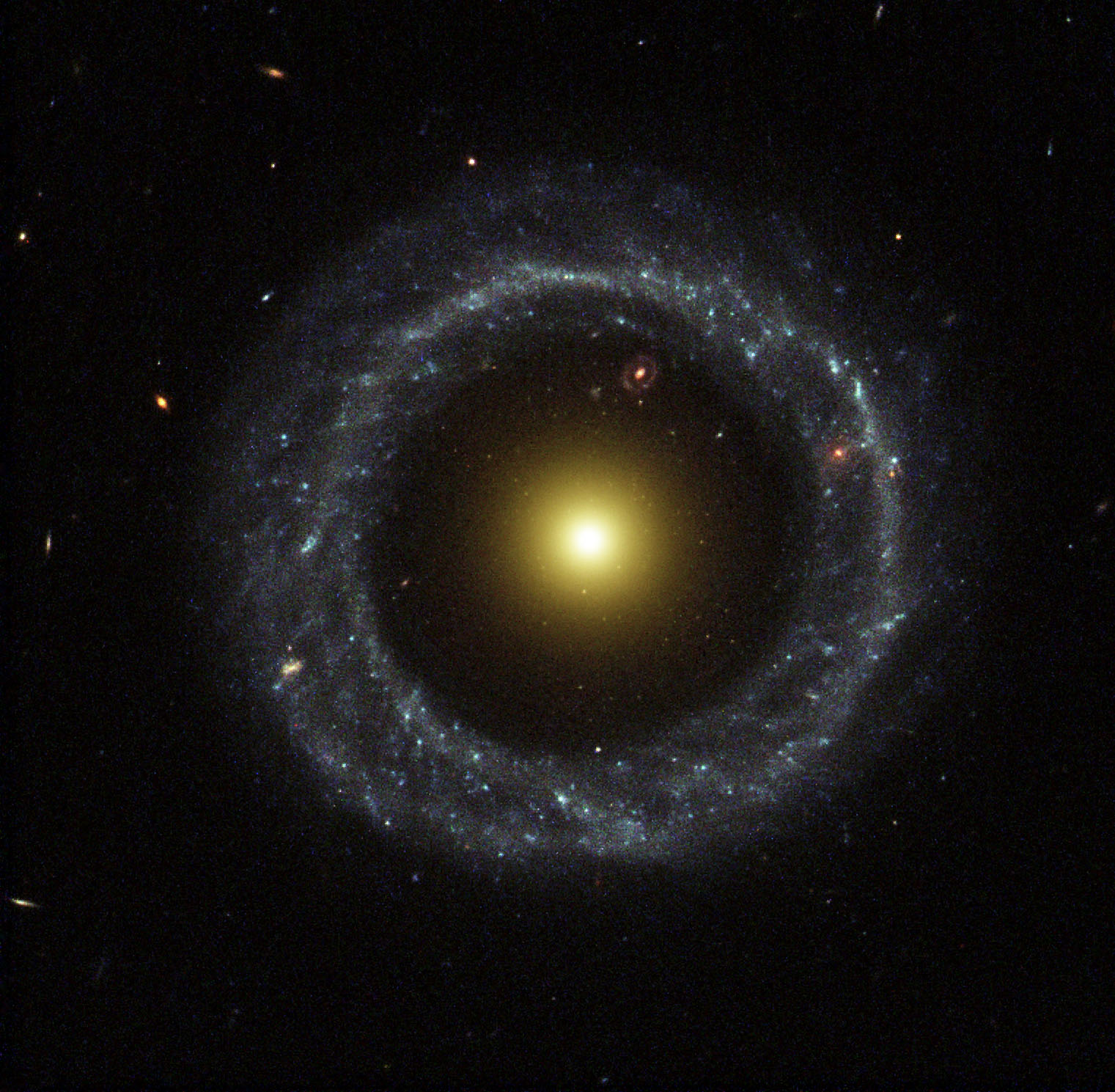
An image of Hoag’s Object, a non-typical galaxy of the type known as a ring galaxy, discovered in 1950 by astronomer Art Hoag, who initially thought it to be a planetary nebula.
Serendipitously, from the perspective of our solar system what appears
to be an even more distant ring galaxy is plainly visible within the gap
between this galaxy’s central body of mostly yellow stars and the outer
ring of blue stars.
117050896982
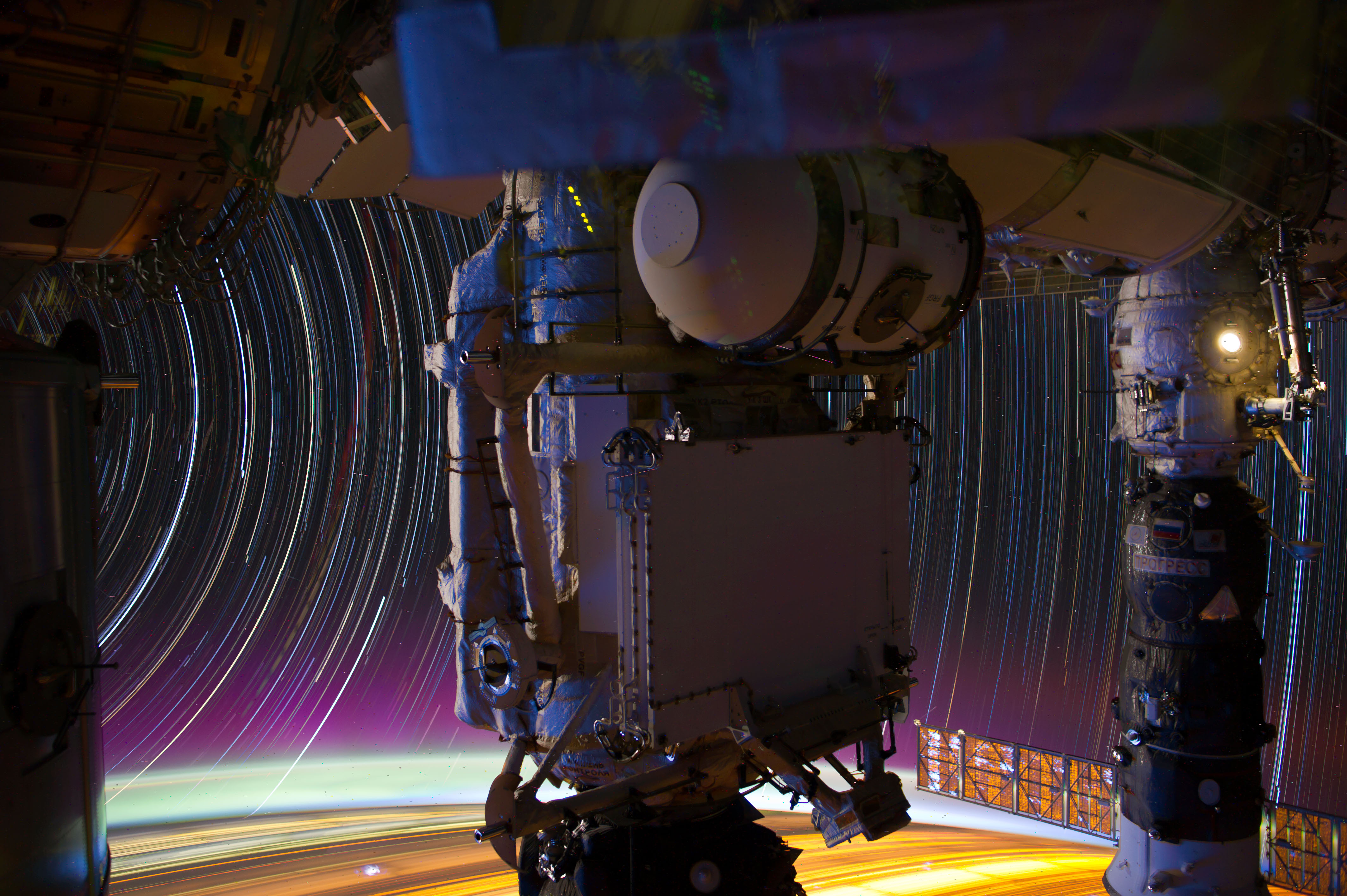
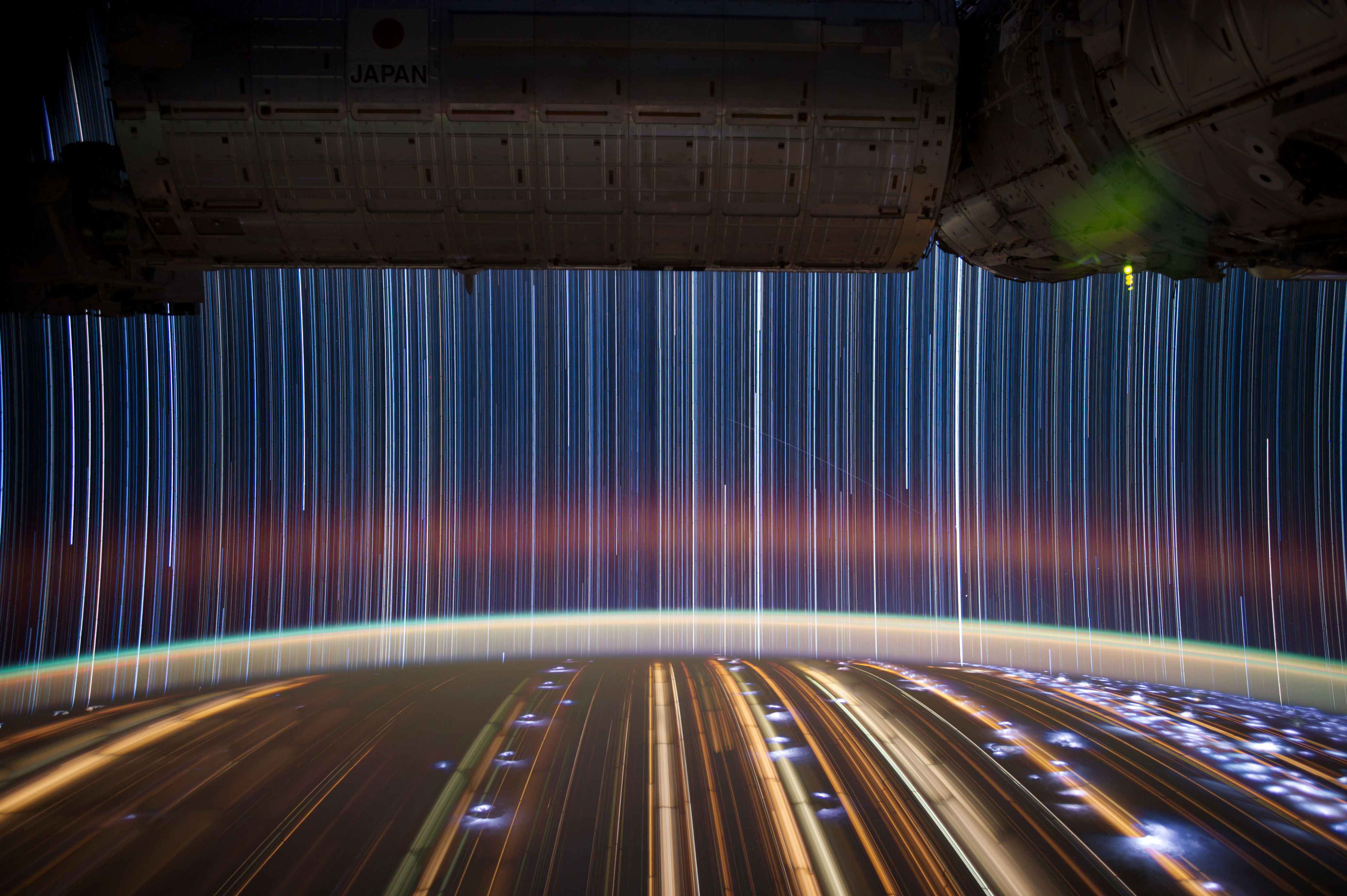
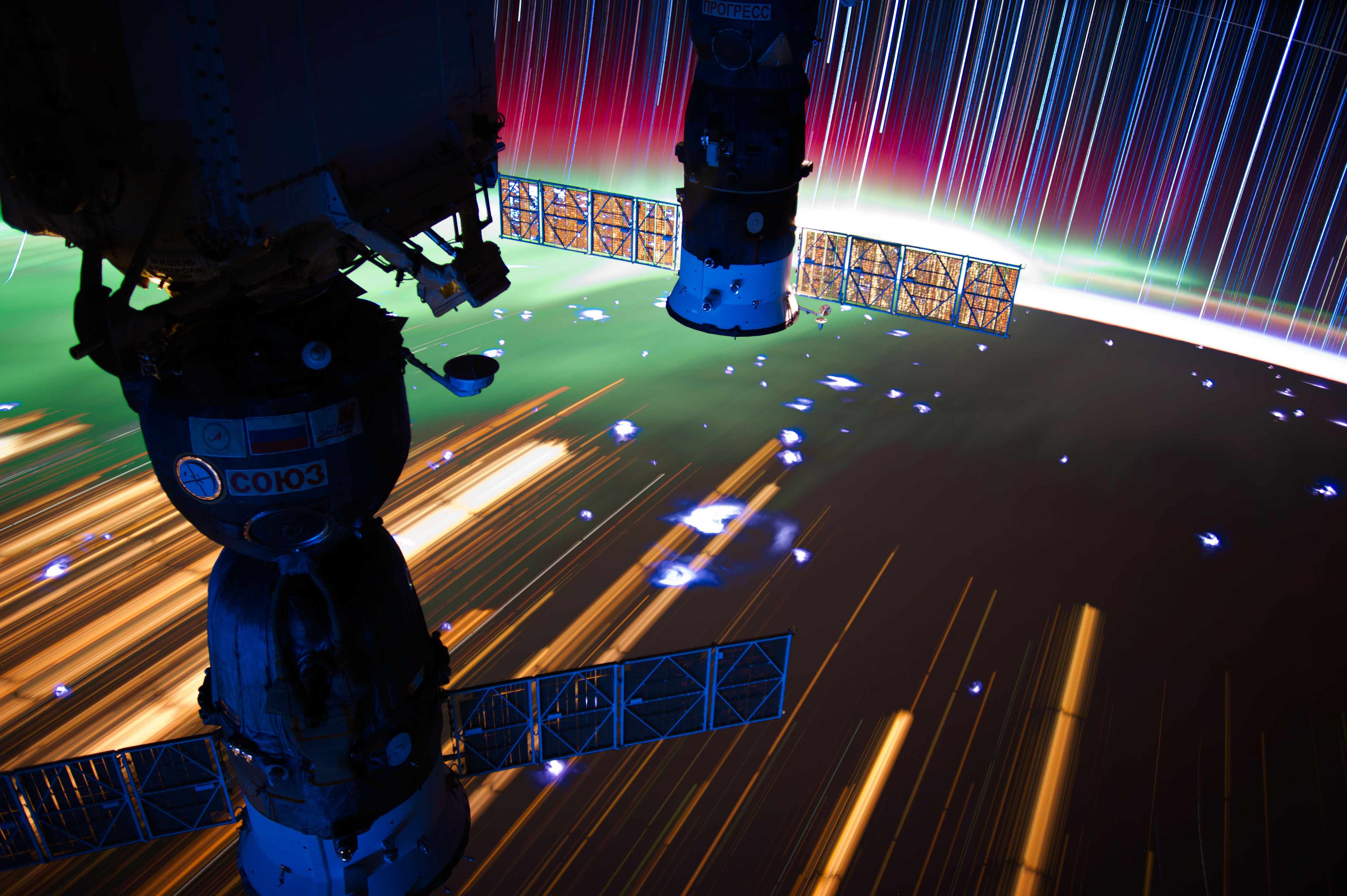
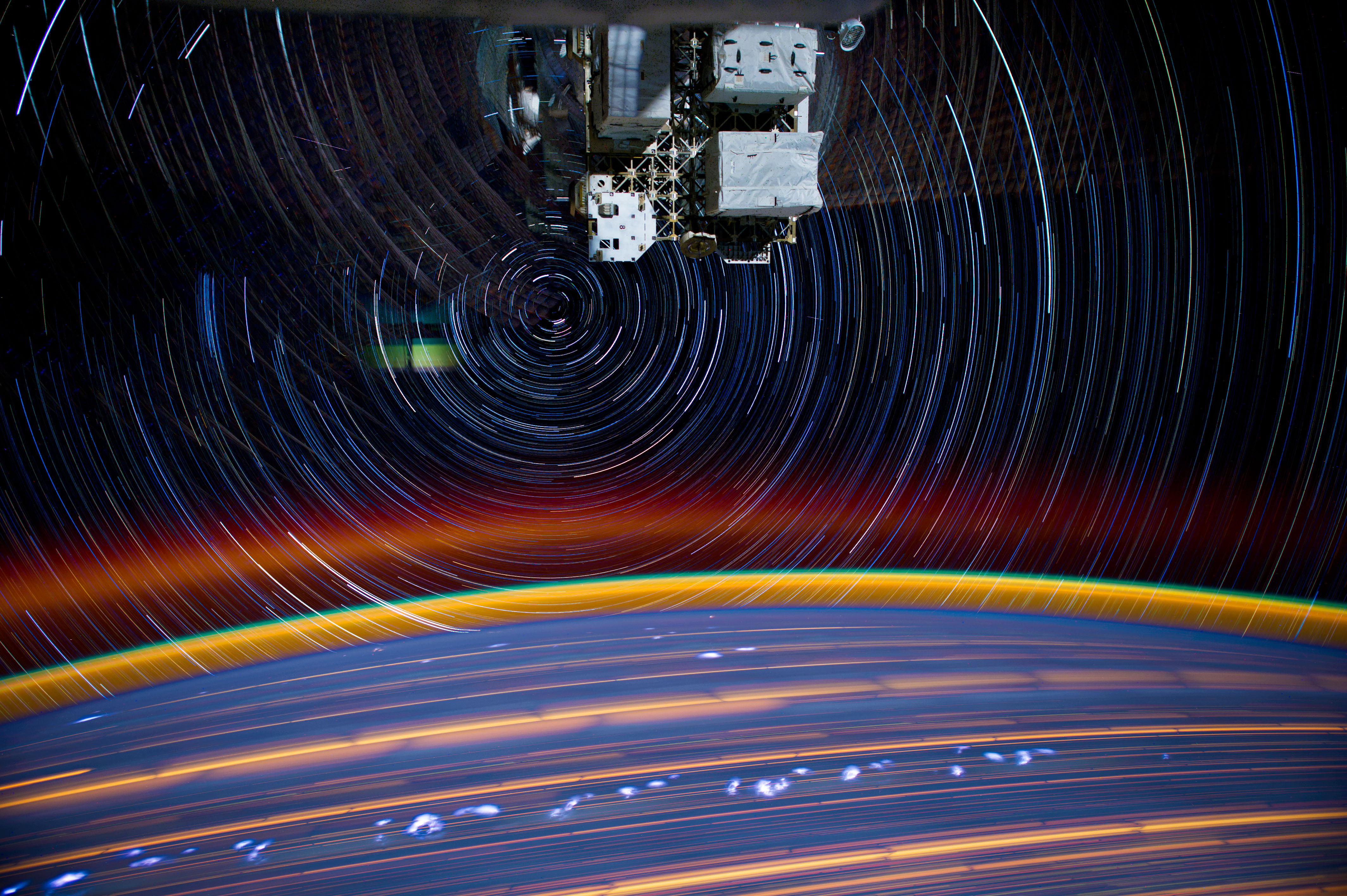
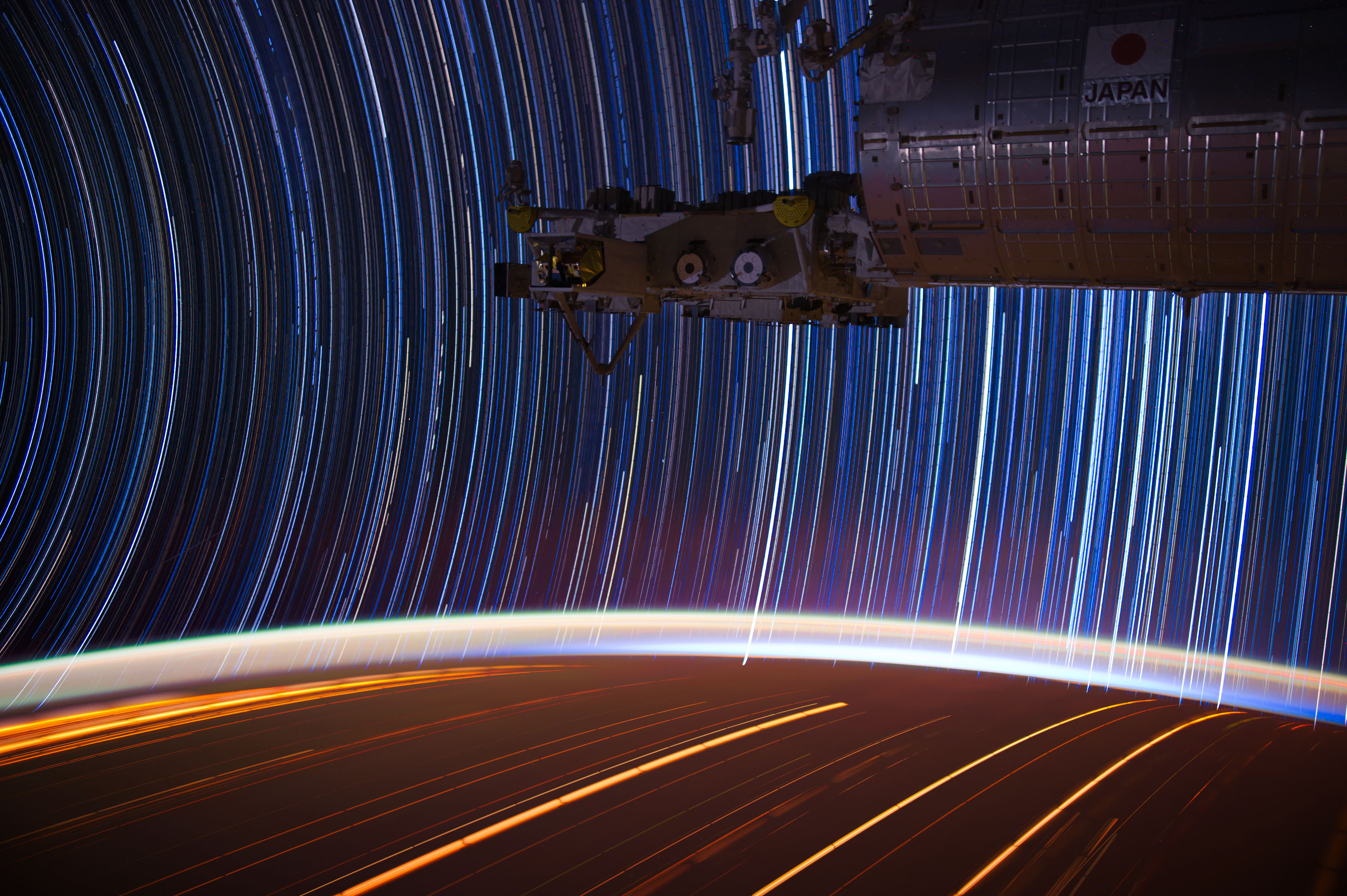

ISS Star Trails
117027670112
116867379312
Dhammapada Verse Two: Happiness Follows a Pure Mind
116793654407
116715679887
115492374222

There have been many drawbacks to solar engery, including high cost and little yield, but an entirely new one has emerged: birds
114392606452
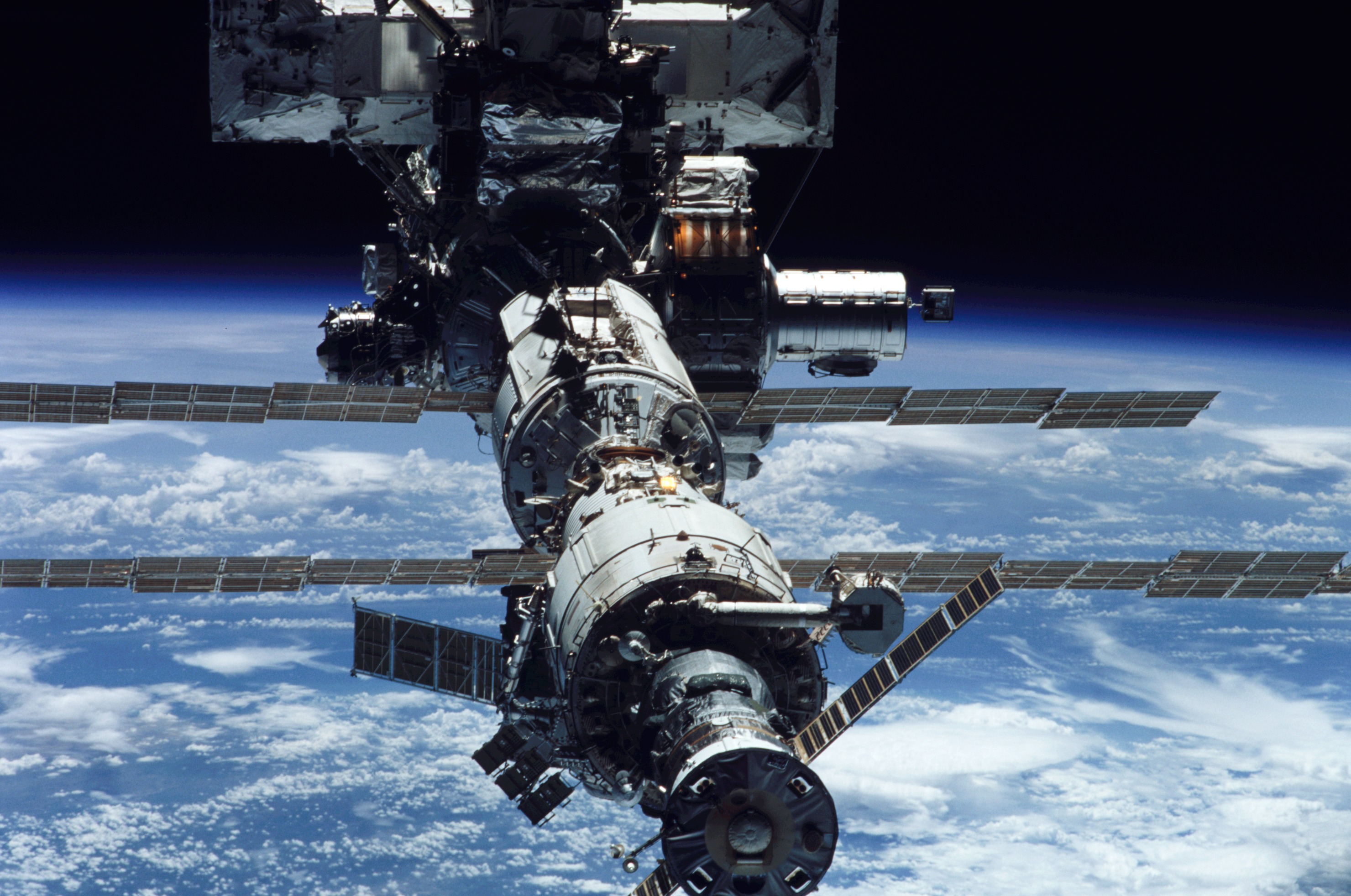
International Space Station
114392515922
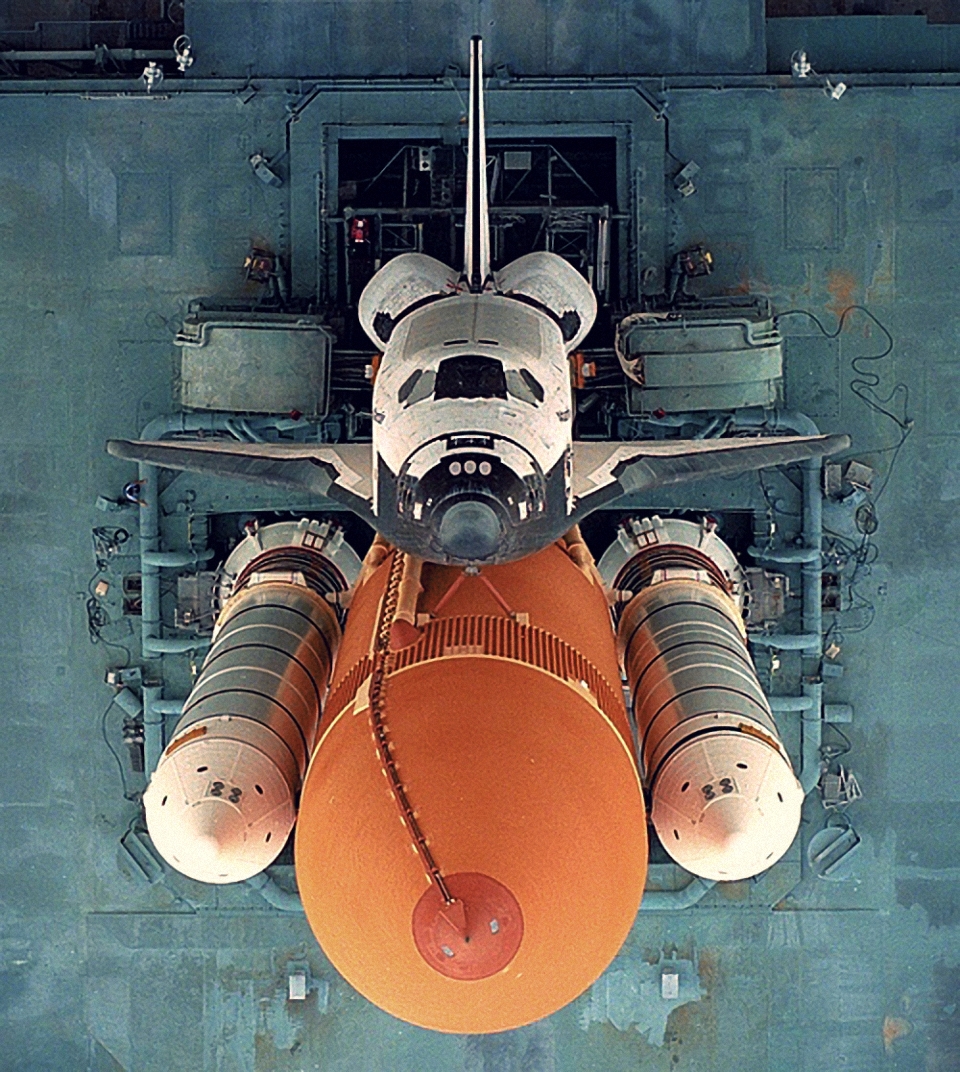
The Space Shuttle Atlantis
113238935777
Alan Watts: Death (1959)
113238703997
Alan Watts: Buddhism and Science (1960)