“Great art – or good art – is when you look at it, experience it and it
stays in your mind. I don’t think conceptual art and traditional art are
all that different. There’s boring conceptual art and there’s boring
traditional art. Great art is if you can’t stop thinking about it, then
it becomes a memory.”
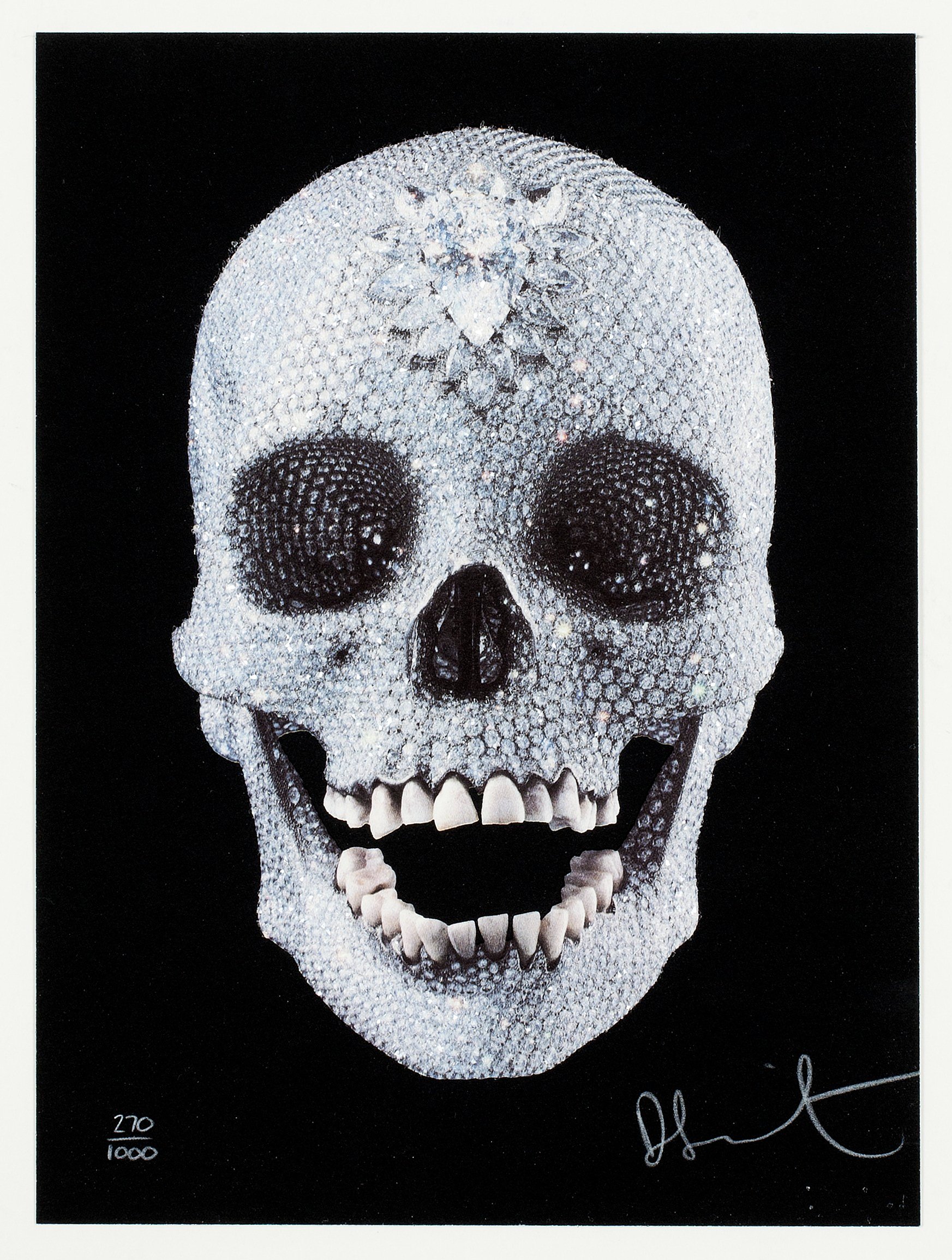
For the Love of God (small diamond skull) Print by Damien Hirst
“Why escape your intended purpose by copying and trying to be someone else? You will discover who you were meant to be only after you have shown confidence being yourself.” — Suzy Kassem
Word Series: A #Copy of A Copy Poster. This is a copy of a copy poster. Size: 18 x 24 in. On a matte paper. Heavyweight stock.
Both physical and NFT items are now available in our store.
“I wanted to make something visual, physical, visceral to reflect the butchery they are inflicting on our planet: a visual scream that gives voice to the calamitous cost of the climate crisis, often on the most marginalised communities across the globe. BUTCHERED is also a tribute to the heroic work done in opposition to this destruction, and to the tireless activists who choose to disrupt, disagree and disobey.” — Anish Kapoor
“I still think science is looking for answers and art is looking for questions.” ⠀ Quinn sees the skeleton as representative of an everyman, an abstraction of a person since it is the part of the body which transcends death. The sculptures Angel and Waiting for Godot take the form of a praying skeleton and are an ironic reference to the idea of waiting for answers – or for some kind of external power to guide our life. ⠀ Marc Quinn Waiting for Godot 2006 Patinated bronze 77h x 37w x 76.5d cm
“I don’t think it’s necessary to be original. It’s necessary to be honest.”
Martin Creed: What’s the point of it? is the first major retrospective of Creed’s ingenious and often highly provocative work. Since the beginning of his career, when he made small objects that could be placed anywhere, Creed has made work that questions the very nature of art and challenges taboos. His work takes on a multitude of forms—from sculpture, paintings, neons, films and installations, to music and performance—appearing both in the art gallery and in broader public circulation. At once rigorous and humorous, his art continually surprises, disrupts and overturns our expectations. It reflects on the unease we face in making choices, the comfort we find in repetition, the desire to control, and the inevitable losses of control that shape existence.
Martin Creed Work No. 88 1995 A sheet of A4 paper crumpled into a ball.
Ideas have fathers One of the many destructive assumptions nowadays is that ideas have no fathers. But ideas are thought up by someone. For example, the concept of placing a sculpture on the ground without a plinth was one of Judd’s ideas; it is now very common and no one is aware of this. Another one of his ideas was the concept of the installation, the use of the whole space. Many artists devalue this idea. Once again there is no discussion at all and mediocre works are created. Art historians who are concerned with the past are at least still interested in chronology, those who work with contemporary art are not, and they see art as the subject for their own speculations.
Artist Donald Judd (1928 – 1994) held the 1993 Mondrian Lecture called ‘Some aspects of colour in general and red and black in particular’.
“Why escape your intended purpose by copying and trying to be someone else? You will discover who you were meant to be only after you have shown confidence being yourself.” — Suzy Kassem
Word Series: A Copy of A Copy Poster. This is a copy of a copy poster. Size: 18 x 24 in. On a matte paper. Heavyweight stock.
Both physical and NFT items are now available in our store.
“The whole thing [about] art and money is ridiculous. The value of a painting at auction is not necessarily the value of the painting. It’s the value of two people bidding against each other because they really want the painting.”
“The powerhouse Blum gallery, which has locations in Los Angeles and Tokyo, and which planned to open a new New York space this fall, has laid off most of its staff and plans to cease brick-and-mortar operations.”