space
122288063757
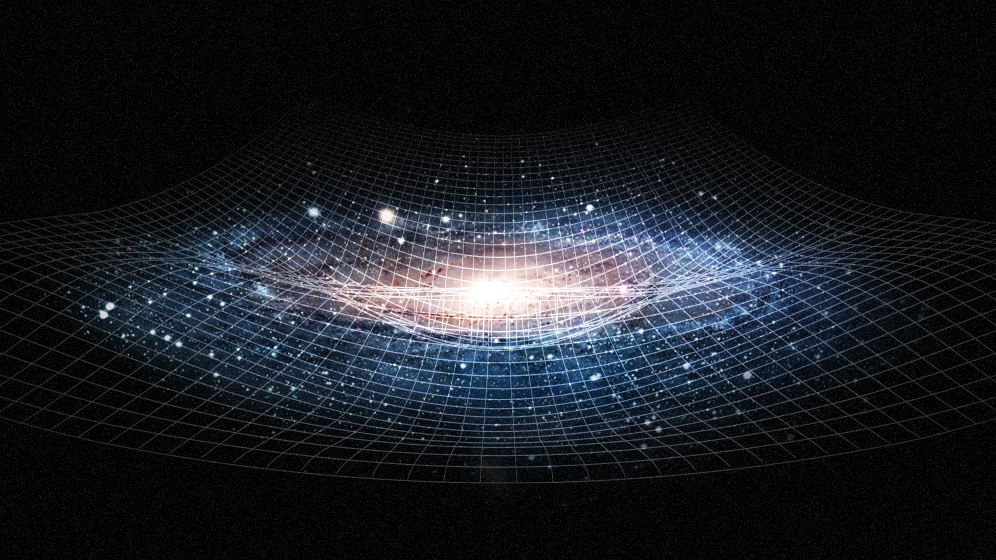
Interactive: What Is Space?
“…many physicists …
have long ‘suspected a deep connection between quantum entanglement —
the ‘spooky action at a distance’ that so vexed Albert Einstein — and
space-time geometry at the smallest scales.’ How might entanglement
stitch together the structured fabric of space-time?“
121895483447
121853109662
121367371919
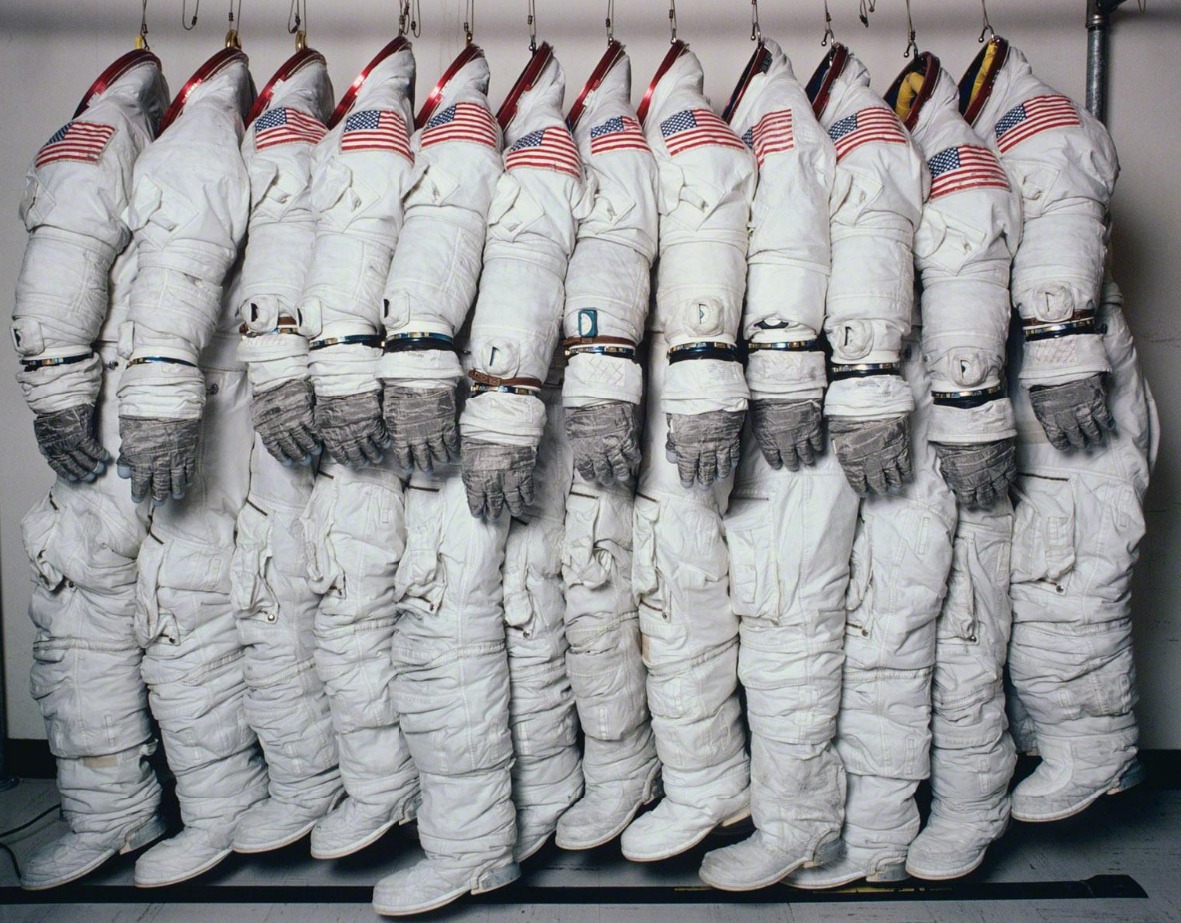
Hiro
Apollo Spaceflight Training Suits, Houston, Texas, 1978
120915970047
120839026007
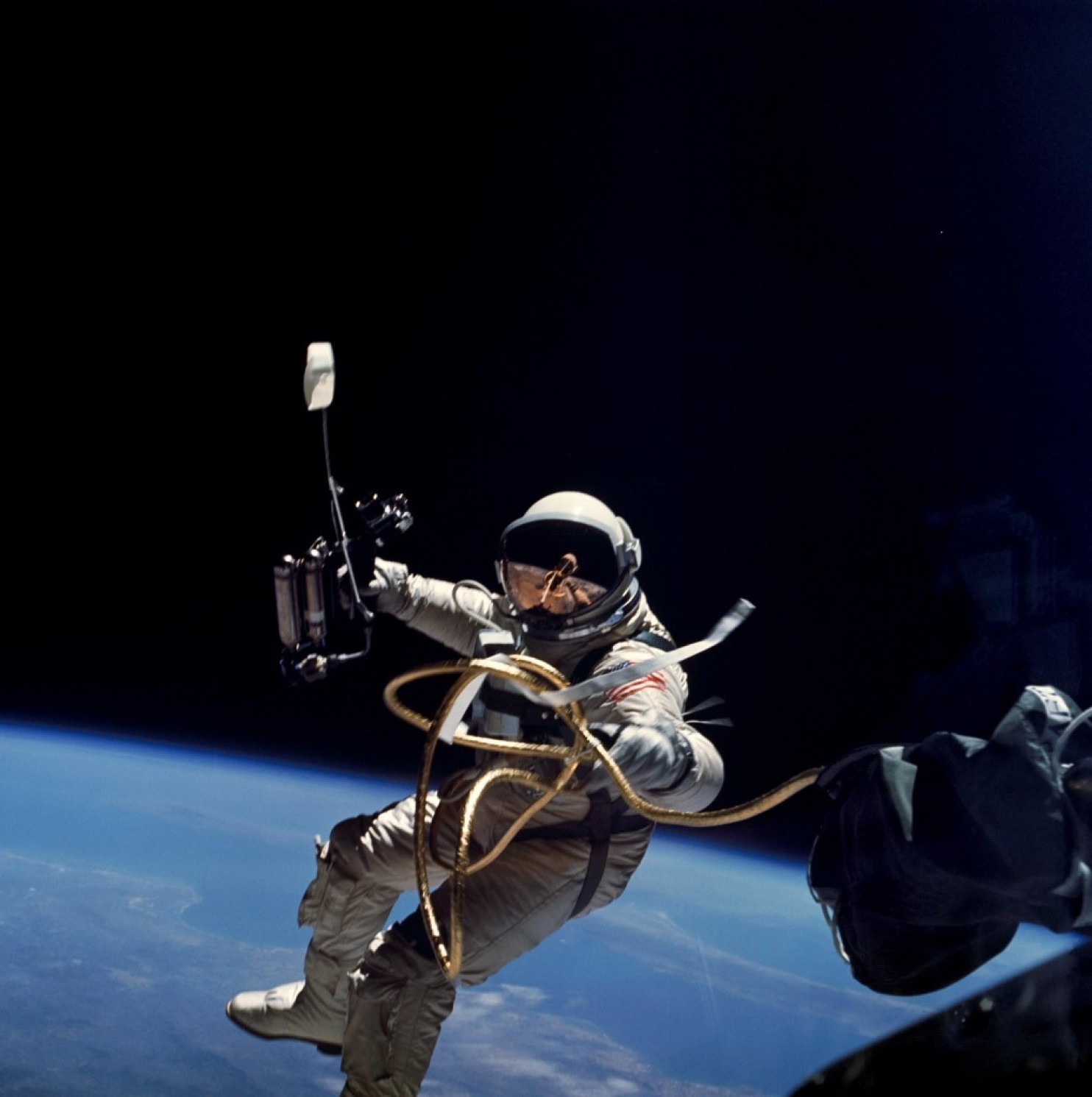
Edward White
117740522539
What does space smell like?
It’s strange to think that the near-vacuum of space
could have a smell, and stranger still that humans — atmospheric
creatures — can actually experience it. Astronauts have consistently
reported the same strange odour after lengthy space walks, bringing it
back in on their suits, helmets, gloves and tools. Its bitter, smoky,
metallic smell — like seared steak, hot metal and arc welding smoke all
rolled into one. NASA have asked a chemist, Steve Pearce, to reproduce
the smell to use during acclimatization training, mapping out the likely
chemistry using natural materials to mimic the odor for accuracy. It’s
believed that the smell is caused by high-energy vibrations in particles
that mix with the air when brought inside. In the future, we might even
recreate the smell of the moon, Mars, Mercury or any place in the
universe, provided we have the right chemical information. In fact, we
can even recreate the smell of the heart of the galaxy — astronomers
searching for animo acids in Sagittarius B2, a vast dust cloud in the
middle of the Milky Way, have reported that due to a substance called
ethyl formate, it smells and tastes of raspberries and rum — much more
pleasant than seared steak and metal.