spiritual
726914486798303232
What is Soul Work? – The Path of Embodying Unconditional Love
“Soul Work is the contemplative practice of turning inwards and rediscovering our True Nature in the present moment. Quite literally, Soul Work means doing the Soul’s work of going within and coming back home to Spirit.
Every Soul has a deep yearning to find truth, freedom, love, and peace.”
726096542868652032
Our minds are all we have. They are all we have ever had. And they are all we can offer others. This might not be obvious, especially when there are aspects of your life that seem in need of improvement—when your goals are unrealized, or you are struggling to find a career, or you have relationships that need repairing. But it’s the truth. Every experience you have ever had has been shaped by your mind. Every relationship is as good or as bad as it is because of the minds involved. If you are perpetually angry, depressed, confused, and unloving, or your attention is elsewhere, it won’t matter how successful you become or who is in your life—you won’t enjoy any of it.
— Sam Harris
721500605269639168
ASK DR. WEISS: Physical appearance; personality and the soul; autism and other conditions
721048458032775168
720434727208763392
708096853948973056
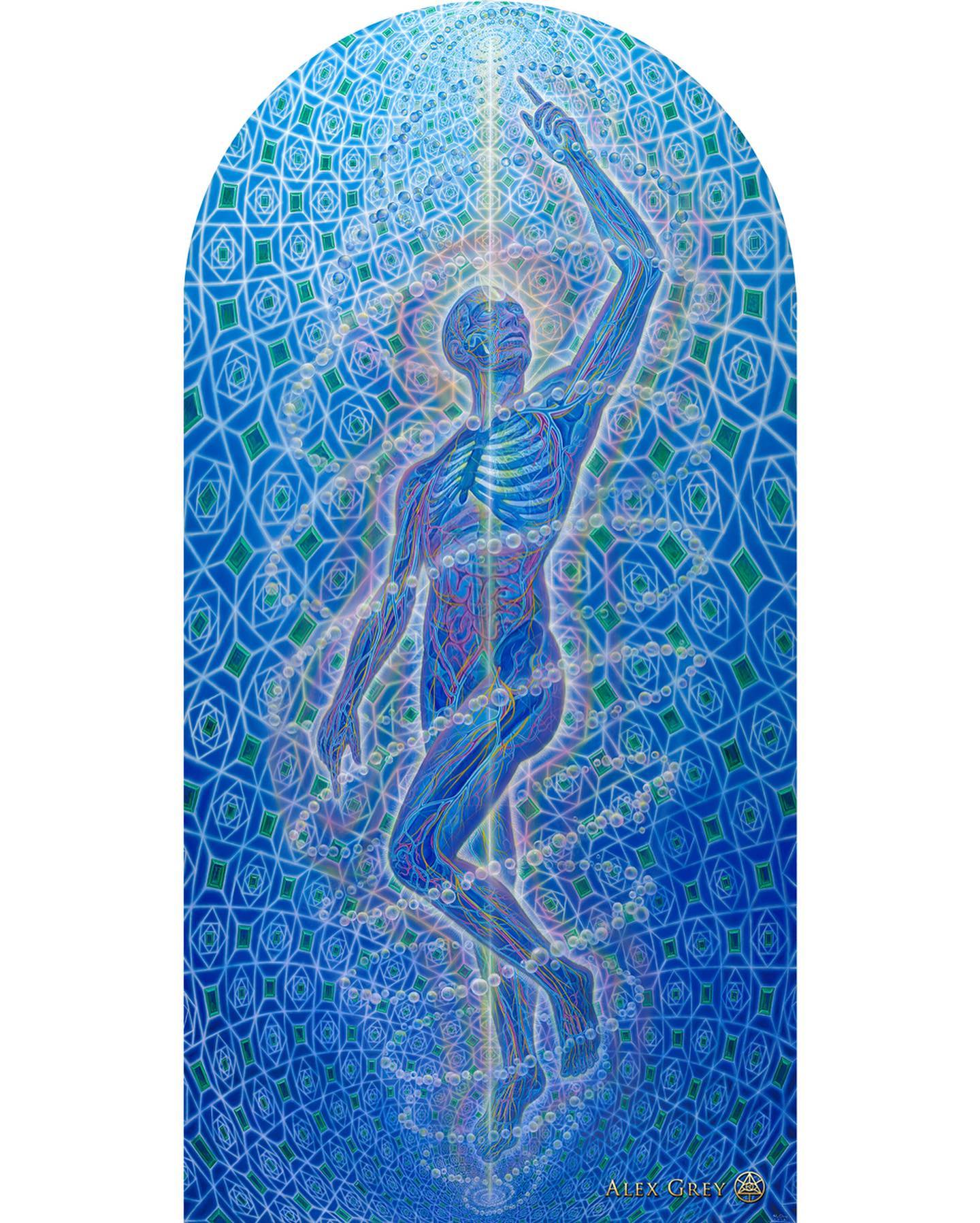
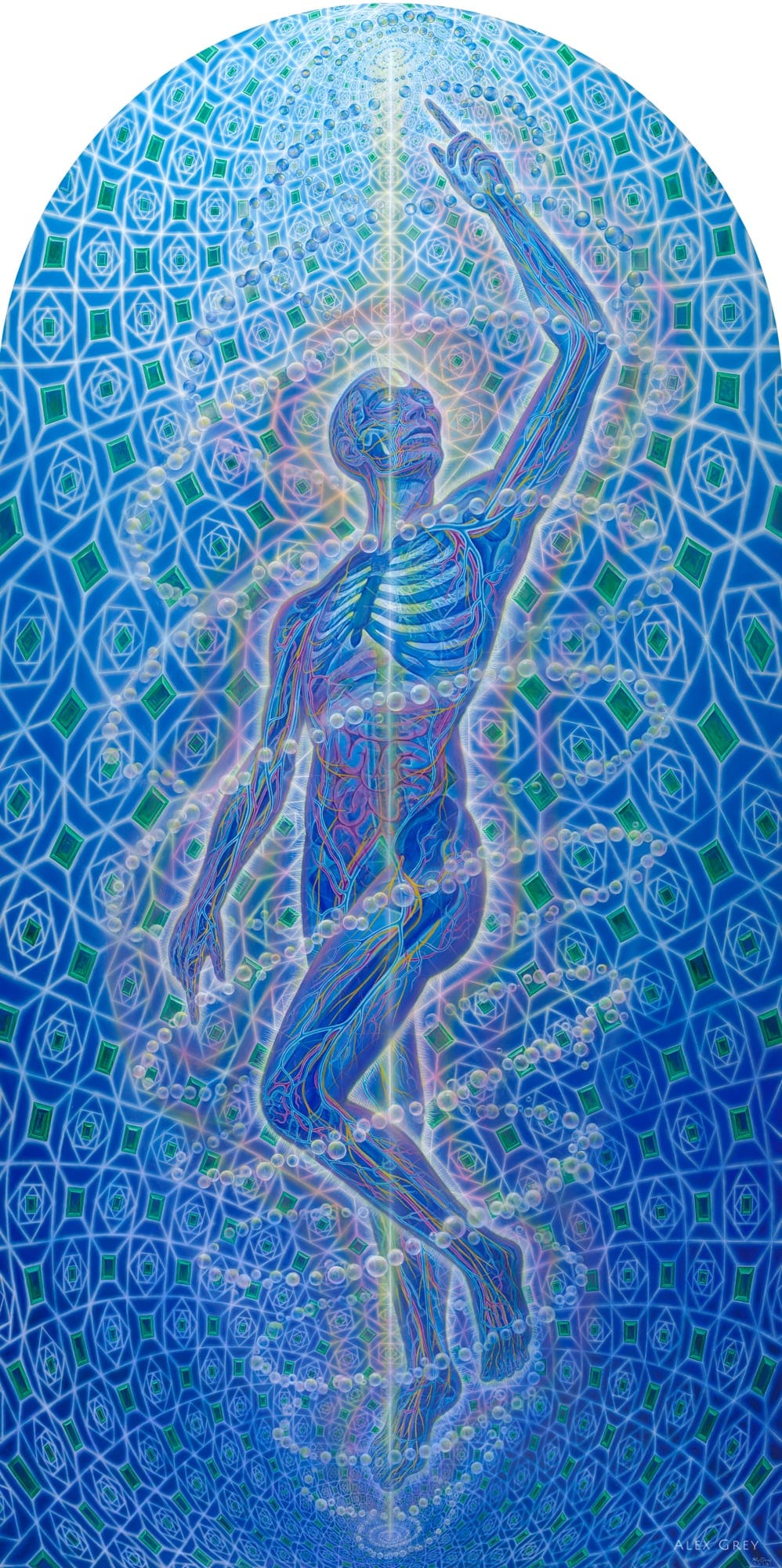
Bridging both lower and higher realms, the hero points in both
directions, yet he focuses his vision upward, aligned with the light in
his heart. First symbolized in alchemical engravings, the Monochord is a
single strand strung from Heaven to Earth. We are that string and God
tunes us.
Alex Grey & Allyson Grey
Monochord
2021
digital NFT
1920 x 1080 Pixels
Highest Bid: $188,888
708096592070295553
I think that frequently, many times in the beginning of our path as artists, we do have to deal with our upsets and our negativeness – in regard to, mostly, ourselves. We may be taking it out on our loved ones or people close to us, but really we’re just mad at ourselves for not giving ourselves the time to devote to our inner development and doing the soul work through our art work. So there’s a certain amount of working through that. You may have to cry, you may have to dance, you may have to get the energy moving in whatever way you can, and if you need to scream as you work that’s as much of a prayer as the more refined kinds of artist’s prayers. Sometimes it’s a more direct kind of thing. You can scream in rage, you can scream your need for God, whatever’s there for you. You’ve got to start where you’re at. If you think that you can just start making spiritual art without addressing all the build-up of shadow material that you may be carrying around with you, and it’s leaking out at the borders, then I don’t think that’s any good. You’ve got to be true. So wherever you’re at, that’s where you start.
And as far as the artist creating spiritual or visionary art, I think that it’s obvious and important that the artist experience the transpersonal states prior to them trying to bring it out in their work, otherwise they’re just doing imitative or derivative kind of work. It has to be from some authentic inner experience, and as long as you’ve had some experience of your soul or spiritual reality in some way, or visionary reality, then by all means – if it’s compelling, make pictures of it.
703629473703133184
700762765652033536

700520200547729408
People who pretend do so for these 8 reasons
Keep it real
699188622342094848
Ego Traps
• If you think it is more “spiritual” to ride a bike to work or use public transportation, but then find yourself judging anyone who drives a car, you’re in an ego trap.
• If you think it is more “spiritual” to stop watching television because it rots your brain, but then find yourself judging those who still watch TV, you’re in an ego trap.
• If you think it is more “spiritual” to avoid reading gossip, tabloid or news magazines, but then find yourself judging those who do read those things, you’re in an ego trap.
• If you think it is more “spiritual” to listen to classical music or soothing nature sounds, but then find yourself judging those who listen to mainstream or pop music, you’re in an ego trap.
• If you think it is more “spiritual” to do yoga, become a vegan, buy organic, buy healing crystals, practice reiki, meditate, wear hippie/thrift shop clothing, visit ashrams and read enlightened spiritual books, but then you judge anyone who doesn’t do those things, you’re in an ego trap.
Always be aware of the feeling of superiority. Self-righteous superiority is your biggest clue that you are in an ego trap. The ego loves to sneak in the back door. It will take a noble idea, like starting up yoga, and then twist it to serve its own ends by making you feel superior to others; you will start to look down on those who are not following your righteous “spiritual” path. Superiority, judgment and condemnation. That is the ego trap.
691068867451256832
ASK DR. WEISS: Free will and destiny; soulmates; ghosts; souls in different forms
690615394238660608
Ego Traps
• If you think it is more “spiritual” to ride a bike to work or use public transportation, but then find yourself judging anyone who drives a car, you’re in an ego trap.
• If you think it is more “spiritual” to stop watching television because it rots your brain, but then find yourself judging those who still watch TV, you’re in an ego trap.
• If you think it is more “spiritual” to avoid reading gossip, tabloid or news magazines, but then find yourself judging those who do read those things, you’re in an ego trap.
• If you think it is more “spiritual” to listen to classical music or soothing nature sounds, but then find yourself judging those who listen to mainstream or pop music, you’re in an ego trap.
• If you think it is more “spiritual” to do yoga, become a vegan, buy organic, buy healing crystals, practice reiki, meditate, wear hippie/thrift shop clothing, visit ashrams and read enlightened spiritual books, but then you judge anyone who doesn’t do those things, you’re in an ego trap.
Always be aware of the feeling of superiority. Self-righteous superiority is your biggest clue that you are in an ego trap. The ego loves to sneak in the back door. It will take a noble idea, like starting up yoga, and then twist it to serve its own ends by making you feel superior to others; you will start to look down on those who are not following your righteous “spiritual” path. Superiority, judgment and condemnation. That is the ego trap.
688441924506550272
Ayahuasca