Symbolism
773647814699991040

“From my rotting body, flowers shall grow, and I am in them, and that is eternity.”
Edvard Munch
Madonna (Schiefler 33; Woll 39)
lithograph with woodcut in black, rust red, blue and pale grey-green, 1895-1902, on tissue-thin Japon, a superb, strongly printed impression, the colors rich, Woll’s fourth state (of seven) before the additional strands of hair across the torso, signed in pencil, with wide margins, deckle along the upper and right sheet edges, the lower and left sheet edges trimmed at time of printing, in excellent condition, framed
L. 21 7/8 x 13¾ in. (556 x 349 mm.)
S. 25¾ x 17¾ in. (654 x 451 mm.)
Price realised
USD 650,500
754477433378439168
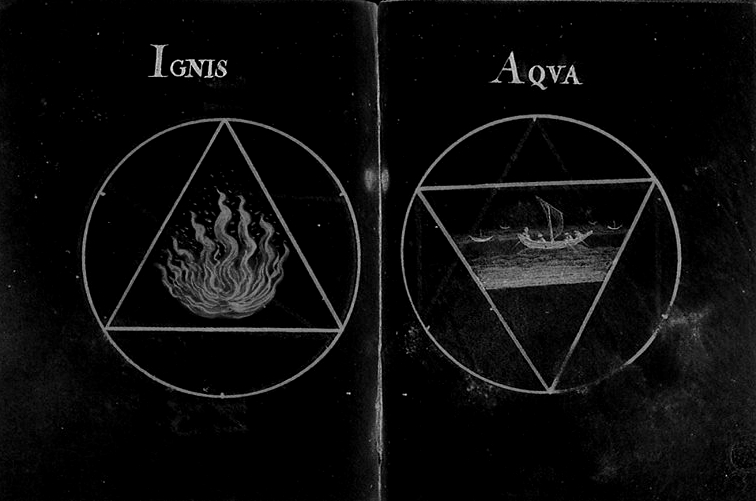
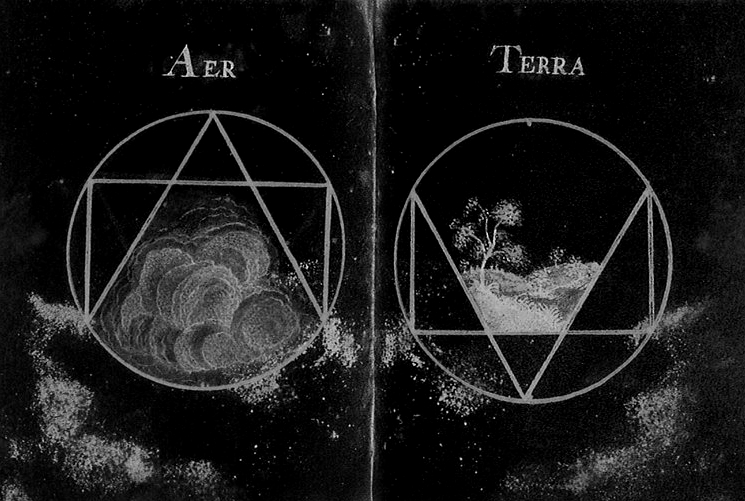
Ulrich Ruosch – Four Elements, “Das Alchemiehandbuch des Appenzeller Wundarztes“, 17th century.
Ulrich Ruosch was a Paracelsian surgeon from Switzerland who produced a beautiful manual which captures the world of 17th-century Alchemy, rife as it is with meaningful connections between the Planets and the Metals and the operations of Cosmic Forces in the sublunary world of the four Elements.
Ignis is symbolized by pure Fire, and Aqua by sailing vessel crossing the Sea has been used, with more vessels in the background. Aer is purely symbolized by clouds, but for Terra, a rather charming scene of a lush wooded landscape is used. This is a subtle stylistic reference to the correspondence of the Elements with the Strata of the Universe: the Upper Stratum is Fire (Ignis), the Middle Stratum is Air (Aer), while the Earth (Terra) belongs to the Lower Stratum, as does Water (Aqua).
732937660798205952

160484649987
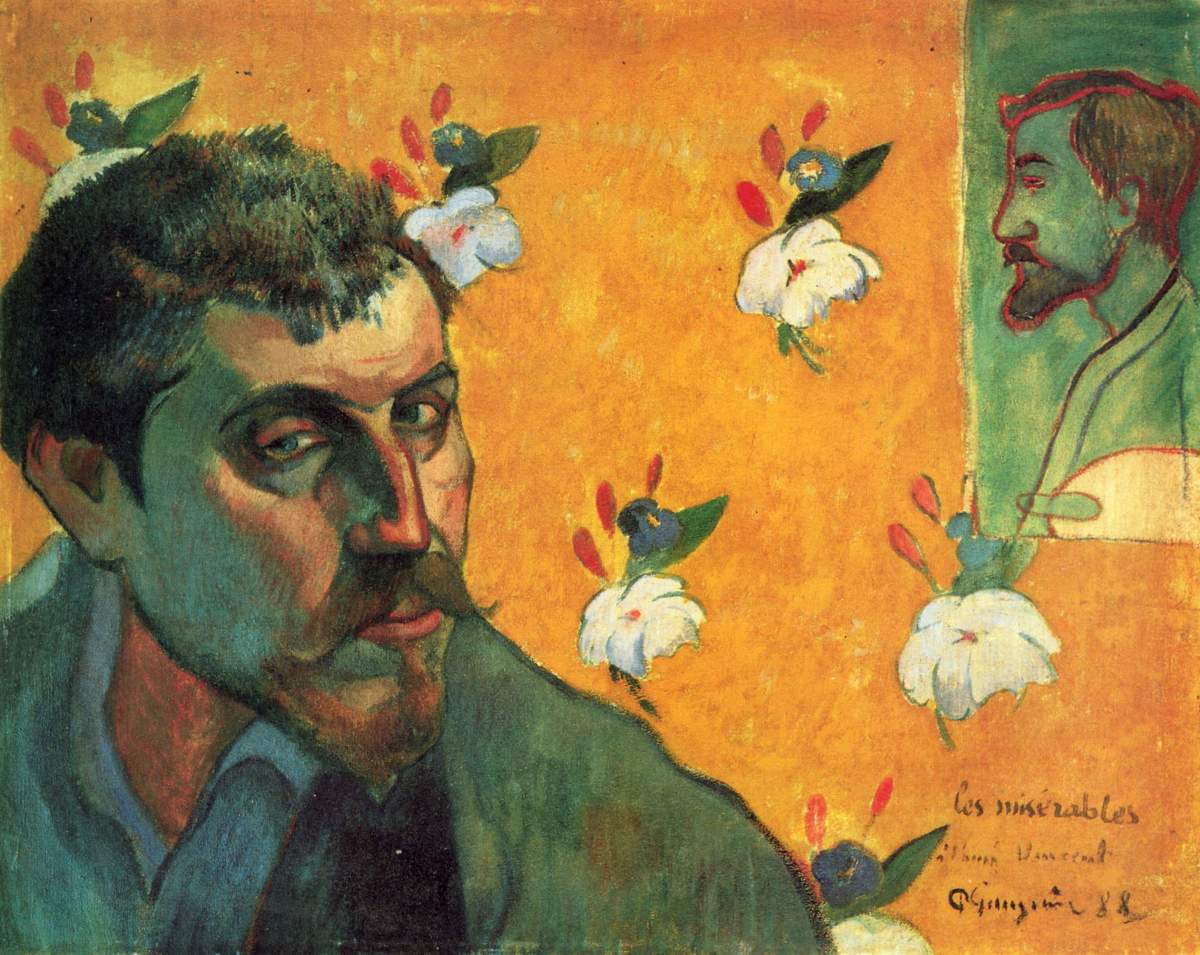
In the autumn of 1889, 41-year-old Gauguin received a distraught
letter from his young friend after a particularly harsh critical
reception of Bernard’s paintings. In a reply found in Paul Gauguin: Letters to His Wife and Friends (public library), the painter writes to his 21-year-old friend:
Your disconsolate letter reaches a countryside as
sorrowful. I understand the bitterness which sweeps over you at the
foolish reception of you and your works… What would you rather have? a
mediocrity which pleases everybody or a talent which breaks new ground.
We must choose if we have free will. Would you have the power of choice
if choosing leads to suffering — a Nessus shirt which sticks to you and
cannot be stripped off? Attacks on originality are to be expected from
those who lack the power to create and shrug their shoulders.
As for me, I own myself beaten — by events, by men, by
the family, but not by public opinion. I scorn it and I can do without
admirers. I won’t say that at your age I was like this, but by the
exertion of sheer will power, that is what I am like to-day. Let them
study carefully my last pictures and, if they have any feelings at all,
they will see what resigned suffering is in them — a cry wrung from the
heart… But you, why do you suffer, too? You are young, and too early you
begin to carry the cross. Do not rebel; one day, you will feel a joy in
having resisted the temptation to hate, and there is truly intoxicating
poetry in the goodness of him who has suffered.
155486883912
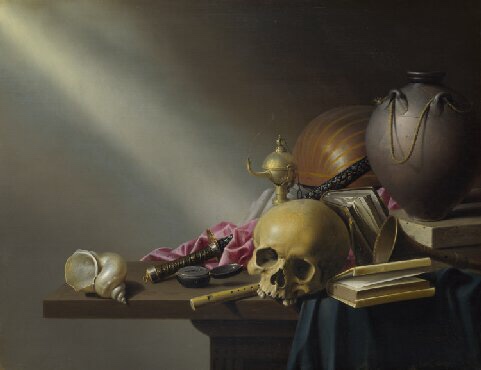
Still Life: An Allegory of the Vanities of Human Life (about 1640) by Harmen Steenwyck
144541594382
Exhibition Munch : Van Gogh at the Van Gogh Museum
143812990752
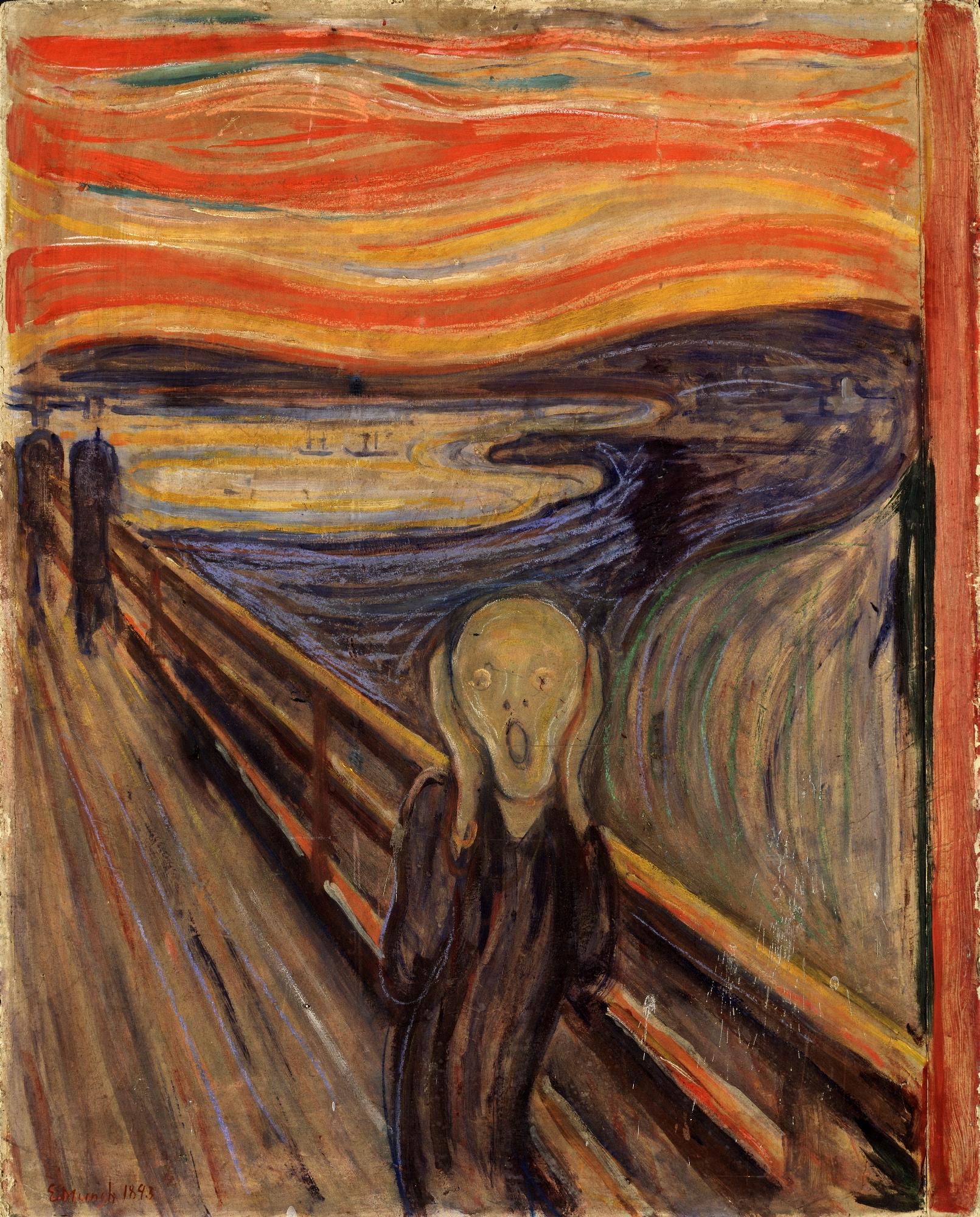
“The point is that one sees things at different moments with different
eyes. Differently in the morning then in the evening. The way in which
one sees also depends on one’s mood.. ..coming in from a dark bedroom in
the morning into the sitting room one will, for example, see everything
in a bluish light. Even the deepest shadows are topped with bright
light. After a while one will accustom oneself to the light and the
shadows will be deeper and everything will be seen more sharply. If an
atmosphere of this kind is being painted it won’t do merely to sit and
gaze at everything ‘just as one sees’. One must paint precisely the
fleeting moment of significance – one must capture the exact experience
separating that significant moment from the next – the exact moment when
the motif struck one.. .In some circumstances a chair may seem to be
just as interesting as a human being. In some way or another it must
have caught the interest in which case the onlooker’s interest must
somehow be engaged in the same way. It’s not the chair that should be
painted, but what the person has felt at the sight of it [written in
Saint Cloud, 1890 – probably related to the chair of Vincent van Gogh”
The Scream – Munch Edvard