wisdom
707086643097681920
Don’t Gain The World & Lose Your Soul, Wisdom Is Better Than Silver Or Gold.
703473370880180224
Knowing others is intelligence;
knowing yourself is true wisdom.
Mastering others is strength;
mastering yourself is true power.
653208850534678528
UNLEARN
148567677747
“I have been studying for forty years, which is to say forty wasted years; I teach others yet am ignorant of everything; this state of affairs fills my soul with so much humiliation and disgust that my life is intolerable. I was born in Time, I live in Time, and do not know what Time is. I find myself at a point between two eternities, as our wise men say, yet I have no conception of eternity. I am composed of matter, I think, but have never been able to discover what produces thought. I do not know whether or not I think with my head the same way that I hold things with my hands. Not only is the origin of my thought unknown to me, but the origin of my movements is equally hidden: I do not know why I exist. Yet every day people ask me questions on all these issues. I must give answers, yet have nothing worth saying, so I talk a great deal, and am confused and ashamed of myself afterwards for having spoken.”― Voltaire
141651334347
Erikson’s theory of personality
The Erikson life-stage virtue, in order of the eight stages in which they may be acquired, are:
- Hope, Basic trust vs. basic mistrust—This stage covers the
period of infancy, 0-1 year of age, which is the most fundamental stage
of life. Whether the baby develops basic trust or basic mistrust is not
merely a matter of nurture. It is multi-faceted and has strong social
components. It depends on the quality of the maternal relationship. The
mother carries out and reflects their inner perceptions of
trustworthiness, a sense of personal meaning, etc. on the child. If
successful in this, the baby develops a sense of trust, which “forms the
basis in the child for a sense of identity.” Failure to develop this
trust will result in a feeling of fear and a sense that the world is
inconsistent and unpredictable. - Will, Autonomy vs. Shame—Covers early childhood around 1–3
years old. Introduces the concept of autonomy vs. shame and doubt. The
child begins to discover the beginnings of his or her independence, and
parents must facilitate the child’s sense of doing basic tasks “all by
himself/herself.” Discouragement can lead to the child doubting his or
her efficacy. During this stage the child is usually trying to master
toilet training. - Purpose, Initiative vs. Guilt—Preschool / 3–6 years. Does the
child have the ability to or do things on their own, such as dress him
or herself? If “guilty” about making his or her own choices, the child
will not function well. Erikson has a positive outlook on this stage,
saying that most guilt is quickly compensated by a sense of
accomplishment. - Competence, Industry vs. Inferiority—School-age
/ 6–11 years. Child comparing self-worth to others (such as in a
classroom environment). Child can recognize major disparities in
personal abilities relative to other children. Erikson places some
emphasis on the teacher, who should ensure that children do not feel
inferior. - Fidelity, Identity vs. Role Confusion—Adolescent
/ 12–18 years. Questioning of self. Who am I, how do I fit in? Where am
I going in life? Erikson believes, that if the parents allow the child
to explore, they will conclude their own identity. If, however, the
parents continually push him/her to conform to their views, the teen
will face identity confusion. - Love, Intimacy vs. isolation—This
is the first stage of adult development. This development usually
happens during young adulthood, which is between the ages of 18 to 35.
Dating, marriage, family and friendships are important during the stage
in their life. By successfully forming loving relationships with other
people, individuals are able to experience love and intimacy. Those who
fail to form lasting relationships may feel isolated and alone. - Care, Generativity vs. stagnation—The second stage of
adulthood happens between the ages of 35-64. During this time people are
normally settled in their life and know what is important to them. A
person is either making progress in their career or treading lightly in
their career and unsure if this is what they want to do for the rest of
their working lives. Also during this time, a person is enjoying raising
their children and participating in activities, that gives them a sense
of purpose. If a person is not comfortable with the way their life is
progressing, they’re usually regretful about the decisions that they
have made in the past and feel a sense of uselessness. - Wisdom, Ego integrity vs. despair—This stage affects the age
group of 65 and on. During this time an individual has reached the last
chapter in their life and retirement is approaching or has already taken
place. Ego-integrity means the acceptance of life in its fullness: the
victories and the defeats, what was accomplished and what was not
accomplished. Wisdom is the result of successfully accomplishing this final developmental task. Wisdom is defined as “informed and detached concern for life itself in the face of death itself.” - For Ninth Stage
- “Basic Mistrust vs. Trust: Hope”
In the ninth stage, “elders are forced to mistrust their own
capabilities” because one’s “body inevitably weakens.” Yet, Joan Erikson
asserts that “while there is light, there is hope” for a “bright light
and revelation.” - “Shame and Doubt vs. Autonomy: Will”
Ninth stage elders face the “shame of lost control” and doubt “their
autonomy over their own bodies.” So it is that “shame and doubt
challenge cherished autonomy.” - “Inferiority vs. Industry: Competence”
Industry as a “driving force” that elders once had is gone in the ninth
stage. Being incompetent “because of aging is belittling” and makes
elders “like unhappy small children of great age.” - “Identity confusion vs. Identity: Fidelity”
Elders experience confusion about their “existential identity” in the
ninth stage and “a real uncertainty about status and role.” - “Isolation vs. Intimacy: Love”
In the ninth stage, the “years of intimacy and love” are often replaced
by “isolation and deprivation.” Relationships become “overshadowed by
new incapacities and dependencies.” - “Stagnation vs. Generativity: Care”
The generativity in the seventh stage of “work and family
relationships,” if it goes satisfactorily, is “a wonderful time to be
alive.” In one’s eighties and nineties, there is less energy for
generativity or caretaking. Thus, “a sense of stagnation may well take
over.” - “Despair and Disgust vs. Integrity: Wisdom”
Integrity imposes “a serious demand on the senses of elders.” Wisdom
requires capacities that ninth stage elders “do not usually have.” The
eighth stage includes retrospection that can evoke a “degree of disgust
and despair.” In the ninth stage, introspection is replaced by the
attention demanded to one’s “loss of capacities and disintegration.”
Living in the ninth stage, Joan Erikson expressed confidence that the
psychosocial crisis of the ninth stage can be met as in the first stage
with the “basic trust” with which “we are blessed.”
126559502597
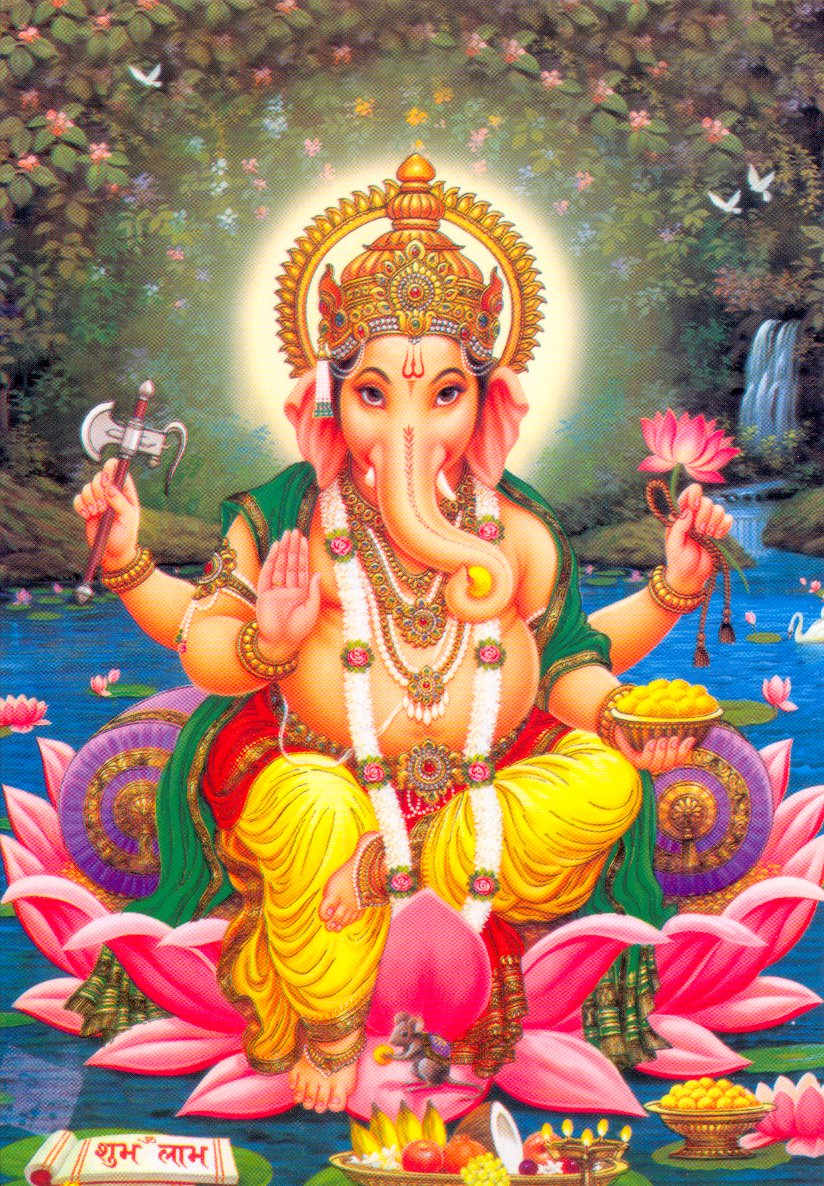
Ganesha – God of wisdom, knowledge and new beginnings
145172662742
Matthew Henry Commentary
8:1-11
The will of God is made known by the works of creation, and by the
consciences of men, but more clearly by Moses and the prophets. The
chief difficulty is to get men to attend to instruction. Yet attention
to the words of Christ, will guide the most ignorant into saving
knowledge of the truth. Where there is an understanding heart, and
willingness to receive the truth in love, wisdom is valued above silver
and gold.