money
Art Series: Failed Artists Organic T-Shirt


Quote Of The Day
“It is impossible for someone to lie unless he thinks he knows the truth. Producing bullshit requires no such conviction. A person who lies is thereby responding to the truth, and he is to that extent respectful of it. When an honest man speaks, he says only what he believes to be true; and for the liar, it is correspondingly indispensable that he considers his statements to be false. For the bullshitter, however, all these bets are off: he is neither on the side of the true nor on the side of the false. His eye is not on the facts at all, as the eyes of the honest man and of the liar are, except insofar as they may pertain to his interest in getting away with what he says. He does not care whether the things he says describe reality correctly. He just picks them out, or makes them up, to suit his purpose.”
— Harry Frankfurt (On Bullshit, pp. 55-56)
He who has a why to live can bear almost any how.
— Friedrich Nietzsche
Trust Nobody


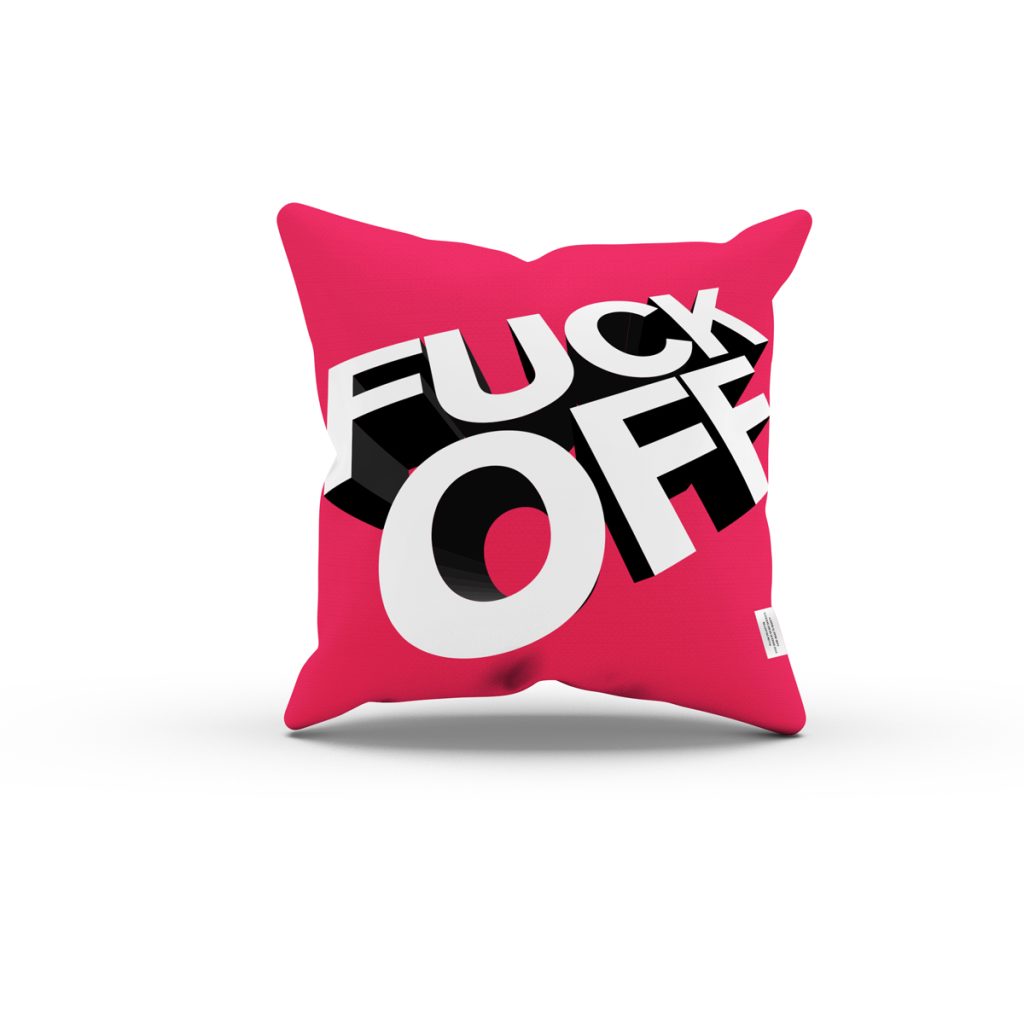
Fuck Off Pillow



“A true artist is not one who is inspired, but one who inspires others.”
— Salvador Dali
Pest Control©
“Are you a company looking to licence Banksy art for commercial use? Then you’ve come to the right place – you can’t. Only Pest Control Office have permission to use or license my artwork. If someone else has granted you permission, you don’t have permission. I wrote ‘copyright is for losers’ in my (copyrighted) book and still encourage anybody to take and amend my art for their own personal amusement, but not for profit or making it look like I’ve endorsed something when I haven’t.”
— Banksy
Government App Development Cost
Building an online social security system — something that lets citizens check benefits, manage accounts, apply for services, or receive statements — is significantly more involved than a typical consumer app because it must handle sensitive personal data, integrate with backend government databases, and meet strict security and compliance standards.
Here’s a realistic view of what such a system might cost in the U.S. context (in USD), based on industry benchmarks for government service apps and secure digital platforms: (apptunix)
💰 Typical Cost Ranges for a Social Security-Type Online System
🧩 1. Basic Digital Service Portal
- Core features: secure login, view benefit info, simple forms, status tracking.
- Platforms: web portal and basic mobile app (iOS/Android).
💰 $100,000 – $250,000
This includes secure user authentication, database integration, and a user dashboard. (apptunix)
🛡️ 2. Medium-Complexity System
- Adds: multi-factor authentication, document upload, notifications, API integration with legacy social security databases.
💰 $250,000 – $500,000
Systems that talk to existing government backends and have moderate automation live in this range. (apptunix)
🚨 3. Enterprise-Grade, Highly Secure Platform
- Enterprise features: advanced encryption, biometric login, compliance with federal security standards (FISMA, NIST), accessibility compliance, real-time data syncing.
- High scalability for millions of users.
💰 $500,000 – $1,000,000+
Large government services platforms or national social security systems can easily exceed this, especially when they need independent security audits or continuous monitoring. (apptunix)
805156154562985984
Copyright for Artists
Artists need copyright law because it gives their creative work a basic layer of protection, dignity, and sustainability.
First, it recognizes authorship. Copyright law legally links a work to its creator. This matters because art is not just an object, it is an extension of thought, experience, and time. Without that recognition, anyone could claim or reuse the work as if it had no origin.
Second, it prevents unauthorized copying and exploitation. Copyright gives artists control over how their work is reproduced, sold, modified, or distributed. Without it, others could profit from an artist’s labor while the artist receives nothing in return.
Third, it allows artists to earn a living. Many artists rely on licensing, commissions, prints, publishing, or royalties. Copyright makes these systems possible by defining who has the right to monetize a work and under what terms.
Fourth, it protects creative integrity. Artists can object to distortions, misuse, or contexts that misrepresent their work or intent. This is especially important when art carries personal, cultural, or political meaning.
Fifth, it encourages continued creation. When artists know their work will not be freely taken or erased, they are more likely to keep creating and sharing. A system with no protection often favors those with money and platforms, not creators.
At a global level, frameworks like the Berne Convention ensure that artists’ rights are respected across borders, while tools such as Creative Commons allow artists to intentionally share their work on their own terms.
In short, copyright law is not about limiting creativity. It exists to make sure creativity can survive without being taken advantage of.
by ChatGPT
805152121481789440
“If you can’t talk about your art, maybe you don’t know why you’re doing it.”
— Damien Hirst
805151725038256128
Creative Idea Origins
I think creative ideas come from personal experience and curiosity.
From what we live through, what stays with us, and the questions we can’t stop asking. Curiosity pushes us to explore, and experience gives those explorations meaning. When the two meet, ideas start to form naturally, without being forced.
Personal experience gives ideas their weight, and curiosity gives them movement. Experience shapes how you see the world, while curiosity keeps you looking beyond what you already know. One grounds the idea, the other keeps it alive.
When curiosity meets lived experience, ideas don’t feel borrowed or artificial. They feel honest, because they come from paying attention to your own life and still wanting to understand more.
805117115622457344
“Stupid is as stupid does.”
— Forrest Gump
804983979411472384
NFTs and Digital Art
NFTs and digital art remain an important breakthrough not because of short term market prices, but because they solved long standing structural problems that digital creators faced for decades.
For most of its history, digital art was culturally visible but economically fragile. Files could be copied endlessly, attribution was easy to remove, and ownership was impossible to prove in a native digital way. As a result, digital art was often treated as disposable, promotional, or secondary to physical work. Value existed in attention, not in the object itself.
NFTs introduced a technical shift rather than a stylistic one. For the first time, a digital artwork could have verifiable authorship, provenance, and scarcity without relying on institutions, galleries, or centralized platforms. This did not suddenly make all digital art valuable, but it changed the rules of what was possible. Digital works could now exist as collectable objects rather than just images circulating online.
The decline in market prices does not undo this breakthrough. Markets fluctuate, especially early ones driven by speculation. What mattered was not the inflated valuations, but the establishment of infrastructure. Wallets, on chain provenance, creator royalties, and peer to peer ownership created a foundation that did not exist before. Even in a quieter market, these systems continue to function.
Another key shift is psychological rather than financial. NFTs forced a broader cultural acknowledgment that digital labor is real labor, and that digital objects can carry meaning, history, and personal attachment. This parallels earlier moments in art history when new mediums were dismissed before being normalized, such as photography, video art, or digital music files.
Importantly, NFTs also separated validation from traditional gatekeepers. Artists no longer needed approval from galleries or publishers to issue work, document its origin, and reach collectors directly. Even if many projects failed, the principle remains powerful. The ability for creators to define context, edition size, and relationship with audiences is a lasting change.
In this sense, declining prices may even be healthy. They remove speculative noise and return focus to intention, experimentation, and long term practice. When value is no longer guaranteed by hype, the medium becomes more honest and closer to art rather than finance.
Digital art was devalued in the past because it lacked a native system of recognition and ownership. NFTs did not magically solve taste or quality, but they solved that missing layer. Regardless of market cycles, that structural shift remains, and it continues to influence how digital creativity is produced, shared, and understood.
By ChatGPT
804916846407090176
The difference between MODERN ART and CONTEMPORARY ART